


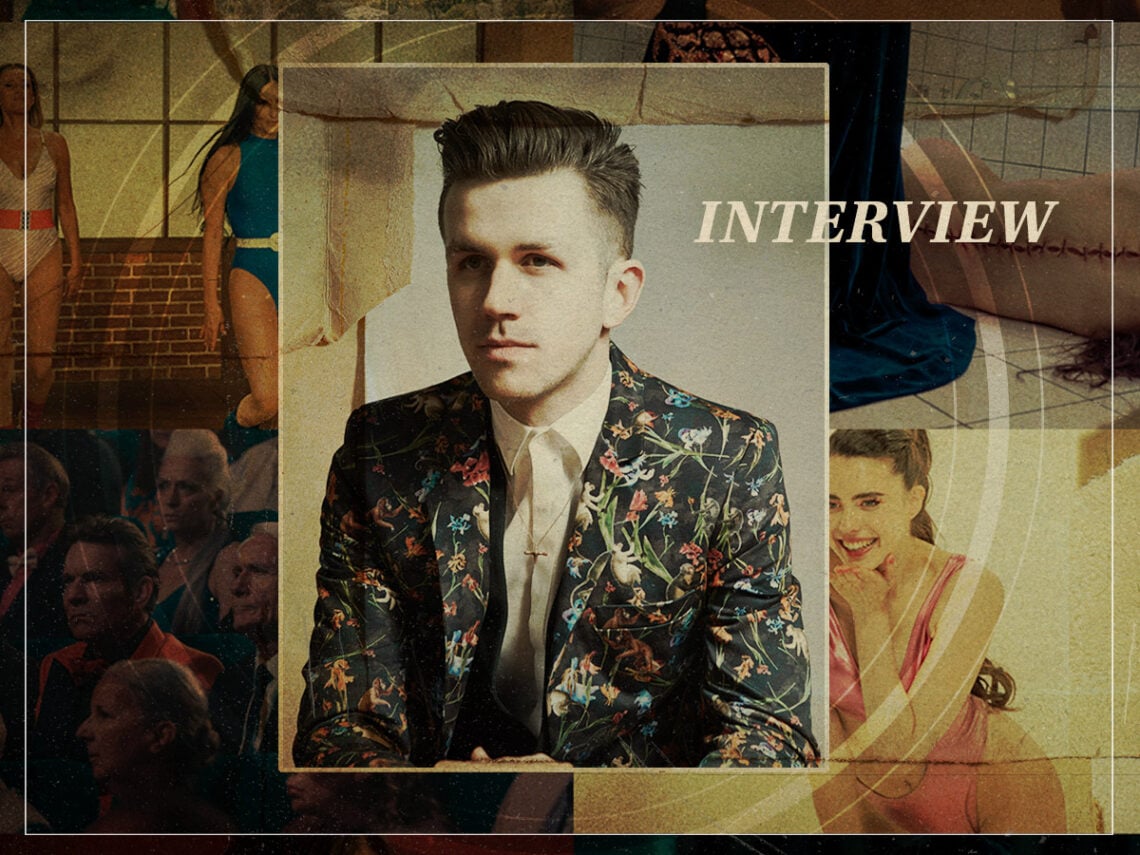
‘The Substance’ composer Raffertie on the power of silence

When British composer Benjamin Stefanski (who goes by the stage name Raffertie) saw a rough cut of Coralie Fargeat’s body horror hit The Substance for the first time, he was completely floored. “I think I felt the way a lot of people feel when they first see The Substance,” he told Far Out, “Like, ‘What have I just watched?!’” Raffertie had been in discussions with the director about composing a score for the film, and within that first viewing, he already started to formulate ideas.
As a classically trained musician who gained prominence as a producer and DJ with category-defying electronic music, Stefanski was a perfect choice for a movie that was propulsively edited and explosively stylised. His score is as dynamic and immersive as Fargeat’s imagery, featuring layers of dark, ambient textures, haunting orchestral, and sharp snares to punctuate the snappy pacing.
The film stars Demi Moore as Elisabeth Sparkle, an Oscar-winning actor whose career has been slowly declining for years. When she’s fired from her television exercise show for the unforgivable offence of turning 50, Sparkle turns to an experimental treatment known as ‘The Substance’. Once injected, the neon green liquid creates a separate version of the star – a young, impossibly dewy-skinned nymphette named Sue (played with sinister perkiness by Margaret Qualley). The rules are strict. Elisabeth can only activate the process once, and when Sue is brought into the world, the two women must alternate being alive every seven days. Inevitably, one of them fails to respect the balance, and the ensuing body horror has already become the stuff of cinematic legend.
When Raffertie saw the rough cut of the movie, he immediately realised that silence was going to be a key aspect of his score. He also identified several moments where the music could underline the action. Chief among them was the scene in which Sue introduces herself for the first time at an audition to replace Elisabeth on the television show. The tight pacing of the scene proved to be the perfect set-up for the composer, who found that his first inklings of an idea dove-tailed perfectly with what Fargeat had created.
“The start of the idea was that bass loop and a kick drum and then that sort of noisy snare which comes in,” Stefanski said. “And I remember putting it to that scene… with Sue in the catsuit, and it was just quite fortunate, sometimes you get things that just line up really nicely, and you know the kick drums were lining up with the cut, and then when it sort of snaps to her lips… the snare kicked in. All of it tied together quite nicely.”

Stefanski has been working as a film and television composer for well over a decade now, contributing to shows like Suits and the John Wick prequel, The Continental. The task of a film composer varies greatly from project to project. Sometimes, the director isn’t quite sure how to articulate what they’re looking for from the score. Other times, their ideas are so specific that it leaves little room for creative freedom. Fargeat was the ideal collaborator, giving Stefanski plenty of space, in the beginning, to develop his ideas and specific input about what she wanted the music to communicate.
“Coralie and I talked a lot about there being an electronic backbone to the score,” he said. “We talked a lot in the beginning about there being this duality between the two sound worlds of Sue and Elisabeth. I think with Elisabeth, we wanted to feel a sort of nostalgia… we wanted to feel this sort of Hollywood grandeur… We were sending Bernard Herrmann references back and forth to each other, some things from Citizen Kane and things like that.”
For Sue, they wanted something completely different. It needed to be contemporary and larger-than-life with a hint of sensuality. He would send his ideas to Fargeat, and she would respond with detailed feedback, picking out 20 seconds here, two or three seconds there.
“I think Coralie is very musically-minded, and I think she had an amazing vision for the whole thing,” he said. “It was a really good collaboration between the two of us.”
When it came to the activation scene, he and Fargeat talked at great length about how much music to add. The scene involves a long lead-up to the injection, with Elisabeth staring inscrutably at her naked body in the mirror, tying a band around her arm, and drawing the substance out of the vial. They opted for a combination of silence and noise, beginning with a slow ratcheting up of tension as Elisabeth injects herself. As she stares at herself in the mirror again and falls to the floor, there is complete silence.

Once The Substance starts to take hold, however, all hell breaks loose with the score, with a cacophony of sounds denoting the gruesome transformation taking place on screen.
“That was really a moment to allow everything to come out,” Stefanski said. “And that happens literally on screen – you know, everything comes out of Elisabeth – but also sonically as well, it allowed us to just be super bold.”
In that respect, Fargeat’s film was a special opportunity. Laying everything out there is difficult in some films, Stefanski explained, because there is a very fine line between complementing the images on screen and completely overpowering them. “The film’s not really about restraint,” he said, “So it allows everyone to just be a bit more free, and it allows everyone to just express whatever that sort of deep feeling is. It was a film that allowed us all to express it on some level.”
