


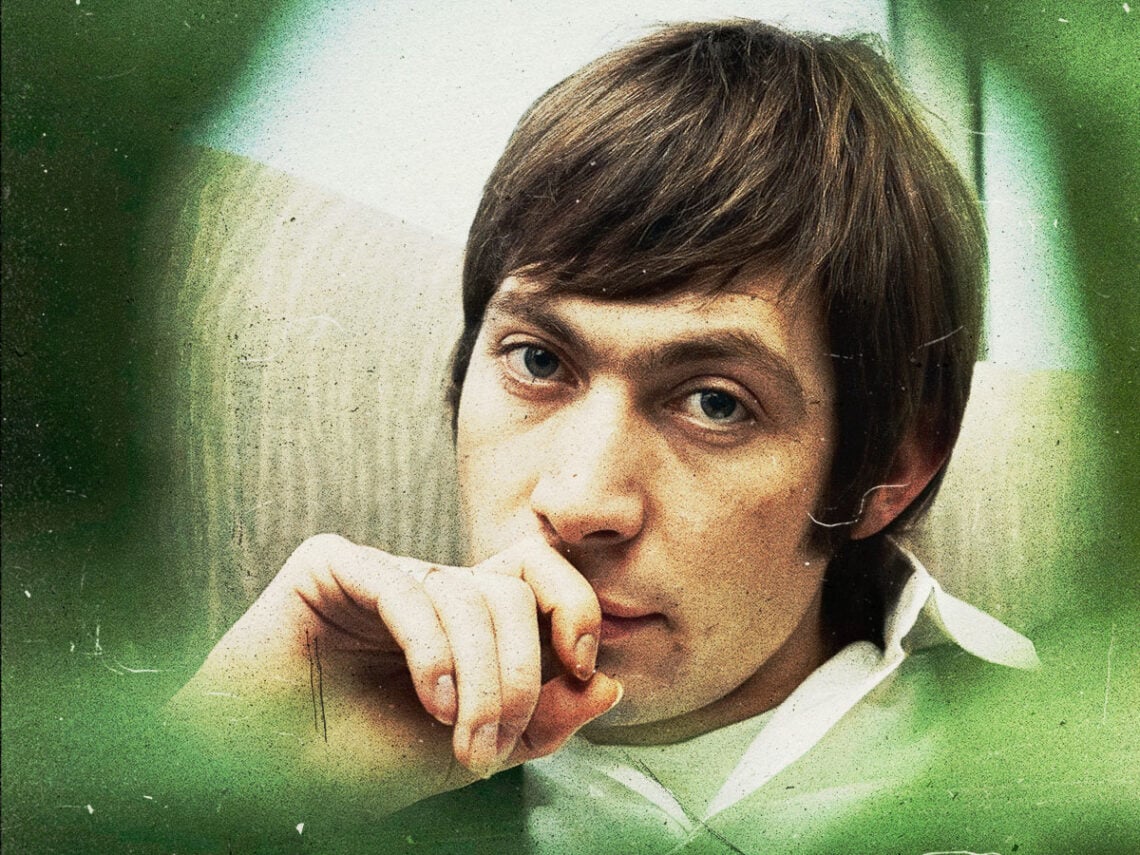
The strange accident that helped Charlie Watts kick his heroin addiction: “Keith picked me up”

Charlie Watts was always the most dependable cohort in The Rolling Stones, and without him, they’d have fallen apart.
Even when everything around him was a chaotic mess, the drummer was the glue that somehow managed to keep the band’s dysfunctionality at bay. As was famously displayed when a drunken Mick Jagger rang him on tour and uttered the fateful phrase: “Where’s my drummer?”
A few moments later, there’s a knock on the door; as Keith Richards describes in his memoir, “Charlie Watts, Savile Row suit, perfectly dressed, tie, shaved, the whole fucking bit. I could smell the cologne! I opened the door, and he didn’t even look at me. He walked straight past me, got hold of Mick and said, ‘Never call me your drummer again.’ Then he hauled him up by the lapels of my jacket and gave him a right hook.”
With that sort of regimental mindset, you’d expect him to swerve the typical vices that have seduced many less scrupulous rock stars. However, for a brief period in time, even he lost his way and succumbed to the deadly temptation of opiates. Oddly enough, this wasn’t in his youth either.
The late sticksman was always a very different character from the rest of those in the band, a factor that helped to smooth out their chemistry. After all, imagine if everybody acted like Keith Richards or Mick Jagger? It would simply be a disaster, and Watts was a calming influence on all of his colleagues.
His peers in the group almost saw him as a respectable older brother. For him to end up with a thirst for heroin was unthinkable to his bandmates, and the drug made him lose sight of himself. This was especially surprising given he had entered his 40s and had spent the best part of two decades largely staying clear of substances.

However, despite falling into a bad habit, Watts always maintained that he was never addicted, but he did confirm that he was perilously on the brink. Remarkably, the only reason why his reliance on heroin never enhanced to that stage was due to an intervention from Keith Richards.
The guitarist had become the unenviable poster boy for substance abuse during his heyday, but Richards couldn’t bring himself to lose another friend. Armed with some home truths, he stepped in after Watts suffered a scare. “Charlie Watts gives me the freedom to fly on stage,” Richards once remarked about his bandmate, which perfectly epitomised Watts’ selflessness in a sentence, showing just how much that he respected him.
The Stones suffered a crisis during the 1980s, and they almost split up. In fact, it’s a miracle that they survived what proved to be a decade of decay. Not only did Mick Jagger and Keith Richards begin to drift apart in different creative directions, but this was compounded by Watts’ slip into narcotics abuse.
“Looking back, I think it was a midlife crisis,” Watts harrowingly recalled during an interview with the Mirror. “I became totally another person around 1983 and came out of it about 1986. I nearly lost my wife and everything over my behaviour.”
After years of firmly holding onto himself in the whirlwind of fame, this slide was grossly uncharacteristic. As he continued: “At the end of two years on speed and heroin. I was very ill. My daughter used to tell me I looked like Dracula. I went mad, really. I nearly killed myself.”
It wasn’t a sudden realisation that he’d lost himself due to substances that made Watts see the error in his ways, but a freak incident that forced him to take a break from his dependency. “I broke my ankle when I was playing at Ronnie Scott’s, so I had to get straight,” he explained. “I just stopped cold… for me and for my wife. It [drink and drugs] was never me, really.”
However, the injury came after Watts had already received a wake-up call in the studio, and Richards offered him some stern words of wisdom. “I passed out in the studio, and that to me was a blatant lack of professionalism,” he commented. “Keith picked me up – this is Keith, who I’ve seen in all sorts of states doing all sorts of things – and he said, ‘This is the sort of thing you do when you’re 60’,” Watts added.
The confluence of these two shocks soon ushered the drummer back to a more recognisably sober lifestyle. But if it wasn’t for the broken ankle that Watts suffered, then his fate could have been ever so different, and from that day on, he never touched heroin again.
As Watts said, it “was never me”, yet he morphed into somebody he no longer recognised and became this person who was the antithesis of the real Charlie Watts.
