


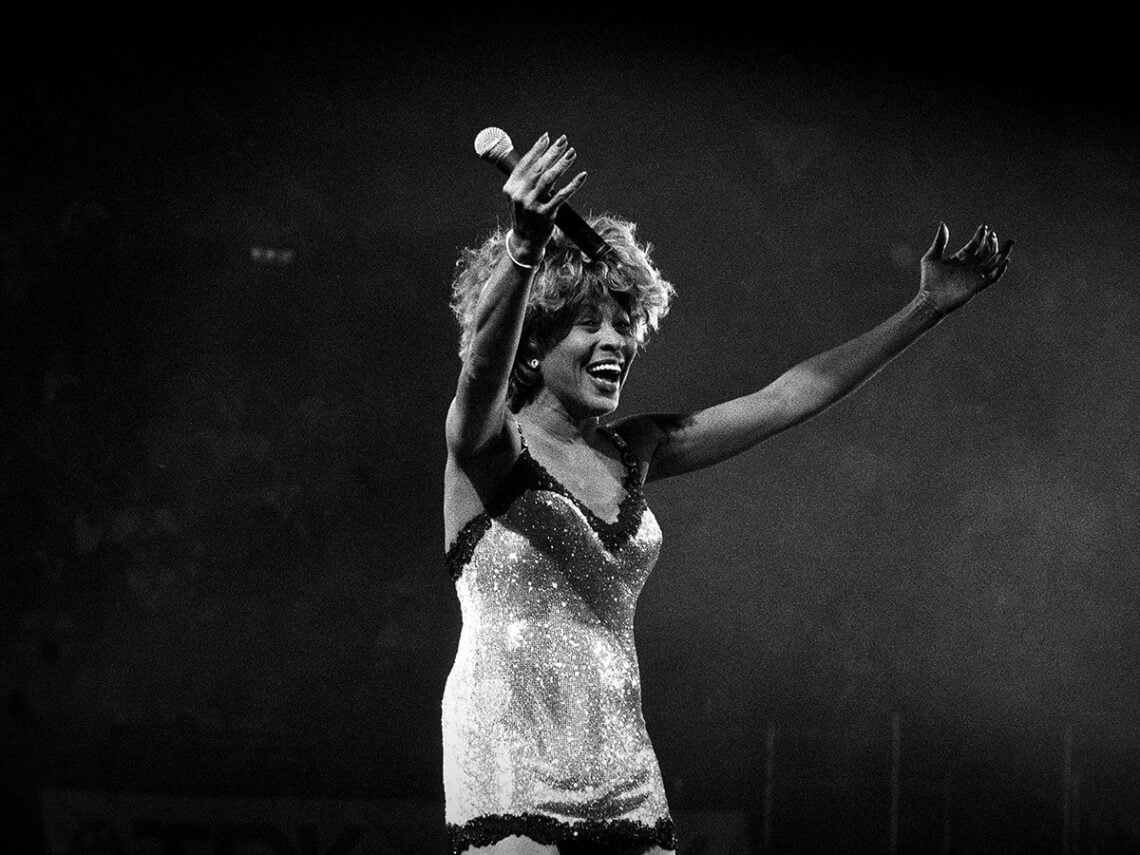
The story behind Tina Turner’s cover of Creedence Clearwater Revival: “Let’s do it, but let’s change it”

Ordinarily, when an artist performs a cover song, it acts as a simple ode to the song’s originator and doesn’t come close to threatening their legacy. But then, someone like Tina Turner comes along and flips that entire idea on its head.
She transcended genre completely, switching between the flawless skill of a soul and R&B singer, and the raucous power of a rock and roll icon, she could put her hand to anything and sprinkle it with originality. It’s what made her position as a potential cover artist more compelling, for she wouldn’t just paint within the lines set out by the previous artist. Instead, she would step outside of those and create a much wider sonic picture.
There’s no better example of this than her rendition of ‘Proud Mary’. Despite Creedence Clearwater Revival being responsible for the much-loved anthem, it’s Turner’s voice we all associate with it, given how personal she made her version. Her voice soars over the top of the chorus line and rumbles in the bridge, where she perfectly builds a sense of tension that releases at the conclusion of the track. Despite all of the odds, it felt as though it was custom-made for her.
But the reason why it does, is that Turner, along with her husband and collaborator Ike, looked at the bones of the song and decided to make it more bespoke to the black community, and in turn, more personal to her.
Turner explained, “So when we cut the album, we were lacking a few tunes, so we said, ‘Well, let’s just put in a few things that we’re doing on stage. And that’s how ‘Proud Mary’ came about. I had loved it when it first came out. We auditioned a girl and she sang ‘Proud Mary.’ This is like eight months later, and Ike said, ‘You know, I forgot all about that tune.’ And I said, ‘Let’s do it, but let’s change it’.”
Continuing: “So in the car Ike plays the guitar, we just sort of jam. And we just sort of broke into the black version of it. It was never planned to say, ‘Well, let’s go to the record shop, and I’d like to record this tune by Aretha Franklin’…it’s just that we get it for stage, because we give the people a little bit of us and a little bit of what they hear on the radio every day.”
It started as somewhat of a necessity, designed to fill a slot in the album. Then, it became a personal ballad that was morphed into a soundscape fitting for her voice and artistry. Before long, it simply became a hit that most of the world associates with Turner and not Creedence Clearwater Revival.
In fact, it would become her actual biggest hit, selling more than a million copies, reaching number four on the Billboard Hot 100, and even earning the musician a Grammy for ‘Best R&B Vocal Performance’ in 1972. While there have been many in history, Turner’s version of ‘Proud Mary’ can’t be far off being labelled the best in history.
