


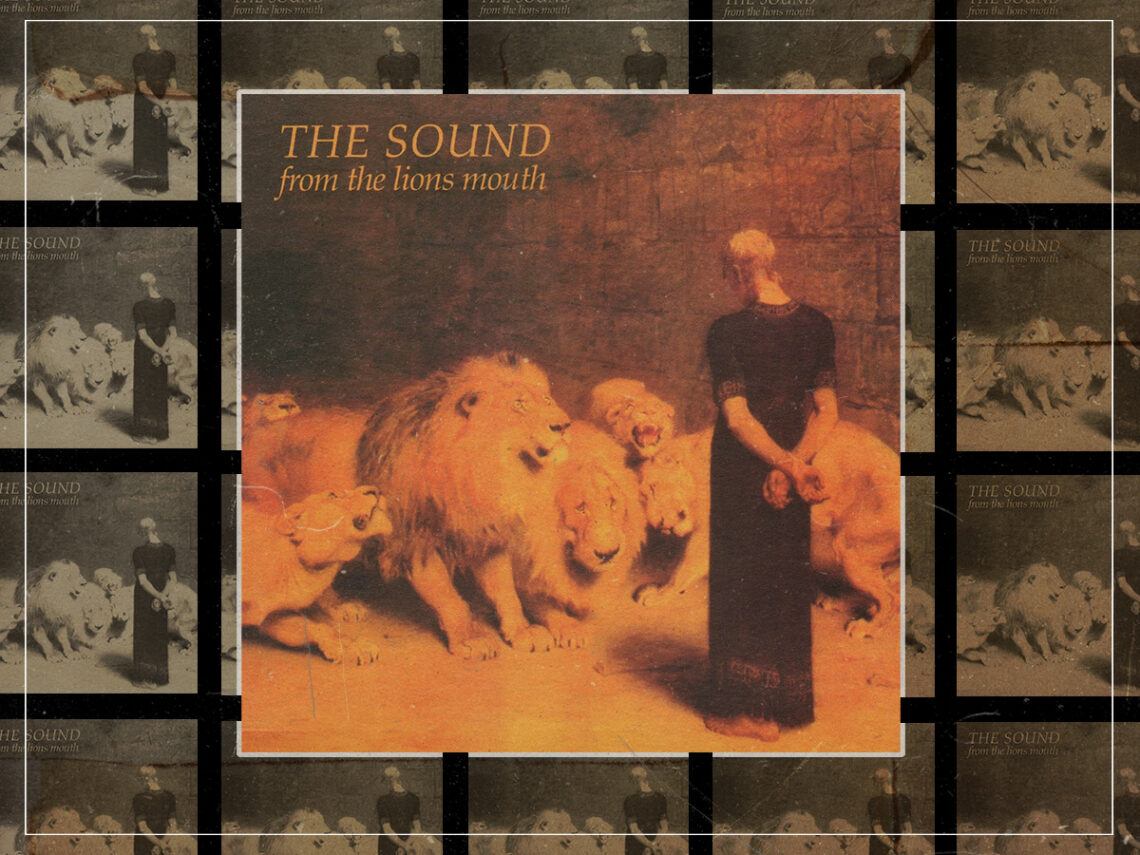
‘From The Lion’s Mouth’: The Sound’s haunting portension of tragedy

Rock music is typified by a high-energy 4/4 beat, guitar-centred instrumentals and a bold, upbeat vocal to boot. However, by the end of the 1960s, drummers of Ginger Baker’s ilk had thrown the 4/4 rule on the bonfire and, as John Lennon sang, “I’m lonely / Want to die”, a dawning age of punk and metal was poised to subdue the upbeat vocals by which the genre was previously identified.
While it wasn’t all sunshine and marshmallows in the 1960s, the following decade made it seem so by comparison. The hippies subsided to the sound of Iggy Pop’s opening lines in ‘Search and Destroy’, which ushered in an age of anger and anarchy that swept the Western world under John Lydon’s derisive gaze. This wave was powerful yet transient, with the spirit of youthful rebellion soon petering out into an age fraught with depression: post-punk.
If punk was fuelled by cocaine, post-punk was its more artistically fertile comedown. During this wave, bands like The Cure, Siouxsie and the Banshees and Bauhaus pioneered a decidedly overcast denomination of post-punk, known as gothic rock, thanks to references to black magic, Bela Lugosi and funeral parties. These bands composed just the tip of an iceberg that held to dour depths the eminent beauty of Joy Division, The Smiths and The Chameleons, among many others.
The punk and post-punk waves seemed to coincide with an artistic veneration of depression and suicide that Martin Rev and Alan Vega seemed to sense early on. Today, I draw your attention to perhaps the most comprehensive and moving study of depression in the post-punk realm, made all the sadder by its writer’s tragic demise.
In 1979, just as The Cure and Joy Division made their first discographic ripples, The Sound formed in London from the ashes of a punk band called The Outsiders. Fronting the group was singer, songwriter and guitarist Adrian Borland, a man who, like Ian Curtis, had a propensity for morose, foreboding lyricism. Curtis famously wrote of his struggle with mental illness and his strained marriage in songs like ‘Love Will Tear Us Apart’ and ‘The Eternal’. As The Sound’s early music reflects, Borland was almost entirely preoccupied with depression and existential crises.
The Sound’s debut album, Jeopardy, arrived in 1980, treating listeners to Borland’s political outcry in ‘Missiles’ and a taste of things to come in the enduring classic ‘I Can’t Escape Myself’. As the band regrouped for a follow-up, Borland’s songwriting took on a nuance of coherence in keeping with refinement in the music and production. The 1981 album From The Lion’s Mouth is The Sound’s indisputable masterpiece and one of the most candid broadcasts of depression in musical history.
It would be a stretch to describe From The Lion’s Mouth as a concept album, but it follows a long train of thought that reflects Borland’s unstable mindset. At this early stage in his career, Borland still harboured hopes of making it big, hence the optimism and sense of triumph in the emphatic opener, ‘Winning’. From an overcast post-punk soundscape, Borland sings of well-fought trials: “I was going to drown / Then I started swimming”.

The opening triumph soon falters to the anxious rhythms of ‘Sense of Purpose’ and ‘Contact the Fact’. In the former, Borland asks, “What are we going to do?” suggesting hope, but the verse contains the first suggestion of suicide, “I’ll take my life / Into my own hands / I’m the one that I will blame / I’m the one that understands”. Meanwhile, the latter addresses a lover in a lament, “Everything I touch, turns to dust / And everyone I turn to, turns on me”.
Throughout the album, Borland gives fragments of information, very few of which scream mental stability. Any embers of hope are duly extinguished as he grapples with more relationship woes in ‘Skeletons’ and a divine power in ‘Judgement’. In the latter, Borland asks, “Can there really be someone up above me? / Who judges me when my time is up?” before questioning the meaning of life itself: “I can’t watch and wait / Just to pay the price of his judgement”.
On side two, ‘Fatal Flaw’ is perhaps the most candid contemplation of suicide on the album. A fall from the grace of ‘Winning’ is complete as Borland sings, “Right now I’m all weakness,” before revealing that he’s “been growing away from the light” to the point of no return. Ultimately, he feels that his only option is to “face the fatal flaw,” his inevitable, programmed demise.
Towards the end of the record, Borland maintains his abject emotions while turning his eyes from the mirror to the window. In ‘Silent Air’, he sings of a “storm that rips anger” in his heart and a “silence that haunts this troubled world” that will, as far as Borland can see, “end in disaster, on the rocks, in pieces.” Finally, The Sound brazenly enter a ‘New Dark Age’ as all hope is lost to the outside world.
Despite the word From The Lion’s Mouth, the world didn’t come to an end in 1981. Borland and The Sound continued to create new music throughout the 1980s but failed to break through on the level of some of their contemporaries, such as The Cure and New Order. In the 1990s, the group finally dispersed, most taking up ordinary day jobs.
After the music ground to a halt, the tragedy it dictated began to manifest itself. In 1993, keyboard player Colvin ‘Max’ Mayers died following complications with AIDS. Meanwhile, through the 1990s, Borland continued to release music in a quiet solo career, all the while battling with his depression, hospitalised on several occasions for psychiatric care.
In 1999, unable to overcome his long-suffered mental condition, Borland committed suicide by jumping in front of a moving express train near Wimbledon Station in London. He was just 41 years old. One can’t help but draw a final parallel between Borland and Ian Curtis, who more famously met an end by his own hand in 1980.
