


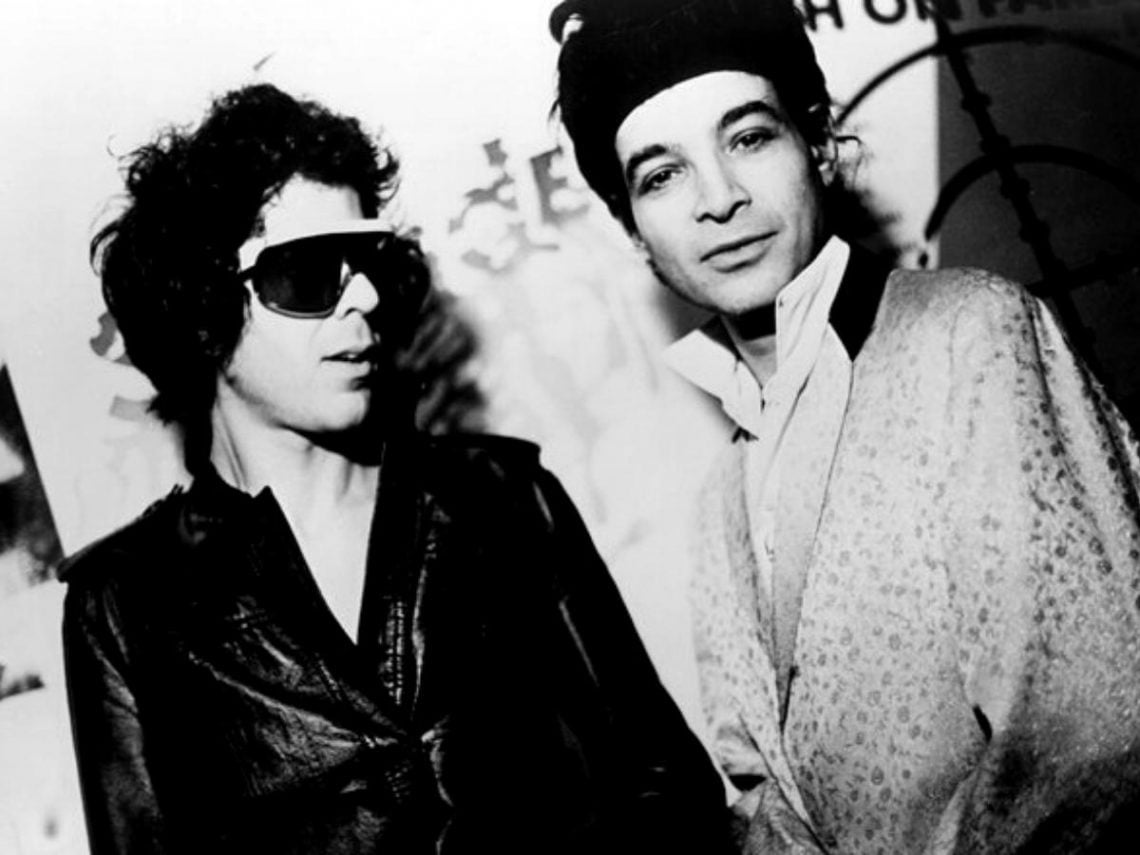
Ranking the Suicide studio albums in order of greatness

Suicide formed in 1970 with the meeting of New York natives Martin Rev and Alan Vega, the former an experimental multi-instrumentalist from an avant-garde jazz background and the latter an aspiring vocalist, guitarist and trumpeter. Initially, the pair welcomed Paul Liebegott as their primary guitarist during early underground gigs in Manhattan as they channelled the gritty, experimental energy of mid-1960s Velvet Underground.
By the end of 1971, Liebegott had left Suicide, leaving Vega and Rev to handle business as a duo. They managed to continue on the gig circuit as one of the earliest forms of the now-ubiquitous electro duos thanks to primitive drum machines, Rev’s battered Farfisa organ, and an assortment of effects units. The fascinating sound of their early material won Suicide opening slots for the likes of the New York Dolls and The Fast as they worked their way toward the recording studio.
‘Rocket U.S.A.’ arrived as the band’s first single in 1976 and was to be followed by the landmark eponymous album the following year. As their name suggests, Suicide’s early sound was one of intense horror and looked to point fingers at the American way of life.
In a 2002 interview, the late Vega revealed that the band’s name was inspired by the title of a Ghost Rider comic issue titled ‘Satan Suicide’. “We were talking about society’s suicide, especially American society,” he added. “New York City was collapsing. The Vietnam War was going on. The name Suicide said it all to us.”
Over the years, Vega and Rev performed and recorded with each other sporadically, gradually developing their sound with the advent of dance music and advanced electronic production equipment. While they never broke into the mainstream, the duo are now revered as the most important synth-punk pioneers of the 1970s and have been credited as the first band to label their sound “punk music” after adopting the term from a Lester Bangs article.
Today, we take a look back through Suicide’s seminal, intriguing and, at times, challenging oeuvre.
Suicide albums ranked from worst to best:
5. Why Be Blue (1992)
At the bottom of the pile is Suicide’s 1992 effort, Why Be Blue. This album lacks most of the redeeming features of its flanking releases while breaking into unsavoury sonic territory. The album brings chirpy ’80s hangover sounds that are predominantly treated with the same mottling wobble-board effects that drown out Vega’s indecipherable lyrics.
The production is shoddy, and the compositions achieve little more than satirising ’80s pop music. Why Be Blue lacks Suicide’s usual creative edge and fills the void with an unlistenable jumble of ideas linked only by the chaotic warping throughout.
4. American Supreme (2002)
After a ten-year hiatus, Suicide returned in 2002 with their fifth and final album, American Supreme. The release brought the pair’s experimental edge to an updated post-rave era electro sound. In some areas, the music ventures interesting hip-hop-inspired samples and loops (‘Televised Executions’, ‘Wrong Decisions’); in others, trippy trance flourishes (‘I Don’t Know’, ‘Death Machine’).
Admirably, American Supreme once again displayed Suicide’s eagerness for musical development, but by 2002, this newly ventured territory had already been chartered by the ravers and hip-hop pioneers of the ’90s. Despite the ten-year wait, the material felt somewhat disorientated and contrived.
3. A Way of Life (1988)
In A Way of Life, Vega and Rev take a turn as close as they would dare towards a commercial sound. The horrifying edginess of their earlier material makes way for a more ethereal and passive sound inspired by the 1980s’ synth-pop craze.
The album reaches a high point with ‘Surrender’, one of the duo’s most romantic and earnest pieces, which tumbles with sentimental beauty while somehow retaining a thread of Suicide’s devious DNA. Meanwhile, hits like ‘Jukebox Baby 96’ and ‘Rain of Ruin’ pick up the pace and bring a new side to their nostalgic post-rock sound.
2. Suicide: Alan Vega/Martin Rev (1980)
In 1980, Suicide followed up the haunting debut with Suicide: Alan Vega/Martin Rev. The album made a satisfactory departure from its predecessor prospecting fruitful new territory. Omitting some of the intensity and horror of Suicide, this second effort focused on a more dance music-oriented sound as Vega showcased his Elvis-inspired croon for the first time.
The album kicks off on a high with the glamorous ‘Diamonds, Fur Coat, Champagne’ and flows through an eclectic spread of tempos and textures to rival the debut album’s comparatively basic sound. From the finger-clicking bounce of ‘Be Bop Kid’ to the sexy and smooth ‘Shadazz’, this one has something for everyone.
1. Suicide (1977)
Indisputably, Suicide made their most profound mark on the musical map with their eponymous debut record. The release concurrently defined and championed the synth-punk niche and left an assertive splat of horror in the psyche of its unsuspecting listeners, much like the one seen in the apt album artwork.
The pacey synth-driven beats give an eerily danceable echo of classic rock while Vega’s mumbling angst-ridden vocals send a tingle down the spine. The album is packed with classics like ‘Rocket U.S.A.’ ‘Ghost Rider’ and ‘Cheree’, but its most beautifully horrifying moment was the murderous ‘Frankie Teardrop’.

Never Miss A Beat
The Far Out Punk Newsletter
All the latest Punk content from the independent voice of culture.
Straight to your inbox.