


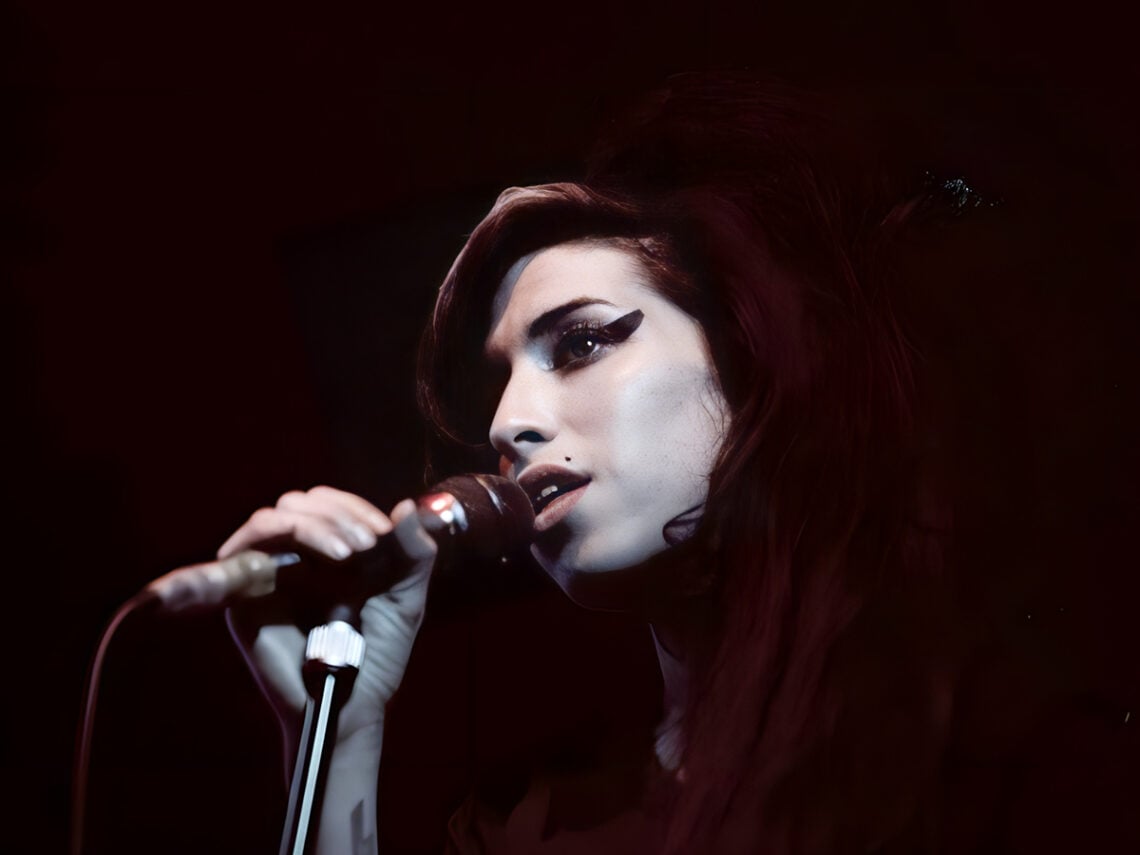
The soulful start: The first album Amy Winehouse truly loved

So much is made of music in the 2000s, and the emergence of “indie sleaze”.
In the void left by Britpop came a new cohort of alternative bands, clad in Lacoste and skinny jeans. With every passing year, the romance of this era grows in cultural discourse, and we herald the bands involved as the faces of that generation. But really, that isn’t true. There was one artist who was the true lightning rod of that era and her name was Amy Winehouse.
She was a tortured soul who, in her desperately sad but short career, provided music with some of its most groundbreaking and influential moments. From her subtle, timid breakout to her charismatic and unpredictable chart domination, she was an artist who remained unique from start to finish, never wavering under the heavy expectancy of commercial expectation.
As a result, she experienced a heady sense of commercial success with her 2006 record Back To Black. It was her magnum opus and a record that displayed a true, unfiltered sense of her artistry. From Mark Ronson’s jazz-inspired arrangements to Winehouse’s deeply soulful vocals that bled with every utterance of a syllable, it was a masterclass in intimate songwriting.
It thrust Winehouse forward as the modern torchbearer of authenticity, someone whose music could bridge the gap between classic icons like Etta James and Tony Bennett, but develop it into a more contemporary context. One that engaged with the troubles of modern life and embraced the colloquialisms that existed within that.
When she met with Ronson, in the depths of London’s vibrant music scene, she was introduced to a producer who could help translate a myriad of modern ideas. His background in hip-hop production and DJing meant that he had an acute ear for rhythmic ideas, which was crucial to the originality of Winehouse’s songwriting sound.
But the power in it was her voice. When Ronson’s innovative sensibilities were paired with Winehouse’s classic profiles, they ended up creating something uniquely familiar. It would be fresh and groundbreaking one minute, while comforting and conventional the next, creating an accessible palette for her vitally compelling storytelling to exist.
So while she lived hard and fast, on the rollercoaster of modern life, it was no surprise that Winehouse’s influences were steeped in tradition. Winehouse regularly professed that Tony Bennett was a huge influence on her style, while Carole King’s Tapestry opened her mind up to the world of sonic storytelling. But it was actually Dinah Washington’s The Swingin’ Miss D, that sat at the bedrock of her influence.
“Amy’s nan Cynthia and her father Mitchell were jazz nuts so Amy heard anything from Ella Fitzgerald to Thelonious Monk from a young age,” her mother Janis explained. Adding, “Dinah Washington probably made the most impact. Just before she passed away, Amy also recorded with Quincy Jones, who arranged The Swingin’ Miss D.”
The unheard sessions of Winehouse and Quincy Jones will remain one of the most painful relics in music history. Jones would have not only provided a pivotal musical moment for Winehouse and her career, but perhaps a safe space in which his wisdom could have cut through the noise of bad influence.
