


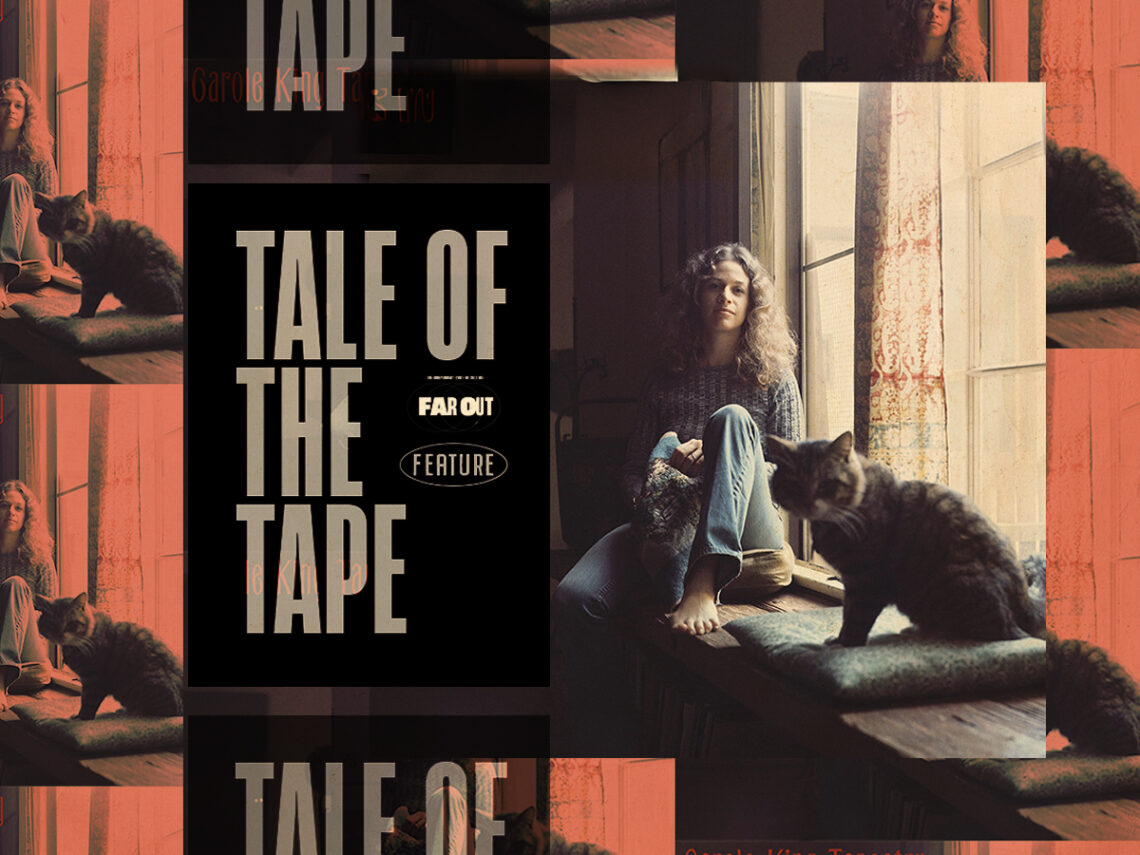
Tale of the Tape: The story of Carole King’s classic album ‘Tapestry’

In the 1960s, it wasn’t exactly unusual for the greatest songwriters to not have a record of their own original material, and for Carole King, she had yet to make an impression on the charts with anything recorded under her own name.
Having established herself as a formidable songwriter, penning tracks such as ‘Will You Love Me Tomorrow’ by The Shirelles while still only a teenager, and also offering up hits for the likes of Dusty Springfield and The Monkees, King was one of the biggest talents to emerge from the supremely talented Brill Building collective, working alongside her then-husband, Gerry Goffin, and brushing shoulders with the likes of Burt Bacharach, Neil Sedaka and the team of Jerry Lieber and Mike Stoller.
However, the collapse of her relationship with Goffin led her to rethink her career, and considering the landscape of popular music began changing towards the end of the decade, whereby the biggest acts were writing their own material, she took the plunge into becoming an artist in her own right instead of offering her services out to other artists. Partially down to the encouragement of James Taylor, she found herself relocating to California and immersing herself in the burgeoning Laurel Canyon scene.
It was there that she released her debut album, the simplistically titled Writer, in 1970, but unfortunately, she received little fanfare for the record despite it being a stellar reflection of her abilities. Her second album, however, was a different story. Released only a year later, Tapestry was the record that propelled her into the spotlight as not just a tremendous songwriter, but a performer with plenty to offer to the world.
Consisting of 11 songs that were either written solely by her, or with the assistance of Goffin or Toni Stern, Tapestry is a chronicle of not only her songwriting prowess but also her breakup with Goffin, with songs like ‘It’s Too Late’ seemingly directly addressing the collapse of their relationship, and ‘I Feel The Earth Move’ looking more outward at her newfound freedom, both as a writer but in her personal life.
It’s indisputably an album with plenty of heart and soul, and that’s reflected in not just the original songs that King penned for the album, but the two older songs she revisits, which both take on different moods when played in these new contexts.
Taking ‘Will You Love Me Tomorrow’ and slowing it down significantly when compared to The Shirelles’ original recording, it is transformed into an even more heartbreaking outpour of acceptance that her relationship is doomed. At the same time, her version of ‘(You Make Me Feel Like) A Natural Woman’, originally recorded by Aretha Franklin, has fewer changes to the original arrangement, but its positioning at the end of the album is a triumphant reclamation of her autonomy as a woman and as a songwriter in her own right.
Tapestry ended up being a smash hit, becoming her best-selling record and remaining that way, and at the time of its release, it broke all sorts of records in terms of its chart performance, outlasting any other record released at the time in terms of the number of consecutive weeks it spent in the Billboard album chart. The new material on the record is not only celebrated to this day, but many of the songs have found their place in the world as pop standards, with ‘You’ve Got a Friend’ and ‘I Feel The Earth Move’ both being covered by countless artists in the subsequent years.
As much as King’s catalogue is full of delights, Tapestry remains the finest collection of her work to have ever been released, and one of the most succinct distillations of a songwriter’s talent to have been put on a record. It’s an astounding reflection of womanhood, liberation and heartache, but also a celebration of just how emotive and personal songwriting can be.
