


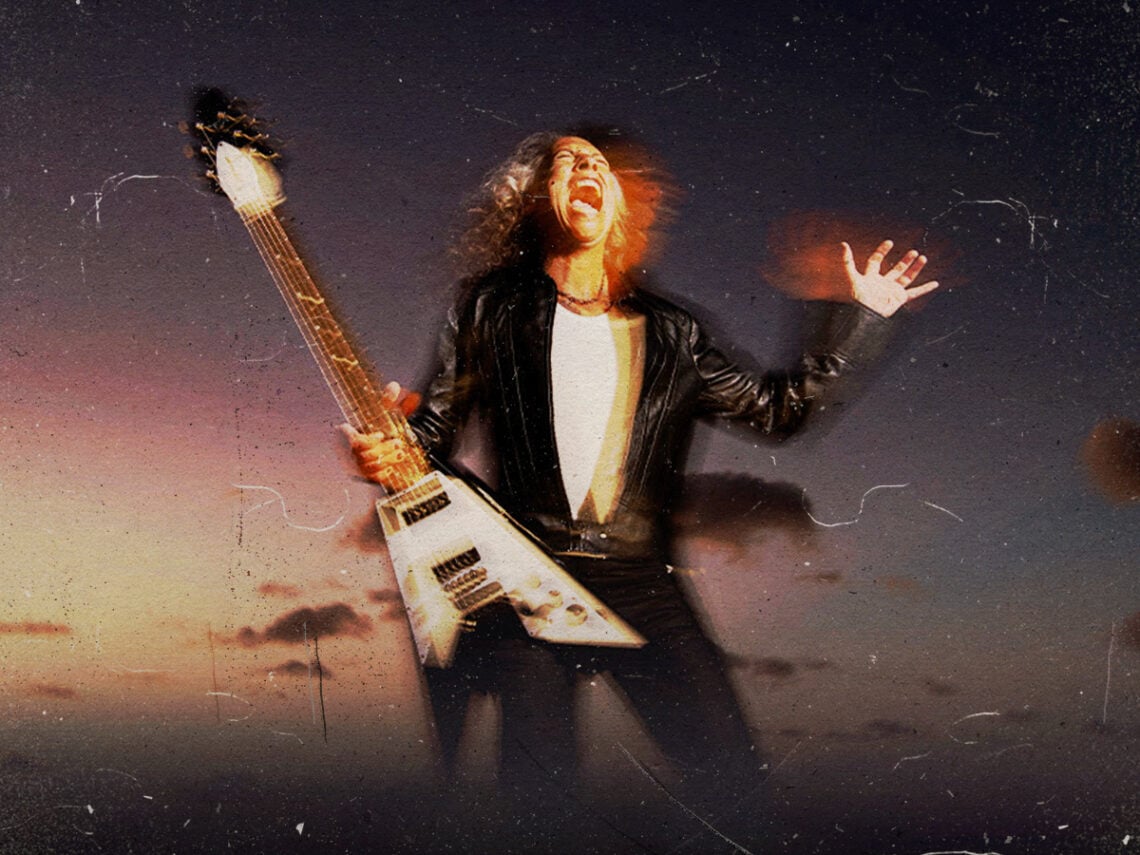
The song that taught Kirk Hammett how to solo

For any rising guitar hero, the idea of soloing can seem a little bit intimidating. Even though anyone can try their hand at getting cowboy chords under their fingers, even touching something written by the likes of Eddie Van Halen is enough for musicians to break out in a cold sweat trying to play along with it for the first time. Although Kirk Hammett would later become one of the greatest soloists of his time with Metallica, Rush’s ‘La Villa Strangiato’ hooked him into proper guitar finesse.
When looking at the Canadian power trio’s early discography, it’s easy to see how they would fit into the traditional progenitors of heavy metal. While the band may have worn their influences of bands like Genesis and Yes on their sleeves, their love of blues-infused rock and roll and Led Zeppelin led to songs that could have stood alongside the heaviest work that Black Sabbath ever made.
Once the band started to gel with founding drummer Neil Peart, they were treated like pariahs of the music industry, coming close to a breakup when making the album Caress of Steel. When their label began leaning on them to come up with some single material, they figured that they would stick to their principles, ultimately winning their freedom with 2112.
This would be the entry point for Hammett, recalling in Beyond the Lighted Stage, “It took me on a journey instantly, and then I bought the record and noticed that there were only three of them. And they were wearing some funky clothes, but I just thought, ‘How can three guys make such a sound?’”.
Since their label had no idea how Rush got their fanbase, they let them do whatever they wanted, knowing it would sell. Now that they had the golden ticket to be as weird as they wanted to be on the record, albums like A Farewell to Kings and Hemispheres would be some of the most outlandish progressive music of the time, including a song so long and adventurous it had to be spread out over both albums.
On the flip side of Hemispheres, ‘La Villa Strangiato’ would be a massive undertaking for every member of the band. Although they were determined to get the song right from top to bottom, they quickly realised it would have been impossible trying to get it right in one take, eventually admitting defeat and performing it in three parts.
When it came to Lifeson’s guitar solo, though, Hammett was transfixed, recalling, “The way that Alex played that long open solo had a huge impression on me. Because he was creating a mood by playing very sparsely and then slowly amping up that intensity. I just thought that was the greatest thing in lead guitar dynamics and phrasing. I see them as the high priests of conceptual metal”.
Lifeson would continue to be the fire in the band even when the group changed their sound. While the 1980s would see them playing around with various keyboard textures, Lifeson would always be fighting to get the guitar into a prominent position in the mix, even turning in solos that could give Eddie Van Halen a run for his money on songs like ‘Freewill’ and ‘The Analog Kid’. Rush was known for covering many bases with their music, but Lifeson was always the one anchoring the song down with heavy chords and fretboard fireworks.
