


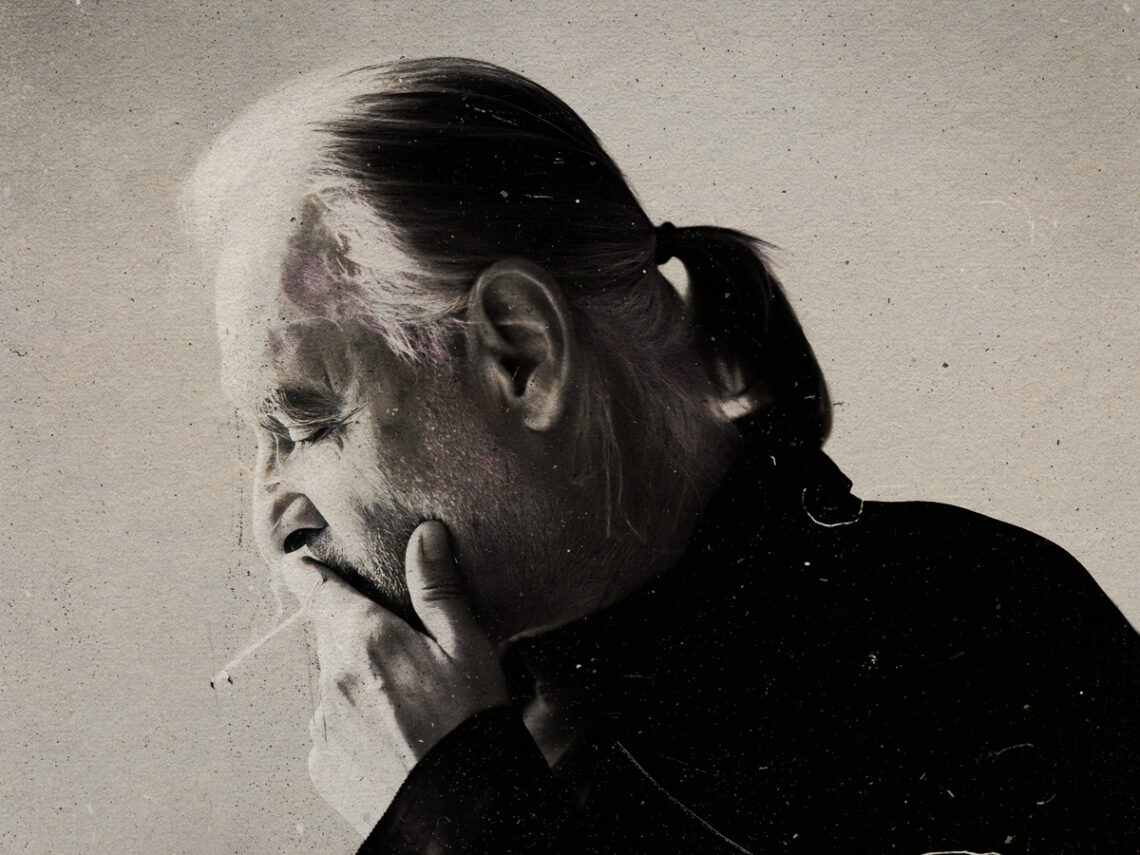
The slow, steady excellence of Hungarian director Béla Tarr

The art of slow cinema seems to be lost in the frenetic noise of contemporary filmmaking, where editing is kept snappy so as to not lose the attention of the audience and superheroes are tossed across the screen seemingly every five seconds or so. Yet, not everyone is so on board with the concept, with the Hungarian filmmaker Béla Tarr having made some of the most magnificent and steady examinations of cinema to date.
Emerging in the early 1980s, Tarr’s debut came in the form of the 1982 drama Panelkapcsolat, an absorbing tale about a husband and wife whose marriage is slowly breaking apart. Containing many of his later hallmarks, Panelkapcsolat starred largely unknown actors and followed ordinary people in a cinema vérité style that pulled the focus of the film onto the beauty in the banality of life.
Establishing a good foundation for his later progress, as Tarr grew as a filmmaker, Panelkapcsolat started to look increasingly pedestrian, with 1988’s Damnation and 1994’s Sátántangó presenting extraordinary cinematic landscapes that seemingly transported the viewer to new planes of reality. By this time, the idiosyncratic Hungarian director had become known for his rather bleak and pessimistic representations of life, yet his works aren’t purposefully defeatist.
“Film by film, I invented my cinematic language,” he stated in an interview with IndieWire, “This language is my language. It came from me. I cannot repeat it. I cannot use it for other shit”.
Very much a unique singular voice in contemporary cinema, Tarr’s films pour with a rare honesty that feels like the product of mother earth, speaking to an innate truth about the human condition. Whilst such may be interpreted as bleak and pessimistic, on the contrary, his films are life-affirming, exploring the existential questions that modern cinema will not and seemingly cannot.
His seven-hour film Sátántangó is often discussed as being his very best, telling the story of the residents of a community farm whose lives are thrown into disarray when a former co-worker of theirs, previously thought to be dead, returns to the community. A devastating watch, Tarr’s film explores how human nature is built to turn on itself, using time as a way to bottle the existential desperation of the people, creating an eerie, ethereal dialogue in and of itself.
A lover of slow, steady cinema, as Tarr later expresses in the same interview: “Most films just tell the story…action, fact, action, fact, I don’t fucking know what. For me, this is poisoning the cinema because the art form is pictures written in time”.
Continuing, he adds, “It’s not only a question of length…it’s a question of heaviness. It’s a question of can you shake the people or not?”.
Rather predictably, this leads the Hungarian artist to comment on the state of modern cinema on the whole, lambasting the pace and noise of such flicks. “Most shit today…they aren’t films, they’re just comics,” he passionately states, “It’s just blub-blub-blub, a bubble of a sentence and then we go to the next section”.
From his debut feature film through to 2000’s masterpiece Werckmeister Harmonies and the cinematic enigma of The Turin Horse in 2011, Tarr has long maintained a dedication to his craft, imprinting his own mind’s eye onto celluloid.
