


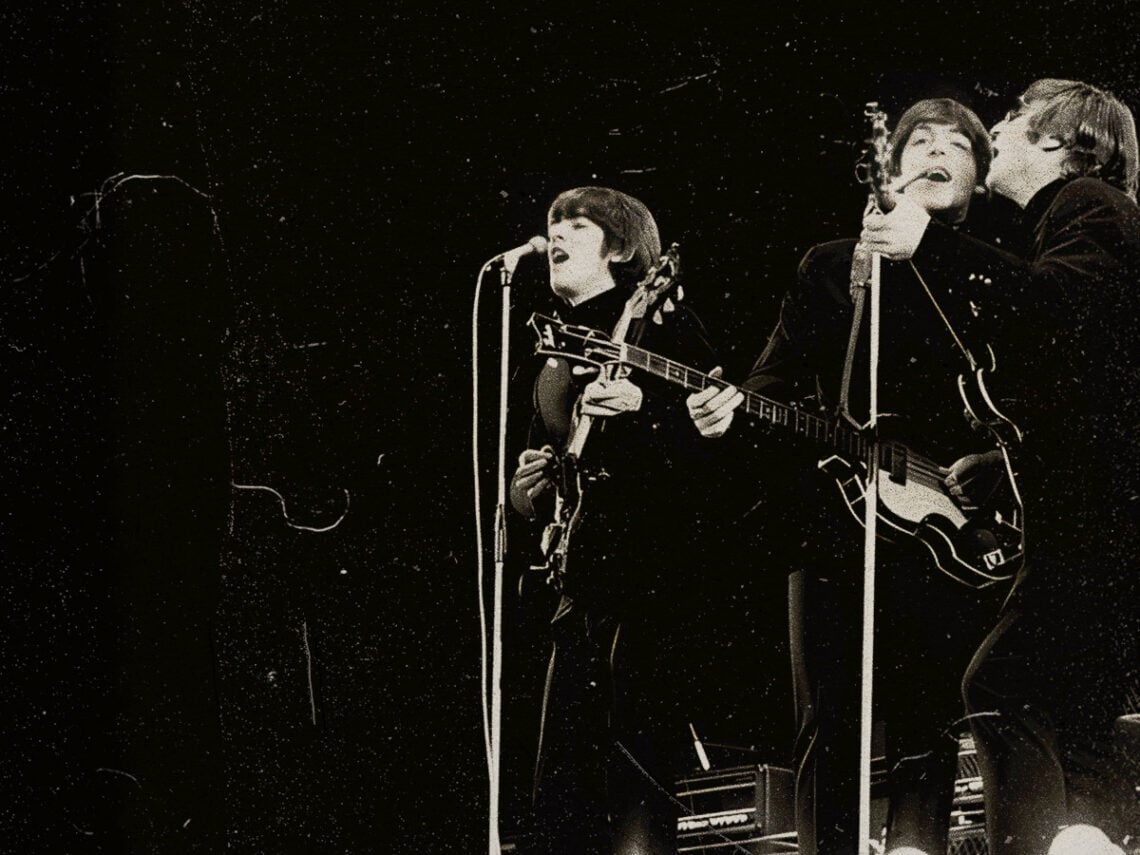
The shows John Lennon wanted The Beatles to be remembered for: “Everybody’s screaming”

Considering The Beatles were the greatest band, likely in history, they didn’t have to prove it on the live scene.
Unlike every other band in the world, that have to prove its worth on a nightly basis, The Beatles could simply stand on the stage and let the world fall into a frenzy. At Beatlemania’s hysteric peak, the music was simply illegible, and the band cobbled together through shows, trying to understand where in the set they were and if the next song they played would finally punctuate the deafening screams.
It’s understandable then that in 1966 they decided to jack it all in. What was the point in wasting months of their precious career, playing gigs that nobody could even hear? Not least when they had a catalogue of esoteric ideas burning under the surface, waiting to be unveiled in the studio, should they be given longer periods of time in there, without the growing pressure to leave and head out on the road.
So in the second half of the ‘60s, they became the greatest studio band of all time, setting the standard for what a great record should sound like, but it meant that when it was all said and done, and The Beatles chapter could finally be brought to a close at the end of the decade, nobody had really experienced what it was like to see them live. At least, not according to John Lennon.
“I don’t think anybody in the world ever saw us outside of Liverpool and Hamburg and a few places in England where we travelled to,” he explained, “Because that’s when we had to perform live to a small audience in a dance hall. We had to hold them. We were great live performers then.”
He added, “Next thing is we’re the biggest thing. Everybody’s screaming. Nobody hears the music. We lose interest in the music. That’s why, in one way, it was good because we went into the recording scene and really sort of expressed ourselves through the records then because we could no longer do it outside.”
A common rebuttal to such a claim would be their iconic gigs at Shea Stadium in 1965, when the band played a raucous show to over 50,000 fans, and if you thought that surely was a moment in time that those in attendance could say was one of the greatest gigs of all time, and ultimately proved The Beatles were a live band they had seen, again, not according to Lennon.
“Shea Stadium was a fantastic happening, and the vibrations and the feeling was fantastic,” he explained, “But it wasn’t rock and roll. It was a happening, man. And that’s fine. But I’m interested in playing music, right? That’s right. So now if I go on the road, I know people aren’t going to scream. They’re going to dig it.”
Therein lies the true essence of why the band broke up. It was a deep desire to engage with music on a purer level than before, and purity always meant heading out on the road, playing live. Freed from the expectation of being in the biggest band in the world, come the ‘70s, Lennon could do that again.

Never Miss A Beat
The Far Out Beatles Newsletter
All the latest stories about The Beatles from the independent voice of culture.
Straight to your inbox.