


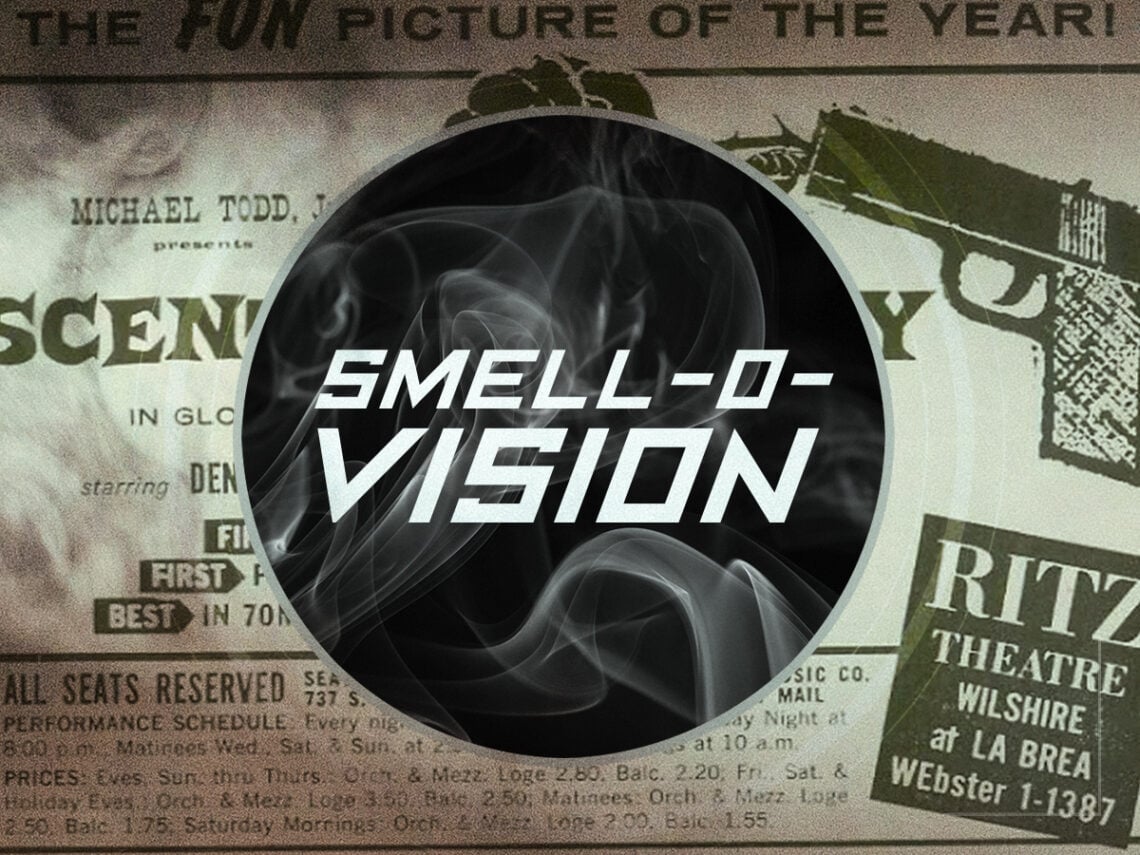
The short, pungent, and altogether questionable history of Smell-O-Vision

Anyone who has ever been to a cinema in their lifetime, which is probably basically everyone in the world above the age of three, knows exactly what the inside of it smells like, and that smell is sweet, slightly stale popcorn and carpets. It’s the same in every country across the globe, and it has been that way for decades.
But there have actually been notable exceptions to this rule, long before the days of 4DX cinema screenings where you can be thrown around until you’re sick to the gills while being misted with artificial rain and lord knows what else, moviemakers had the idea of producing films that you could enjoy smelling as well as watching.
Things came to a very pungent head in 1960, which we’ll come to in a moment, but actually, according to the LA Times, the idea of forcing people to smell films first came about even before proper sound, with one cinema in the early 1900s dipping cotton wool in rosewood oil and then using an electric fan to waft the scent into the faces of unsuspecting movie goers who were just hoping to enjoy a newsreel about a college football game.
By the time the 1940s came around, cinemas had progressed to actually matching scenes to smells, with an Errol Flynn pirate adventure called The Sea Hawk, even featuring the smell of tar from a sailing ship to add to the overall experience. Plus, there was a Clark Gable film called Boom Town, during which scents were even linked to different characters appearing onscreen, including tobacco for Gable and perfume for his co-star Hedy Lamarr.
There were issues to all this however; for one thing people couldn’t get one smell out of their noses fast enough to properly appreciate the next one, leading to ‘olfactory fatigue’ and so enter a man called Hans Laube, a famed osmologist from Switzerland who, during the 1940s, patented a system for cleaning the air in large auditoriums that had been used to great effect throughout Europe and was now working out how to put it into reverse.
He produced a film together with a colleague called My Dream for the World’s Fair that was a 35-minute piece during which he could release 32 different odours depending on what was happening onscreen, including roses, coconut, hay and peaches.
This ‘smell-o-drama’ was a gimmick, but not widely popular enough for much else to happen in the world of stinky movies until the late 1950s, when Laube teamed up with a producer called Michael Todd Jr, and the pair took the former’s ‘Scent-o-vision’ and changed it to ‘Smell-O-Vision’ with dreams of a roll-out across America.

Along with some cheeky bits of marketing copy (“a picture they call a scentsation!”), the duo developed a system in which containers of different perfumes could be linked directly to a movie reel, which would then be pierced by needles on cue, releasing the exact scent for the desired scene. Fans were then used to pump the smell through a mile’s worth of tubing and released under the cinema seats, before, at the end of the film, when the system was rewound and the containers were refilled, ready for the next showing.
It was debuted in 1960 with a fittingly titled film called Scent of Mystery, for which they were able to entice actual proper film stars like Elizabeth Taylor and Denholm Elliot and which actually went down quite well, even including a few clever gags like one character drinking coffee but the audience knowing it was in fact brandy thanks to the smell. But some moviegoers were less impressed, complaining that the smells arrived too early, confusing matters, and with a very distracting hissing sound. And the film itself wasn’t good enough to survive the negative press, with one critic caustically suggesting they pump laughing gas in instead to counteract the lacklustre script.
Smell-O-vision was duly scrapped, only making brief appearances in the 1980s and early 2000s via the use of specially made scratch’n’sniff cards, although one Hong Kong director made a movie called Lavender, spending $1million to pump perfume through the air conditioning system while the film played, saying he was inspired by those attempts many years ago.
