


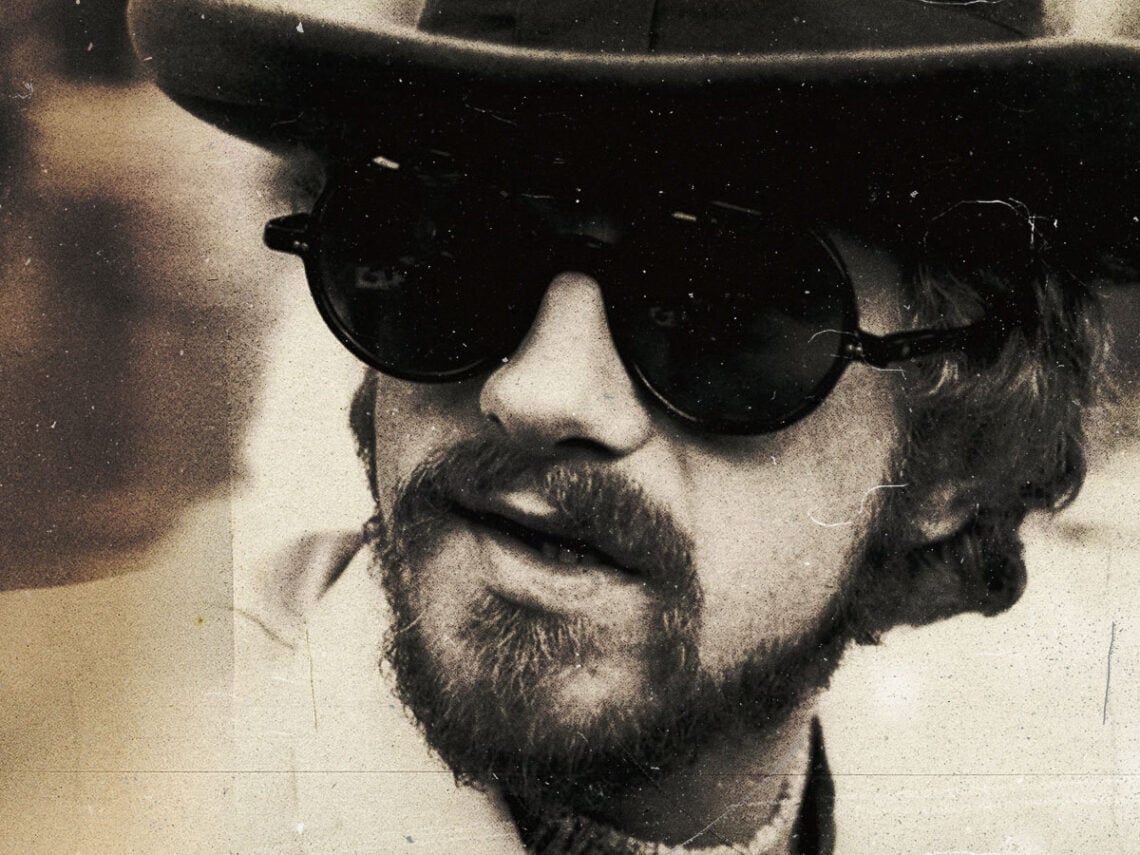
When The Rolling Stones hired Andrew Loog Oldham as their manager

Today, The Rolling Stones remain rock and roll’s most emblematic band more than six decades after their establishment. When the formative members, Brian Jones, Mick Jagger, Keith Richards, Charlie Watts and Bill Wyman, first coalesced to bring blues to the UK charts, not even their wildest dreams could illustrate the path to come.
The band’s first pivotal moment saw the meeting of Jagger and Richards on platform two of Dartford Railway Station. The pair, aged 18 and 17, respectively, found common ground in a mutual appreciation of American blues music by the likes of Muddy Waters, Chuck Berry, Little Richard and Howlin’ Wolf. Thankfully, that fateful day Jagger had been carrying a stack of blues records, gifting the comparatively introverted Richards the perfect conversation starter.
The pair began collaborating in several groups, playing covers on the London blues circuit. By March 1962, they had met Jones and Watts, who played together in a band called Blues Incorporated at the Ealing Jazz Club. Following a series of line-up changes and iterations, The Rolling Stones, named by early band leader Jones, played their first gig with the stable ensemble we recognise today on January 12th, 1963.
In August 1964, Andrew Loog Oldham humbly stated: “We [referring to management partner Eric Easton] didn’t make the Stones stars; the public did. Three years ago, it was possible for managers to make stars. These days it is the fans who dictate who will be stars. We simply helped draw attention to The Rolling Stones, and the public accepted them”. The modest statement excessively curtails what was, in truth, a pivotal managerial success. Without the vision and guidance of Oldham and Easton, the Rolling Stones wouldn’t have had their big break when they did.
The Stones first fell under Oldham’s nose in May 1963, when the aspiring producer and manager was just 19 years old. The driven teenager became competent working initially as a manager for the fashion designer Mary Quant. He later worked for The Beatles under the vital mentorship of Brian Epstein as part of the latter’s NEMS programme.
In April 1963, Oldham was advised by Peter Jones, a journalist at the Record Mirror, to check out this up-and-coming rhythm and blues group, The Rolling Stones. Oldham duly agreed and went to see the Stones play at the Crawdaddy Club in Richmond. Oldham later recalled that he saw something in the group from the first moment he looked at them. Beyond their sound, the Stones were aesthetically a highly marketable product.
That night, Oldham had attended the gig with Easton, with whom he shared an office on Regent Street. “I called Mick [Jagger] over to meet Eric,” Oldham remembered of their first meeting with the Stones. “Brian [Jones] came up and joined in. We simply had a chat, sizing each other up. Brian put himself forward as the leader of the group, and the rest seemed to accept this”
He later added: “I was probably 48 hours ahead of the rest of the business in getting there. That’s the way God planned it.”
Following the meeting, everyone seemed to get on well, and within a few days, Oldham and Easton signed on to become the band’s managers and secured a record deal with Decca. Aged just 19 at the time, Oldham was younger than all of the band members and had to convince his mother to witness and co-sign the group as he was below the age of majority.
After Oldham took over as the band’s manager, he decided to mimic the methods Brian Epstein had employed to popularise The Beatles. Early on, he had the band wearing suits on stage and in press shots. Within weeks, The Stones had released their first single, ‘Come On’, a cover of Chuck Berry’s 1961 original.
A few months later, in April 1964, the band released their eponymous debut album. On the record’s sleeve, the five-piece are photographed by Nicholas Wright in their pristine suits. The resemblance to The Beatles’ With The Beatles cover was no mistake. The crucial and shrewdly unique detail regarding the sleeve design was that, apart from the Decca logo, there was no mention of the album or band name. This minimalist approach was commonplace by the close of the decade (The Beatles’ White Album), but at the time, it was unprecedented and incredibly audacious for a debut record. This design concept had been Oldham’s idea.
Oldham hustled the debut record into the charts, and the Stones began to feel the first tingling sensations of fame. With the naive transparency of youth, Oldham made difficult decisions look like shooting fish in a barrel, so to speak. This was displayed especially when he bluntly dismissed founding member and pianist Ian Stewart simply because he didn’t fit the image. Richards once recalled Oldham’s reasoning: “Six is too many faces for the fans to remember”.
Oldham encouraged Richards and Jagger to write their own songs and helped to shape the early incarnation of the group by following Epstein’s example yet avoiding pastiche by creating a contrasting, bad-boy image for the Stones. They rapidly became the group parents despised, and teenagers loved. As Oldham once put it: “When The Beatles were having hit records and bridging the generation gap, The Stones were saying, you either like us or fuck off.”
To exemplify the previous point, Epstein introduced The Beatles as “my popular music combo”. Meanwhile, Oldham famously coined the divisive headline, “Would you let your daughter sleep with a Rolling Stone?” The headline appeared in Melody Maker, but they understandably censored “sleep,” replacing the word with “go”.
By the mid-1960s, The Rolling Stones were worldwide stars and a perfectly viable alternative to The Beatles. In 1967, during the recording of the band’s answer to The Beatles’ Sgt. Pepper LP, Their Satanic Majesties Request, Oldham left his post as the Stones’ manager. As he once recalled, it was simply a case of “my work here is done”.
This explanation checks out since Oldham was a self-proclaimed cultivator of dreams, “not money”. However, there were ancillary factors that undoubtedly fuelled Oldham’s decision to part from his biggest career success. At the time, like most people involved in the rock ‘n’ roll business, Oldham was battling the adverse effects of a hedonistic lifestyle fraught with heavy drinking and drug use. As he later explained, “[Managing the Stones] was never tough until I could not keep a handle on myself. Then I had to leave”.
