


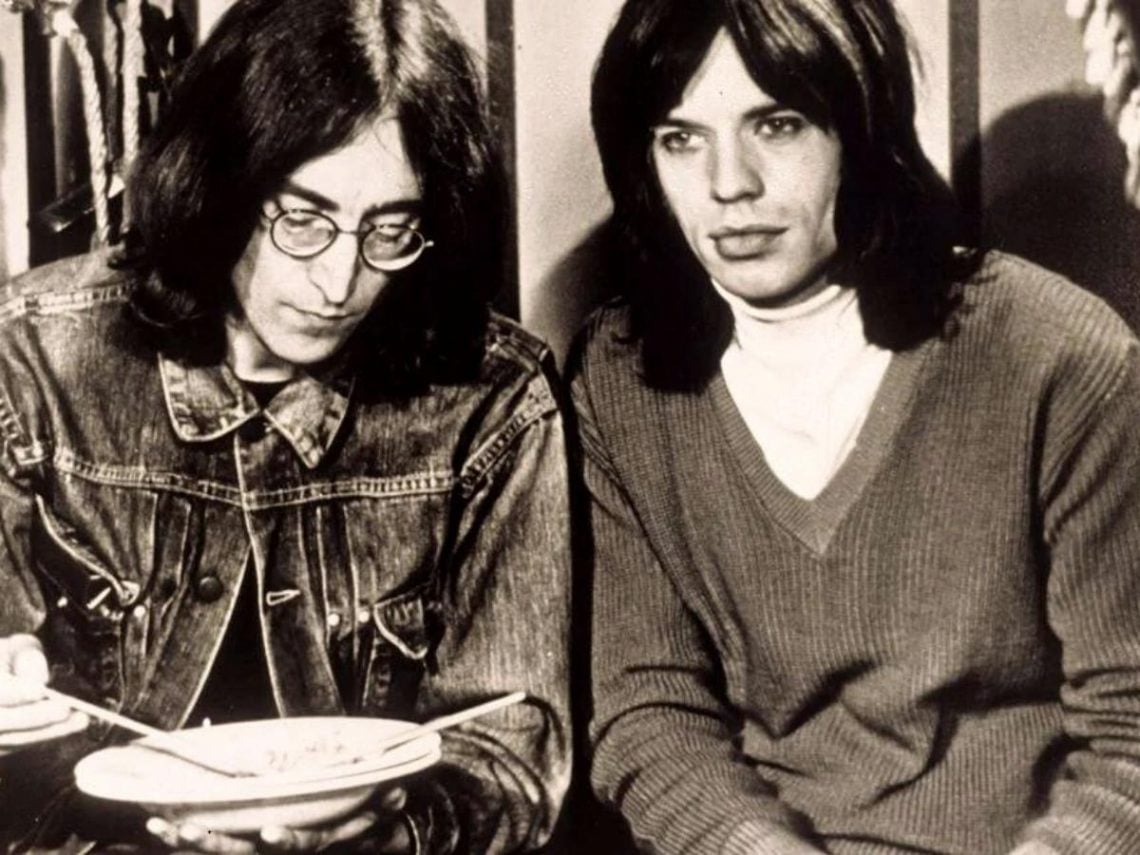
When The Beatles and The Rolling Stones were set to merge

While manager Andrew Loog Oldham’s shrewd business acumen posited the “bad boy” Rolling Stones against the grain of The Beatles’ affable visage in the mid-1960s for a slice of the market share, the two bands were not rivals. Much like fans of Blur and Oasis in the Britpop wars of the ‘90s, in the ‘60s, Beatles and Stones fans could be heard arguing over whose favourite was better, but outside of a little media exaggeration, it was just peace and love, man – such were the times.
Commenting on the positive relationship between the two bands on Ask Keith in 2004, the Stones’ guitarist Keith Richards explained how they would time their releases so as not to step on each others’ feet. “When [The Beatles had a] new single, we always made sure we didn’t clash because, in those days, it was like every two months you had to have a new single,” he recalled.
Richards added: “We would collaborate with each other, so we didn’t go head to head. Outside, it seemed like, ‘you’re either Beatles or Stones, never the twain shall meet’… Bullshit! I mean, between the two bands, there was never any sense of competition; it was co-operation.”
In 1967, this symbiotic relationship almost reached the point of a strategic merger between The Beatles and The Rolling Stones.
A Melody Maker article published in October 1967 addressed the rumours of the reputed deal: “The proposed Beatles-Stones merger revealed at the weekend by Jonathan King on his ITV programme ‘Good Morning’ is almost certain to take place in the future. But it will be a business merger between the two groups and will not lead to any form of Rolling Beatles records”.
“Beatles press officer Tony Barrow told MM: ‘It’s highly possible that the two groups will get together for fresh business ventures, but there is no chance of any sort of co-operation on a record as the two groups are contracted to rival record companies. One idea they’re discussing is obtaining a recording studio where they can each make their own records and possibly record other artists. And there is a possibility of future intriguing schemes. These could include a talent school.”
A week later, Disc Magazine interviewed Mick Jagger, asking him about the prospective merger. “It’s nothing fantastic, just something Paul [McCartney] and I talked about. We’d like to build the best recording studios in the world. It would be like five years ahead of its time. A record label together is another possibility.”
Pete Townshend of The Who and Graham Nash of The Hollies, who were both close with the Stones and Beatles, were asked for their opinions on the merger at the time.
“Pop’s biggest merger – the proposed link-up between the Beatles and the Rolling Stones – received full showbiz backing this week as other top names voiced their views,” Disc Magazine reported. “Who spokesman Pete Townshend, a firm personal friend of the two groups, said: ‘This is a great idea. We virtually record ourselves anyway – but the Beatles and the Stones between them should be able to get one of the best-equipped studios in London, which will help the small groups they take on immensely. These small groups will be able to have the best instead of the rubbish they often have to put up with. I knew of one very promising group who used to get fed up because their recording company would only allow them an hour to do a session, which is hopeless. The Beatles-Stones idea will end all that bullshit.’”
“I think the whole thing sounds like a very good idea,” Nash added. “There’s certainly a lack of facilities on the recording scene here. There are often a lot of problems to overcome before you get what you want. We’ve already formed our own recording production company for ourselves and to record people. The business could only benefit from what the Beatles and Stones plan.”
Stones publicist Les Perrin was also asked to weigh in. “Discussed was the possibility or advisability of opening a recording studio, but these conversations have not been resolved, and any assumptions should be considered premature,” he said, hoping to quell hysteria.
Barrow added: “They want to organise recordings in a studio of their own and also record other talent. But this venture, of course, would interfere with the present recording commitments. The talks were very much of an exploratory nature.”
One of the first planned projects for the merger was an album by Marianne Faithfull; it would be produced by Paul McCartney and Mick Jagger and engineered by Glyn Johns. Work on the record actually began during the merger talks in May 1967. In a conversation with the New Musical Express at the time, Faithfull said: “Mick [Jagger] is producing some new tracks for a new album for me – you heard one track as you came in, written by The Incredible String Band.”
This early track recorded for the album was ‘Painting Box’ by The Incredible String Band, a group Jagger, Faithfull and McCartney endorsed with enthusiasm at the time. McCartney reportedly told the press that their album 5000 Spirits or the Layers of the Onion was his favourite record of 1967.
Other tracks recorded during Faithfull’s session with Jagger and McCartney included a cover of The Beatles’ ‘With a Little Help from My Friends’ and a song called ‘English Summer’ credited to the Jagger and Richards partnership. Sadly, the merger never materialised, and the fruit of Faithfull’s sessions has yet to be released or bootlegged.
Listen to ‘Painting Box’ by The Incredible String Band below.

Never Miss A Beat
The Far Out Beatles Newsletter
All the latest stories about The Beatles from the independent voice of culture.
Straight to your inbox.