


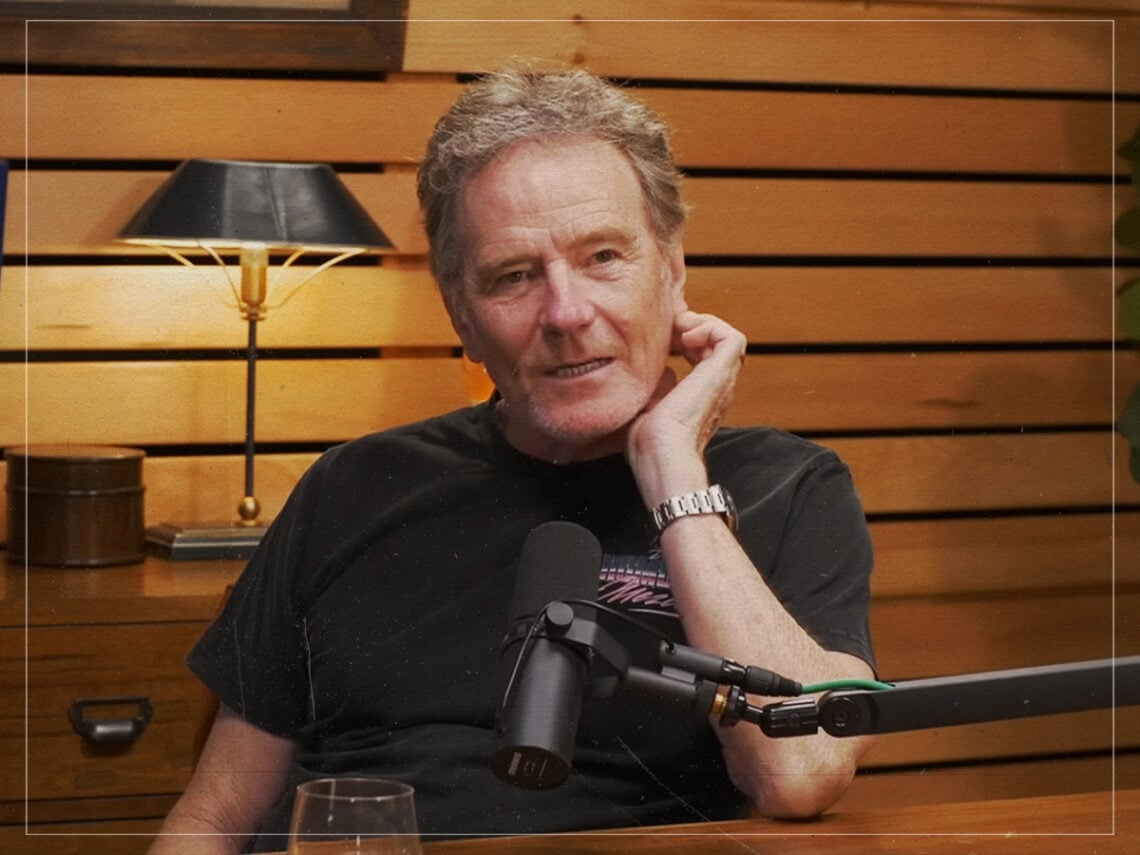
“I had to woo him”: Bryan Cranston made a pros-and-cons list before taking a major role

Bryan Cranston needed to be coaxed into giving one of his most memorable performances.
It’s never too late to have a breakout role, and Cranston had one of the strangest late-career breakouts of any living actor. He had been picking up bit parts for the majority of his career until he landed a role on Malcolm in the Middle, seemingly showing that he was best-suited for comedy, which is why he felt like such a surprising choice to lead Breaking Bad, the ambitious AMC drama from former The X-Files writer Vince Gilligan.
Although Breaking Bad was considered to be an ‘underdog’ show because it was passed on by FX and HBO, it ended up becoming a cultural phenomenon that only picked up more viewers with each subsequent season. Suddenly, Cranston went from an actor who had to seek out work to a legend of the industry whom directors begged to have in their films. It seemed like any project that he was a part of would benefit from the Breaking Bad fans who would watch anything exclusively because Cranston was in it.
One of the first directors to pick up on this trend was Nicolas Winding Refn, the Danish filmmaker who had developed a unique style of gritty, pulpy genre thrillers. Although Refn had helped to launch Tom Hardy’s career with the unusual prison film Bronson, he planned his most significant English-language film to date with Drive, which, unlike his previous films, had a cast of A-listers; Academy Award nominees Ryan Gosling, Carey Mulligan, and Albert Brooks were all part of the project.
Refn knew that he wanted Cranston to be in the film, and referred to himself as “probably the biggest Breaking Bad fan in the world”, but also recalled that getting him to sign on to the role took some convincing.
“I had to woo him because Bryan has a lot of opportunities,” he said, “One of the conditions was that everybody had to come to my house to meet me. So when Bryan came, the character was very underdeveloped, and I said to him, ‘Look, we are here to create him. What would you like to do?’”
Refn said that he had “very good conversations” with Cranston, but did not hear anything back from him immediately. Then, on the advice of his producer, Adam Siegel, he decided to personally call Cranston to gauge his interest. “I called him, and at the moment I called, he was sitting with a blank piece of paper writing pros and cons of doing Drive or not,” Refn said, “He said, ‘Well, since you’re calling, there must be meaning, so I’ll do your movie.'”
The situation worked out in everyone’s favour, as Drive ended up becoming a smash hit on the arthouse film circuit, with Refn praised for his unique directorial precision. It came out at an exciting period in Cranston’s career, as it was just when Breaking Bad was at its peak; when the show wrapped up in 2013, the actor was able to commit more time to making movies.
Cranston has continued to make lists of pros and cons to determine which roles he takes, and he’s managed to carve out a fairly interesting career for himself. In addition to taking smaller roles in the ‘Best Picture’ winner Argo and blockbusters like Godzilla, he scored his first Academy Award nomination for his work in Trumbo.
