


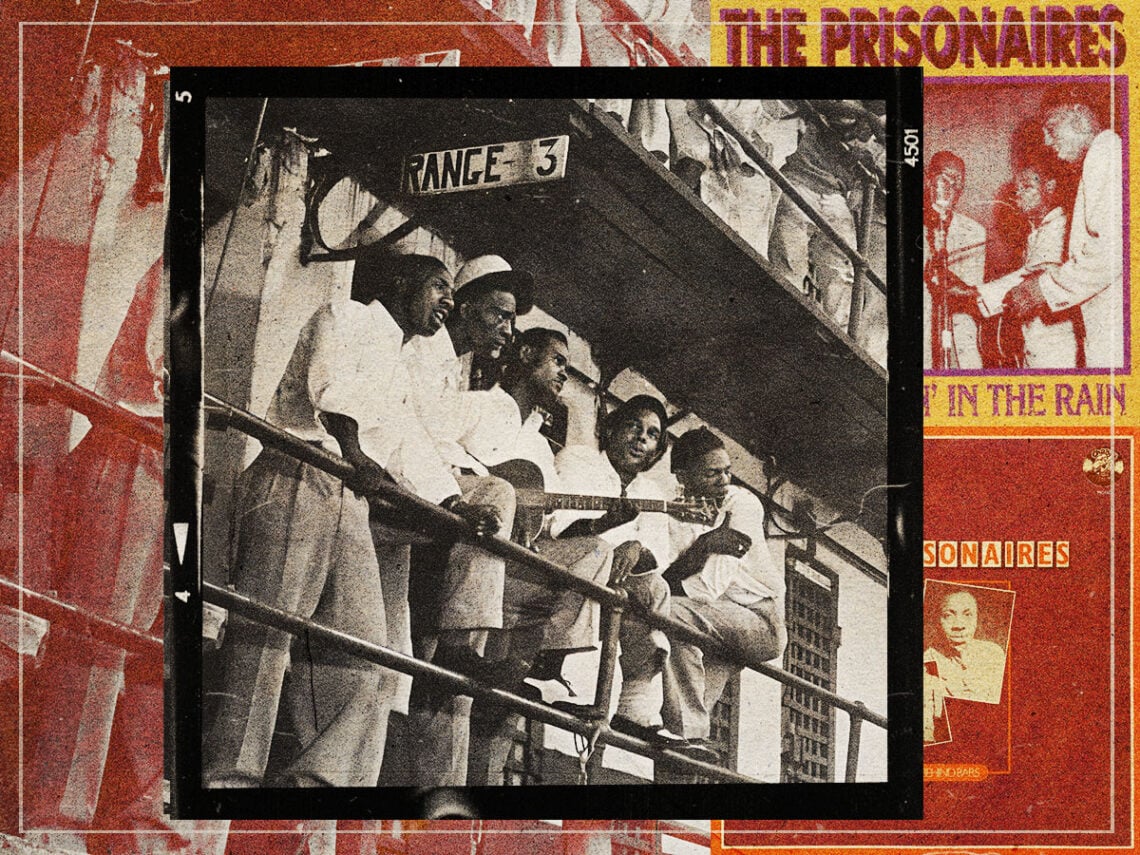
The Prisonaires: hear the music of the convicted murderers who pioneered rock ‘n’ roll

A lilting yet solemn tone akin to Charlie Brown shuffling down a picturesque street in a storm echoes out of the luscious tones of ‘Just Walkin’ in the Rain’. The track heralded the meeting place of pop and the blues that would result in rock ‘n’ roll, and it came from the most unlikely of sources: five inmates of the Tennessee State Penitentiary in Nashville known as The Prisonaires. Their tale is one that says a lot about music.
The group were assembled by Johnny Bragg, a prisoner from the age of 17 – convicted of six charges of rape. Bragg had been singing his way through misdemeanours since he was a child and excelled in the prison’s gospel choir. He also had a keen ear for his fellow inmate’s tones. He quickly made offers to Ed Thurman to be his second tenor, John Drue to be his first tenor, William Stewart to take up baritone and guitar duties and Marcel Sanders on bass. The Prisonaires were complete.
Ed Thurman and William Stewart were both serving 99 years for murder, while Drue was in for five years for larceny, and Sanders had been sentenced to one-to-five years for involuntary manslaughter. Thus, the band were never really fated to get far, but in a way that only music really can, The Prisonaires went on to be a vital footnote in the unfurling chapters of modern music.
Soon after forming and being granted the right to practice because of their positive showings in the gospel choir, the powers that be soon realised that these troubled souls had considerable talent. Therein lay an opportunity rife for exploiting. If the prison could parade this self-formed band as a product of their own litigious undertaking, then they would serve as a prime example of how rehabilitation was working in Tennessee.
So, they began to play at several civic functions – always under armed guard – for high-ranking officials and governors. Their skill was self-evident, and their music was far from murderously deranged, lending itself to more of a dream-like literary recital of the downbeat, lowly traveller searching for their place in big old America. Their success was the prison’s to share. With that in mind, Warden James E. Edwards got the word out to talent scouts at Sam Phillips’ Sun Records, and soon, they were recording a hit.
This hit, ‘Just Walkin’ in the Rain’, would later be heard by a young Elvis Presley. In fact, Bragg would even claim that Elvis was there when they first recorded the song and was wowed by their romanticised gravitas and popularised temperance of the blues. While this claim might have later been questioned, there is no doubt that Elvis saw them record at Sun Studios on at least one occasion and even visited Bragg in prison as a mark of thanks for the inspiration that he provided. Bragg recalled Elvis looking around his heroes’ measly cell, and in response, he asked him what it was like being a star. Elvis replied: “Well, it’s the best and the worst of everything.”
Nevertheless, Elvis was now the frontrunner of a revolution that the world was still reeling from. Without a prison in Tennessee, how different might things have been? Is that the message of this story, that the narrative of The Prisonaires showcases how music can bring out the very best in people and transcend their worst atrocities?
Not exactly. You see, Bragg alone had his sentence commuted (shortened) after the fact owing to subsequent appeals. In fact, studies have shown that from 1870-1960 a significant number of black defendants never made it to trial in the region, resulting in direct convictions. Prejudice and plain racial corruption had a huge sway on the legal system at the time. A paradigm for this comes from the fact that Bragg was once again arrested in 1960 for drummed-up parole violations and received an entirely incongruous six-and-a-half-year sentence for this.
He would continue to make music throughout his life and protest his innocence. However, aside from the luscious songs he crafted, perhaps the biggest note of his legacy is that they were only celebrated when it benefitted the gatekeepers. At the time when The Prisonaires prospered most, their convictions were fresh, and their names were low, devoid of any power other than their music, while they protested innocence in muted tones without much of a voice. However, when their music became an engine for change, the tunes were quickly disregarded and ushered towards white performers unsullied by the law.
Meanwhile, musical historians have tried to exonerate this potential modern narrative, but sadly evidence is slight, leaving The Prisonaires and their music hanging in the balance.
