


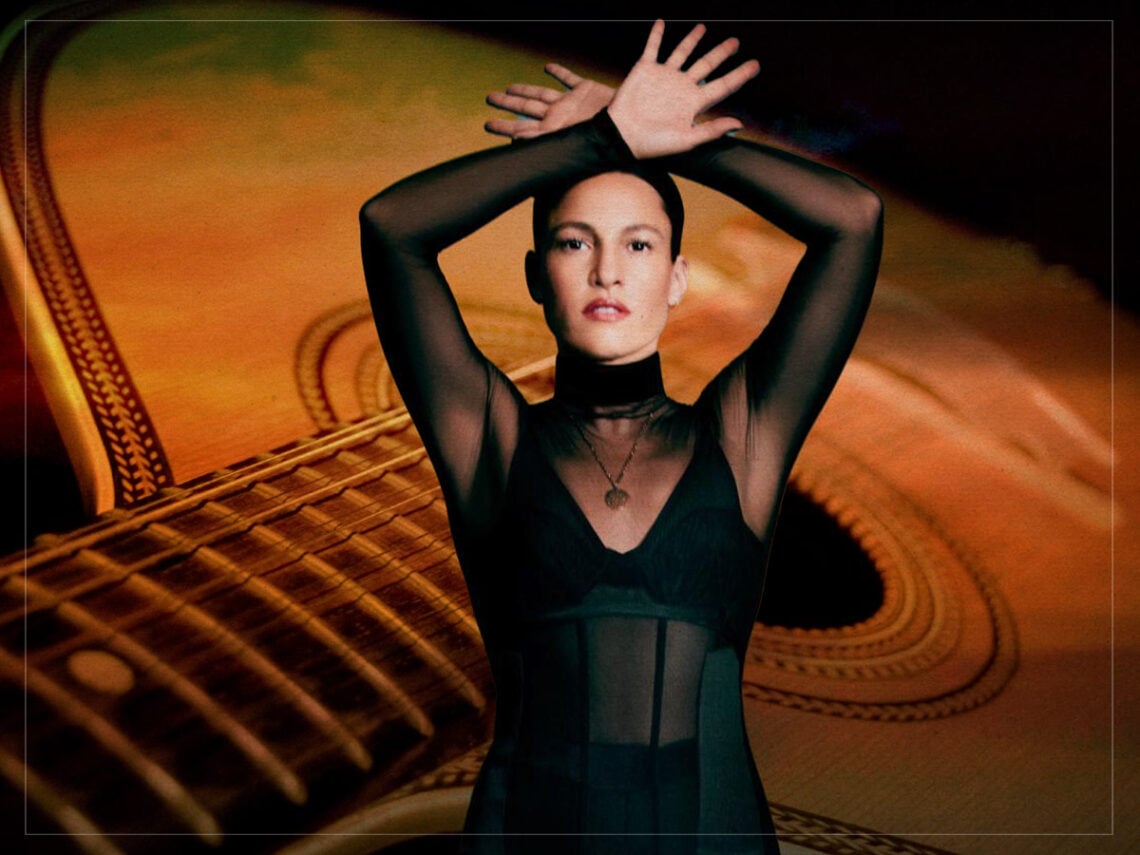
Carminho: The Portuguese artist bringing fado back

Although she is helping make a traditional Portuguese genre feel contemporary, turning it into something embraced by younger generations as much as their grandparents, Maria do Carminho is not trying to reinvent fado. The mournful style traces its roots back to 1820s Lisbon, but the singer known as Carminho is simply bringing it to the world in the form it was passed down to her.
“I don’t want to be called a new fado. I just want to be a worker, a practitioner,” the Portuguese icon declared, as she is leading Portuguese award shows and being nominated for a Latin Grammy, all of which started thanks to her mother’s passion, Teresa Siqueira, a well-known fadista, who brought her daughter up singing since her infancy in the Algarve, with her musicality starting so eagerly that Carminho sang at her first fado performance at the age of four.
When her mother opened a fado house in Lisbon, a bar dedicated to live performances of the genre, Carminho spent much of her time there. Her passion for the music only deepened, even as the genre gradually lost relevance with younger generations. Traditional fado can feel too romantic for modern tastes, defined by its melancholy and quiet longing. Literally meaning “fate”, fado has historically told stories of hardship, poverty and life at sea, but as Carminho sings on her album Portuguesa, “Fado é amor” – fado is love.
Her life’s work has been to do this potent legacy justice, to revive what never deserved to be forgotten, and to platform the genre as it was. “Fado is a language that is alive and is to be spoken,” she told Pop Matters about her newest album Eu Vou Morrer de Amor ou Resistir (I will die of love or resist).
Like in her previous six albums, Carminho has combined some original tracks for remakes of much-beloved fado songs that were mostly preserved as they were, with her own lyrical twist. A true admirer of the ones that came before her, Carminho is one of the few that doesn’t believe in modernising something that is already great.
That’s how she caught the admiration of Rosalía. The Catalan sensation used to sing her favourites among Carminho’s hits while performing in bars in her youth, and invited her to share her music on her last multi-award-winning album.
“I’ve known Carminho’s music for over ten years, and she is still able to move me as deeply as the first time I heard her,” Rosalía told Elle, “I am also grateful for her generosity and for her guidance, which allowed me to sing this fado; if it weren’t for her, I don’t think there would have been a fado in Lux.”

Carmine’s mutual admiration made it impossible not to share a song she had envisioned to make her own track list: “She asked me, ‘How important is this song for you?’ And I said, ‘I don’t know, it’s important, but songs are songs’. We can do many songs, but we cannot force connections, love, and collaborations. That is so precious, of course, I said yes.” The converging forces of incredible voices and a shared devotion to tradition make for the incredible fado song ‘Memória’, which combines the instrumentation of renown track ‘Fado Maria Rita’ with Carminho’s own lyrics.
Between performing for the late Pope Francis in 2023 and appearing in Yorgos Lanthimos’s Poor Things alongside Emma Stone, Carminho shows no intention of slowing down, and her unique voice inspires nothing short of goosebumps, with melodies echoing her attachment to their heritage and her land.
