


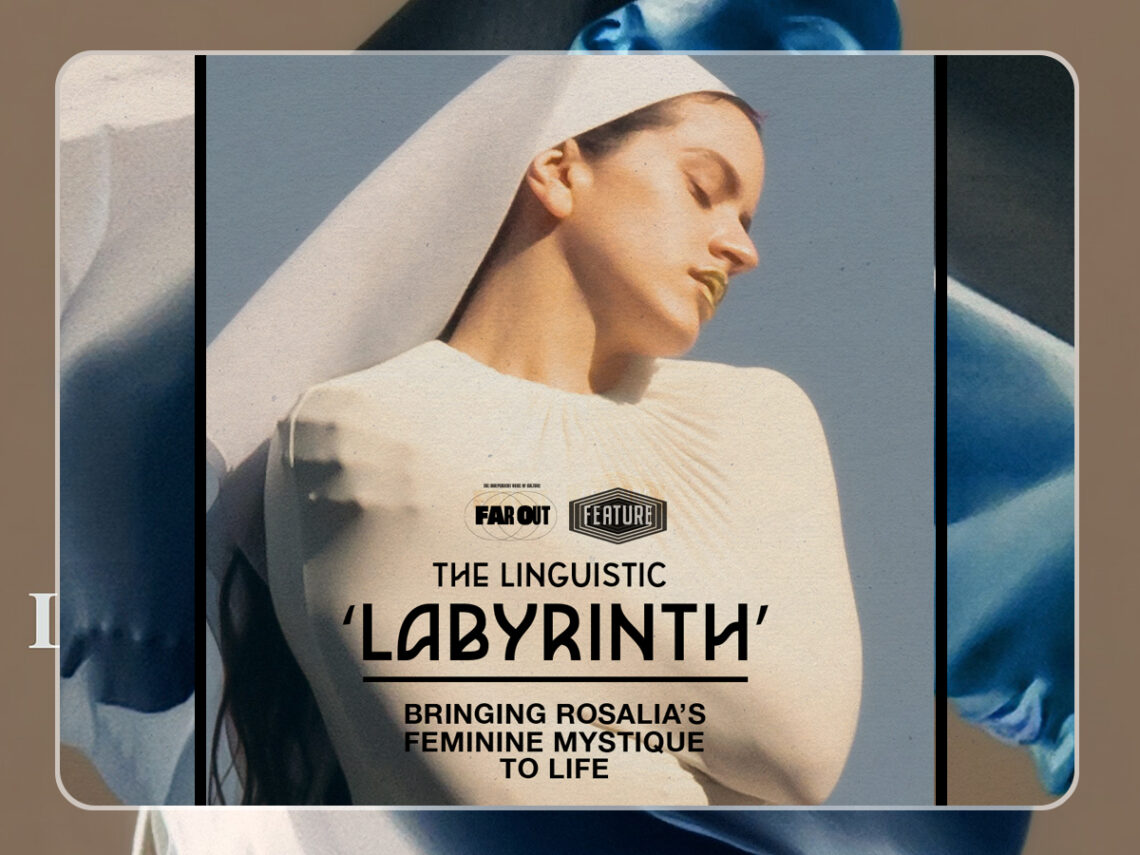
The linguistic ‘labyrinth’ bringing Rosalia’s feminine mystique to life

Lux is not a record to be played in the car or to soundtrack your errands – it’s a main event.
It can’t be understood if it isn’t being played centre-stage, it demands the listener’s full attention – and lingual flexibility. Rosalia’s fourth album combines linguistic achievement and religious admiration, making its way through 14 languages across 18 tracks.
The astonishing record is an operatic homage to female saints and mystic equivalents in other cultures, marrying passionate vocals to a powerful accompaniment by the London Symphony Orchestra. The orchestral elements are so present that they even physically follow the artist around in her ‘Berghain’ music video.
Aside from the frequent intermissions of Spanish and Catalan, the album explores themes in English, Latin, Italian, Ukrainian, Japanese, Arabic, Sicilian, Mandarin, Hebrew, Portuguese, and French. The Catalan singer’s ominous hymn-like vocals, however, transcends language to draw the listener in to her imagined canonisation.
The two years Rosalia spent on the album were mostly dedicated to mastering the pronunciation of the languages included in her music. She mastered her intuition to jot down words in foreign tongues before she could make sense of them, and initially lent her trust to Google Translate to see if they sounded right. She eventually worked with translators and professionals in phonetics to master her pronunciation, until the production ran out of budget.
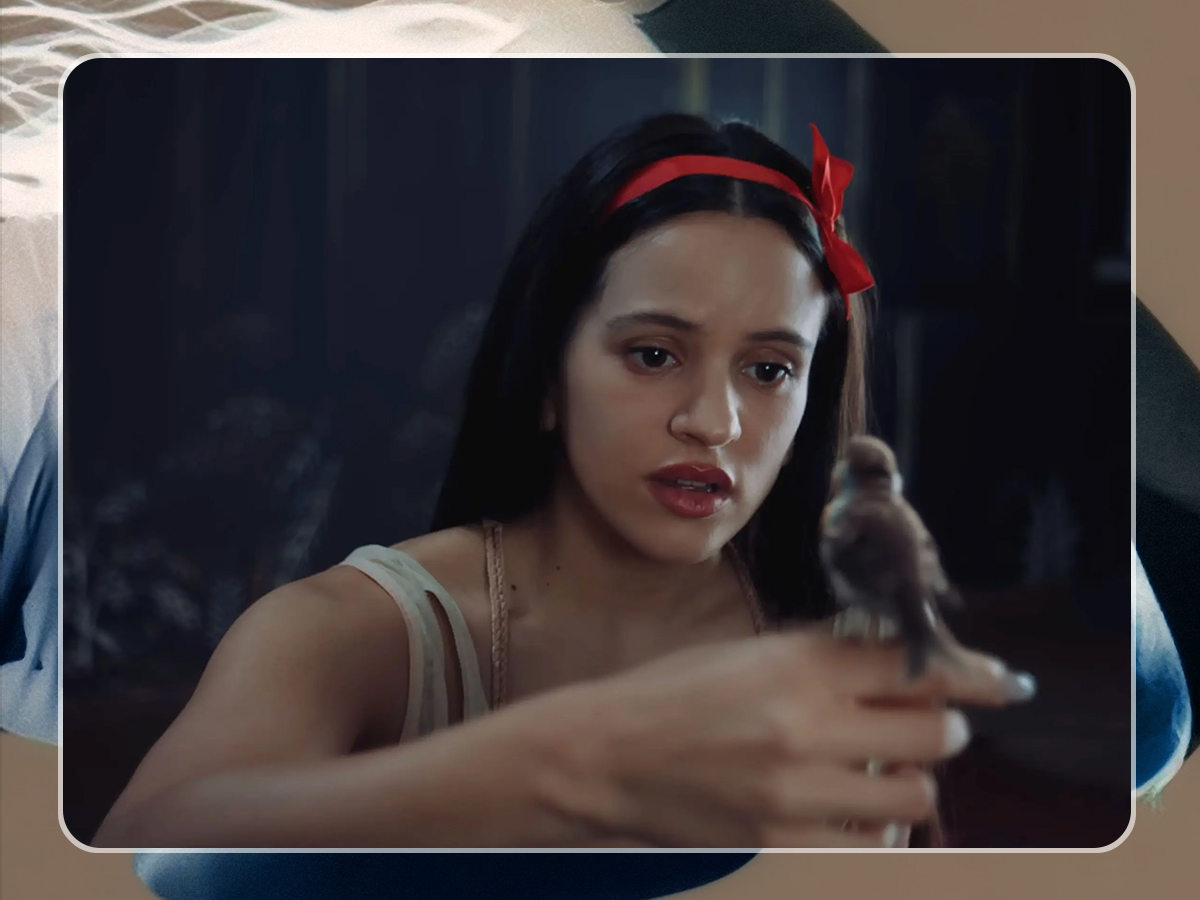
Her theatrical rendering of “so many amazing women in history that we don’t listen to enough, we don’t talk about enough” brings us on a journey across different lands. She told the New York Times: “I love traveling, I love learning from other humans. Why would I not try to learn another language and try to sing in another language and expand the way I can be a singer or a musician or an artist?”
Her breadth between the personal and the universal brings us to the stories of distinct mystics and their untold stories, which Rosalia decides to tell in the languages they would be telling them themselves.
The great experiment begins in Germany, with ‘Berghain’. Saint Hildegard of Bingen, holder of divine visions, wrote about unity with Christ in her polymathic expressions of devotion to the lord. Rosalia sings in German as she introduces her album alongside Björk, who, in her words, is “my favourite woman and artist”. The Icelandic artist served as her inspiration to make a new kind of pop.
The feminine mystique of ‘Focu ‘Ranni’ is a Sicilian telling of Rosalia’s patron saint, Santa Rosalia of Palermo. In her own words, the artist “belongs to the world”, and this was never so personal as it became in this ephemeral hymn – or in ‘La Perla’, the waltz she wrote after a heartbreak.
Ironically, not in French, ‘Sauvignon Blanc’ narrates Saint Teresa of Avila’s ecstatic visions that were once famously brought to life in Bernini’s sculpture. The wine’s metaphor for divine intoxication and detachment from the material world can definitely be associated with Rosalia’s propulsion out of the boundaries that pop audiences put her in. Her admiration for vision-having characters brings us to ‘Jeanne’, this time in French, a homage to the brave Joan of Arc, who revelled in God-given assurance as she stepped in to save her country from invaders.
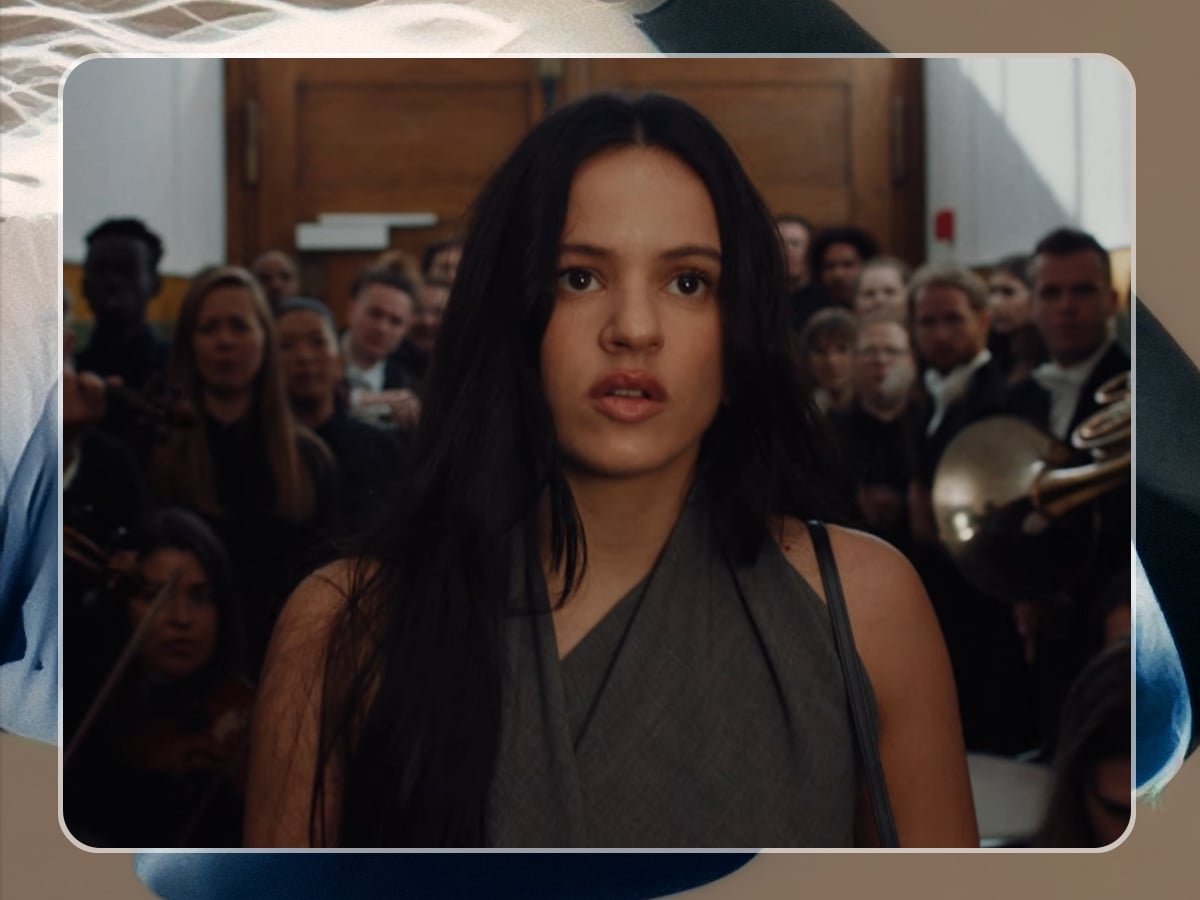
A little-known colleague of Saint Francis of Assisi was Saint Claire of Assisi, to whom Rosalia devotes ‘Mio Cristo Piange diamanti’ in Italian. “I wanted to make a song that was like my version of what an aria could be,” she told Billboard.
Her vocal range brings listeners to chills as she becomes the saint who dedicates her life to the poor. Her devout lyrics pour out of sincerity: “And how many hugs have you given that could have been punches?”
Her Arabic debut highlights a passage from the Quran: “For you, I would destroy the sky. For you, I would tear down hell”. ‘La Yugular’ invokes Rabia Basri, Islam’s first female saint, a poet and mystic, bringing the artist to finally have to reconcile with harsh linguistic differences.
“At the end of the day, the breath, that’s where it all starts… I was struggling with recording in Arabic because I’m not used to [using] my throat like this, to make this space, and I don’t even think that I got it right but I tried. That was my love letter to Arabic,” Rosalia told NPR.
The resulting album is, in her own words, “like a puzzle, like a labyrinth”. The blending of different genres and historical figures from a wide range of human epochs shows her range and her dedication to developing her art. The avant-garde pop star carried flamenco into mainstream music with her 2018 album El Mal Querer, and now, Pop’s first symphony will bring opera into the modern age.
