


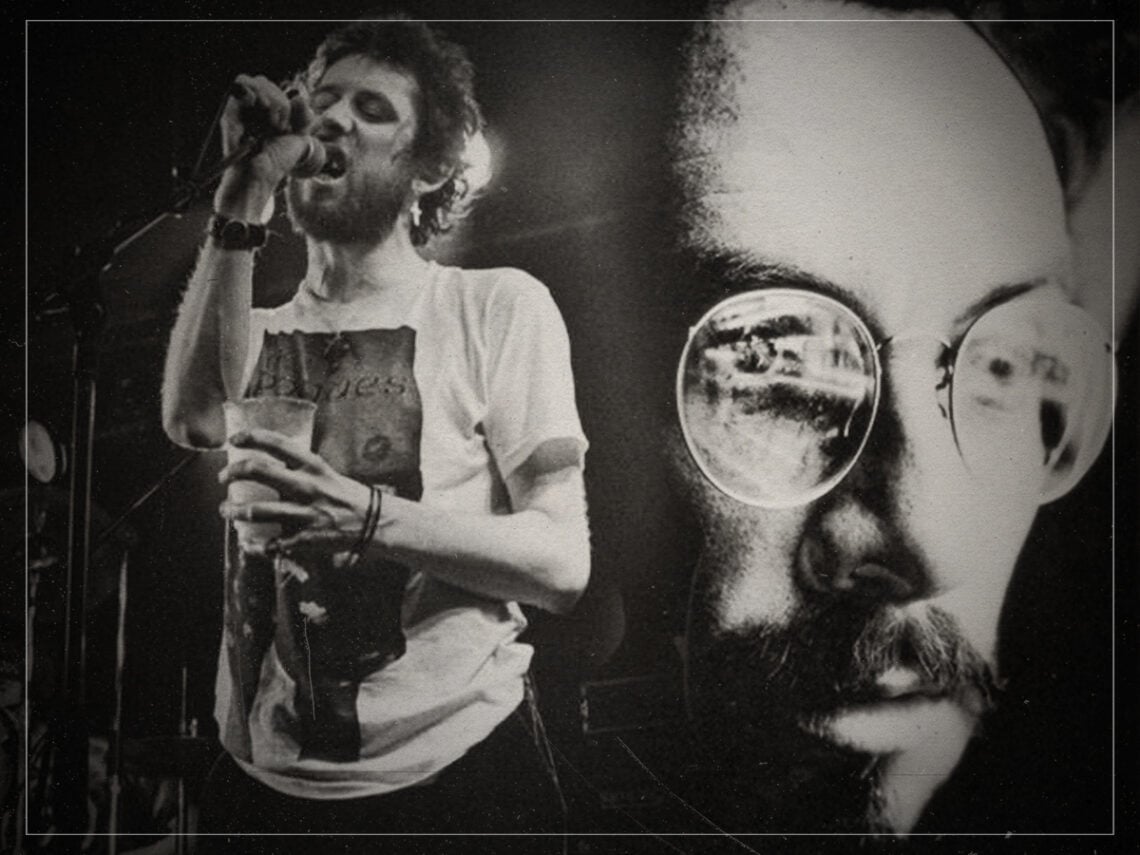
The Pogues’ classic 1985 album Elvis Costello saved from being “fucked up”

Elvis Costello might not have been one of the glue-sniffing, bondage-trousered punks populating the underground scene of mid-1970s London, but he shared a certain grassroots, DIY sensibility with that realm. He also had the necessary experience to prevent that grassroots ethos from becoming tainted by the mainstream industry.
For a songwriter whose expansive body of work has rarely dipped into the abrasive, barre-chord anarchy of a band like the Sex Pistols, Costello owed a lot to the punk explosion. It was on the independently-owned Stiff Records, after all, that his first masterpieces were released, and his output at that time embodied an ‘angry young man’ spirit that could not have existed without punk’s willingness to break down the barriers constructed by mainstream rock. Crucially, though, Costello had enough experience of that industry to understand its dangers.
While punk might have wished to dismantle major record labels and the mainstream music industry upon its initial emergence, it didn’t take long for that industry to get its talons into the punk scene, signing up groups like The Clash and the Sex Pistols and, in the words of Joe Strummer himself, “Turnin’ rebellion into money”.
Costello had seen this bastardisation occur in real time, and he was keen to protect some of the better groups to emerge from punk’s influence from succumbing to the same fate. He understood the punk sound and its importance, which is one of the key reasons why his production work during the late 1970s was so essential, particularly when it came to The Pogues’ legendary sophomore record Rum Sodomy & the Lash.
At that point, Shane MacGowan’s group were still the rough-around-the-edges, abrasive Celtic punks that had burst onto the scene some years prior, but there was enough attention around them that the mainstream industry wasn’t far around the corner. For that second record, though, Costello had a duty to retain the abrasive, spontaneous sound of the band as they were.
“I saw my task was to capture them in their dilapidated glory before some more professional producer fucked them up,” Costello once declared, lending his production skills to the Stiff-released record.
In that sense, the producer achieved his aims, as Rum Sodomy & the Lash is an indisputable classic of its time, containing a deluge of MacGowan’s finest efforts, including his iconic cover of Ewan MacColl’s ‘Dirty Old Town’.

Elvis Costello had already proved his production prowess on multiple occasions by that point, perhaps most notably on The Specials’ 2 Tone ska revolution, but that Pogues record was certainly his magnum opus when it came to production.
Not only was he able to craft a record that sits on the barrier between punk power and mainstream appeal, but he also managed to retain the snarling aggression and DIY energy of the band, whereas a major label producer might have polished them up beyond all recognition. Costello might have moved on from the ‘angry young man’ aesthetic by the time 1985 rolled around, but he certainly never forgot his roots, or the magic of that punk revolution.

Never Miss A Beat
The Far Out Punk Newsletter
All the latest Punk content from the independent voice of culture.
Straight to your inbox.