


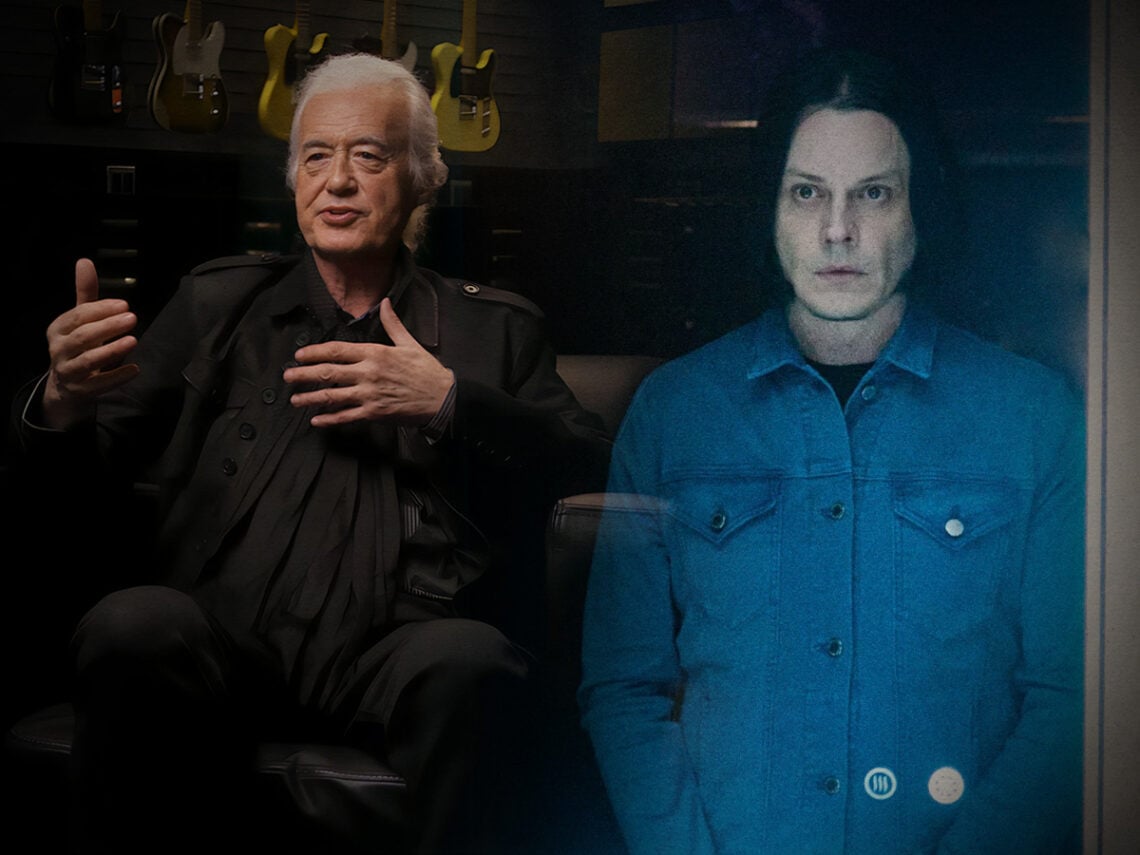
The “overwhelming” day Jack White finally met his hero Jimmy Page

We like to obsess over lineage in music, trying to compare artists from one generation to the next to figure out exactly where the baton has been passed. It’s never looked at more closely than on the guitar, the instrument some consider to be the central player in the full-blooded rock and roll sound, and the one often used as a generational comparison.
But why the guitar over anything else? Well, it all traces back to the blues. That’s really where the sound of rock and roll comes from, designed by legendary players Robert Johnson and electric Chicago legends like Muddy Waters and BB King. Those three essentially built the foundations of rock and roll that would be popularised in the 1970s and make cultural icons out of the likes of Led Zeppelin and Jimmy Page.
“The blues – I mean, it’s just undeniable,” Page once said. “It was just an undeniable element of everything that was going on in Led Zeppelin. If there hadn’t been that sort of movement in Chicago, back in the ’50s, and all that sort of riffing, then you wouldn’t have got what came through in various bands later – certainly for me and how it affected me in Led Zeppelin.”
With Zeppelin, Page took the blues model and made it stadium-ready, reverberating the riffs built on simple structure into the walls of space where rock and roll was immortalised. But as is always the way with rock lineage, the question was who would take the throne thereafter? When Zeppelin closed their books in the 1970s, rock was in a state of obscurity, and the scorching riffs of classic rock would hibernate for a couple of decades at least. Until Jack White arrived.
Almost like a transatlantic second coming, White emerged with his own band, The White Stripes and took blues rock into the future. At the turn of the millennium, when the genre needed it the most, White pulled blues rock from the ruins and revived it, something that earned him the deep respect of his peers and, more importantly, Page.
It didn’t take long for the pair to meet, which, for White, was a life-affirming experience. “The overwhelming feeling is that he’s connected to the blues,” he explained. “That’s what puts a smile on my face. It made me feel good because I knew that, despite our differences in age and where we came from, we’re both traveling down the same path—the one that heads straight for the blues.”
A lot of people like to ruminate on the idea of rock and roll dying. It often feels like the go-to scapegoat when music is in a state of flux. But what Page and White prove together is that it simply will never happen.
As White explained, Page came along in the ‘70s and took blues rock to another level, just when people thought it had hit its limits. In the 2000s, the story was much the same, before White came along and pushed it even further beyond the realms of possibility, proving again that rock and roll will never die.

Never Miss A Beat
The Far Out Led Zeppelin Newsletter
All the latest stories about Led Zeppelin from the independent voice of culture.
Straight to your inbox.