


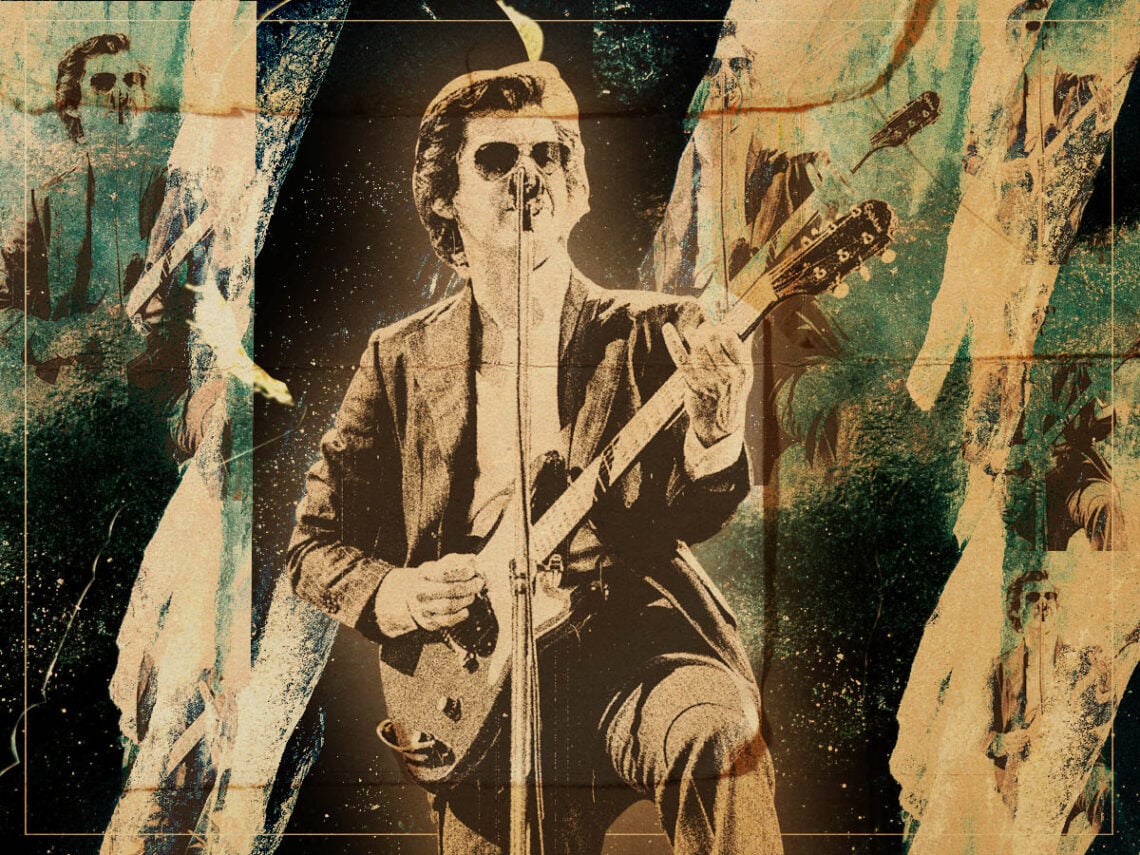
How music’s most infamous quote refuses to die: “Nobody cares about guitar groups anymore”

When I joined university, I did all the things I was told I was meant to. I explored different societies, I drank cheap beer, and most importantly, introduced myself to everyone and anyone. In that latter interaction, I was commonly asked, “What music genres are you into?” as olive branches were tentatively extended.
More often than not, I lied. I said, “Yeah, house mainly,” before covering my lying mouth with a shamefully large gulp, hoping whoever I said that to wouldn’t notice my lie and potentially accept me as being as cool as them.
Luckily, that charade lasted no longer than a week, as I thankfully met the people who I consider my closest friends now. Together, we went to gigs that, yes, pushed each other’s comfort zones, but largely shared a commonality in taste. During those nights, we laughed at the anecdotes I would tell of my Air Max-inspired lies and the ridiculousness of me even trying to market myself as a house fan.
But I did it in a classic state of adolescent insecurity. Because while I clearly didn’t know much about myself, I did know that in the early 2010s, being an indie fan wasn’t all that cool. Any music that revolved around the guitar and more specifically, the guitar solo, was quickly branded as dad music, worthy of an air guitar freak out while wearing boot cut jeans and brogues. So had it finally reached its peak? Had guitar music, as it has been threatening to do for decades, finally died?
No, of course it hasn’t, but I needed reminding. And luckily, Alex Turner was on hand to do so. During the 2014 Brit Awards, he gave the rousing, albeit corny, indie rally cry. Accepting the ‘British Album Of The Year’ award for AM, he reminded those in the crowd, largely occupied by titans of the chart-based house music that warped my University experience, the ever-present importance of “guitar music”.
He famously said, “That rock ‘n’roll, eh? That rock ‘n roll, it just won’t go away. It might hibernate from time to time and sink back into the swamp. I think the cyclical nature of the universe in which it exists demands it adheres to some of its rules.”
Concluding, “But it’s always waiting there, just around the corner. Ready to make its way back through the sludge and smash through the glass ceiling, looking better than ever. Yeah, that rock’n’roll, it seems like it’s faded away sometimes, but it will never die. And there’s nothing you can do about it.”
Critics sneered as Turner’s statement was not only rooted in what they believed was an antiquated idea, but delivered with the arrogance of someone clearly intent on provoking. Because he was aggressively defending our genre in the face of an audience that would certainly laugh at that idea. The Brits are undoubtedly full of critics ready to dump rock and roll in the bins of history.
And so, what Turner says is right. Because throughout history, there have always been those who are unconvinced of its ability to adapt to the times. In fact, long before rock and roll had a chance to even establish itself, there were those who insisted that it was rooted in simplicity and nothing else. Decca Records’ A&R guy Dick Rowe famously turned down an option to sign The Beatles, on the proviso that “Nobody cares about guitar groups anymore.”
In all of this, I think the question we need to ask is, what even is guitar music? AM, the album that put Turner on stage, wasn’t exactly bona fide rock and roll. It was infused with hip-hop and groove. Sure, The Beatles started around the humble beginnings of an acoustic guitar, but what came after was entirely experimental. So long as the appetite for genuine expression remains, frankly, the guitar will never die.
PS: I saw one of my university house music intimidators at the Fontaines DC gig in Finsbury Park. Swings and roundabouts.
