


The only “prog God”, according to Tony Banks

During the late 1960s, in the transformative years of psychedelia, bands like The Beatles and Pink Floyd set the “controls for the heart of” prog-rock, providing a platform of quirky experimentalism from which bands like Yes, Genesis and Rush launched to stardom.
As the 1970s dawned, the world faced life without The Beatles and the hippie dream, but rock was still very much alive in the factions of glam rock, prog-rock, heavy metal and blues rock. The diversification of the sound was to be an important by-product of the decade. As music began to meander down different avenues, a new Mount Olympus of sub-genre Gods was spawned.
Phil Collins, who had his first glimpse of musical fame when performing some later discarded drum tracks during George Harrison’s All Things Must Pass sessions, joined Genesis in 1970. Between then and early bandleader Peter Gabriel’s departure in 1974, Collins helped establish the group as one of Britain’s foremost prog-rock phenomena with enduring albums like Nursery Cryme, Foxtrot and The Lamb Lies Down on Broadway.
Listening to genre masterpieces like The Dark Side of the Moon, In the Court of the Crimson King, and Brain Salad Surgery, one can understand the scope involved. Rather than a style, prog rock essentially denoted any rock music with a decidedly experimental essence, be that long, meandering guitar solos or experimental synth tracks. During their first and most explorative chapter, Genesis fashioned a potent sonic personality distinguished by Gabriel’s quirky lyrical delivery and unconventional instrumental compositions of chaotic keyboard flourishes and irregular drum beats.
As Genesis’ keyboardist, Tony Banks toyed with all manner of sound effects and playing styles. Although the prog-rock banner encompassed a vast array of approaches, many of the genre’s most associative groups had a strong ivory presence, with Pink Floyd’s Richard Wright and Yes’ Rick Wakeman among the bonafide titans. The spacious work of Wright in ‘The Great Gig in the Sky’ and the chaotic rifling of Banks’ keys in ‘Watcher of the Skies’ perfectly demonstrate the range of keyboard-based prog.
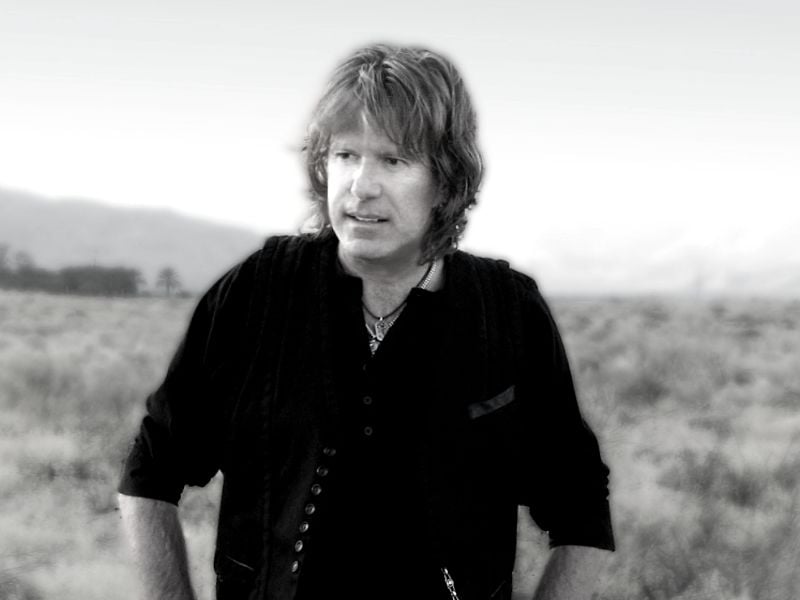
As you might have guessed, Banks favours rock music with a strong keyboard presence and, hence, kneels at the altar of Keith Emerson, the keyboardist of The Nice and, later, the supergroup Emerson, Lake & Palmer. “The first band I saw live was The Nice, at the Marquee in 1968, with Keith Emerson,” Banks recalled in a 2022 conversation with Classic Rock. Peter [Gabriel] and I were there, and I did think then that it could be really exciting to play live.”
The ability to noodle between different concepts, allowing the strangeness of everyday fantasy to begin to birth its way itno mainstream audiences was an exciting prospect. It allowed a whole range of artists the ability to express themselves in a whole new realm of ways.
Banks, along with his longstanding Genesis bandmates Mike Rutherford and Phil Collins, is a proud member of the prog rock community and became heavily associated with the Prog Awards between 2012 and 2019. “I met Keith at the [inaugural] Prog Awards,” Banks continued. “Rick Wakeman was getting the Prog God Award, and when I said goodbye to Keith, I told him: ‘You’ll always be Prog God to me!’ After The Beatles and all that stuff, he was one of the reasons I ended up in a band”.
In the prog rock community, Emerson and Wakeman are often regarded as the two apical titans. While Wakeman is perhaps the more accessible and mellifluously inclined of the pair, Emerson was more technically gifted and explorative, hence his status as the keyboardist’s keyboardist.
“It wasn’t just that Keith was an accomplished musician, which of course he was, but the fact that he was doing things nobody had ever done before,” Banks wrote, eulogising the late musician in a 2016 issue of Prog Magazine. “In that sense, his impact was comparable to that of Jimi Hendrix.”
While for many that may be a step too far, for a certain section of the rock community, there is no doubt that Emerson’s ability helped to institutionalise a brand new sound. Without him, there is a good suggestion to be made that prog rock as we know it today simply wouldn’t have existed.
