


The artist Trent Reznor wanted to be remembered in the same vein as: “A mentor”

It must be odd for an artist with a strong, lasting legacy to stop for a moment and think about what that means. Trent Reznor, for example, has earned his keep more than most, but to him, legacy is nothing without authenticity.
In an industry where respect is more easily earned by those who lean into more traditional realms of playing and performing music, Reznor has had his path cut out for him since the beginning, even during moments when his influence on the scene has been as clear as day. After all, as a rock band born out of Reznor’s love for electronic tech, Nine Inch Nails existed in a space that wasn’t always welcoming of such forward-thinking production innovations, though it didn’t take Reznor long to figure out why.
In the rock game, where rock loyalists often favour said traditional approaches over those who blend synthesisers and other electronic equipment with older, more widely accepted instruments and approaches, a band like Nine Inch Nails was often easily shunned. And yet, because Reznor himself never paid any attention to such unnecessary discourse, he was able to stay on the straight and narrow with what he considered his truest artistic vision.
As he once explained, whenever people say things like ‘electronic music isn’t real music’, the ridiculousness of the statement itself is the answer. “That’s the words of an idiot,” he argued in 1992. “I completely rebel against the idea that for it to be music it’s got to be done with a fucking guitar and traditional instruments”.
“That’s ridiculous, totally, utterly ridiculous.”
Trent Reznor
This passion no doubt came from the fact that this was always Reznor’s approach to music – even growing up, he played the keyboard, and then the piano, and had always been “into” computers once tech advanced enough that making music using one could become a real hobby. By which point, he’d become more interested in the different sounds you can apply to certain structures and rhythms, like synths and drum machines.
And although he managed to blend the only two worlds that rock purists love to argue should remain separate, it’s precisely this attitude that ensured Nine Inch Nails’ growth from individualist passion project to fully-fledged, influential rock band. After all, not every song is approached with computer-based tech; some have also been written on guitars, before Reznor brought in the other elements into the mix and fleshed out a composition entirely.
But again, the lack of a set formula is what ensured their success and, by extension, resulted in Reznor building his own legacy, independent from what was expected of a rock pioneer breaking onto the scene in the late 1980s. For this reason, it’s easy to place him among other pioneering legends who weren’t afraid to do whatever they wanted to execute their vision, including the one person who all but invented the entire game: David Bowie.
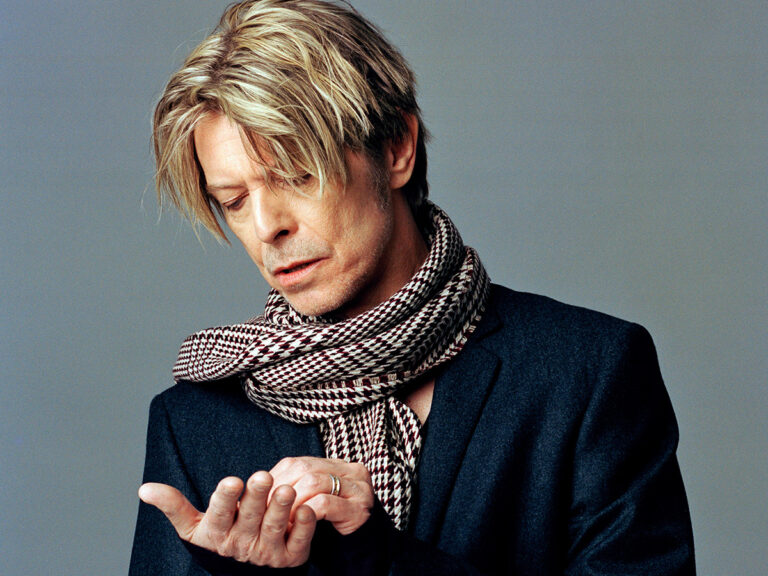
In fact, when asked about his own legacy and his peers, Reznor once said that being compared to the late ‘Starman’, especially in terms of innovative reputation and musical achievements, would be the dream. After mentioning Tool’s Maynard James Keenan and praising the work of LCD Soundsystem and Arcade Fire, Reznor said, “When I look at people that I would like to feel have been a mentor or an inspiring kind of archetype of what I’d love to see my career eventually be mentioned as a footnote for in the same paragraph, it would be, like, Bowie.”
Considering everything Reznor has worked towards since their debut – which, as we’ve seen, is a hell of a lot more than most – placing him exactly where he wants to be wouldn’t be all that difficult. After all, Bowie himself once turned to Reznor when he needed a partner for his own slice of musical excellence, and in doing so also played a significant role in supporting Reznor’s own health and wellbeing and broader path to recovery.
