


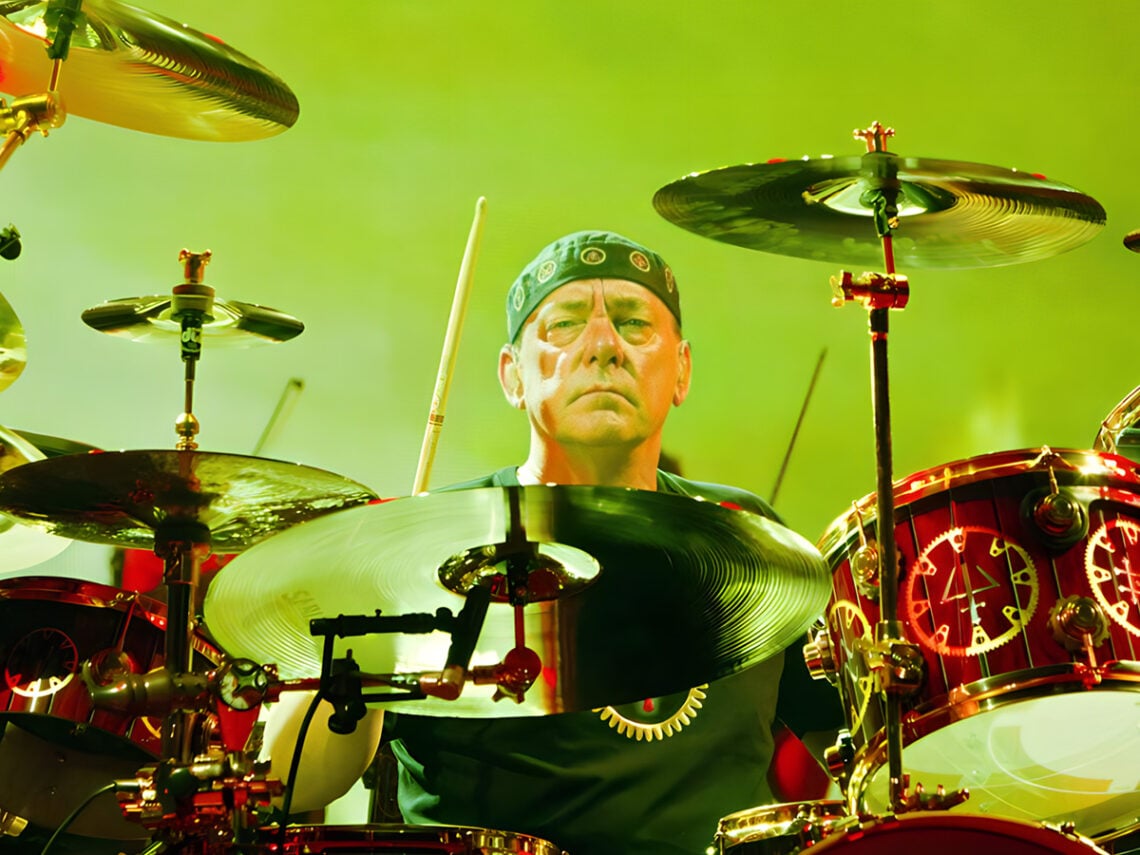
The one album Neil Peart said was painful to make

Nothing that Neil Peart ever played could ever really be considered simple by any means.
Even when he was first starting out playing with Rush on Fly By Night, his technique was already miles above anything that everyone else was even thinking about trying at the time. The prog rock world was his oyster most of the time he stepped behind the drumkit, but it’s not like he didn’t have a few setbacks when it came time to bring in some new songs to the rest of his bandmates.
Because if you think about it, the fact that Peart switched things up on almost every record is almost mind-boggling. Here is someone who could have stood on their throne as the greatest drummer in the world more than a few times, and yet when you listen to their approach on an album like Hemispheres compared to Signals or Grace Under Pressure, you would have sworn that it was a completely different musician at work. He wanted to do everything he could to keep things interesting, and that sometimes meant not being so meticulous.
After all, his work with Freddie Gruber actually helped give him a lot more perspective on his playing. It’s one thing to have a perfect sense of rhythm and time feel, but if that starts getting too rigid, putting that sense of musical mojo back into everything is one of the best parts of Rush’s later records. But whereas that era could have been a new chapter for Peart’s playing, no one could have imagined the kind of pain he had to go through after Test for Echo.
The band had just got off their tour, and within a year’s time, both Peart’s wife and daughter would be gone. That kind of tragedy would have done a number on anyone, and the drumming god was scared to go back to his drums again. Even Geddy Lee and Alex Lifeson remembered him disappearing for a year and driving a motorcycle around North America to get away from it all. He needed space, but when he stopped riding, he finally found some light at the end of the tunnel.
Vapor Trails may have been a return to form when it finally came out, but the big question was how Peart was going to sound. No one can simply go back to being one of the greatest drummers overnight, and since he didn’t go anywhere near a kit for years at a time, who’s to say that he even had the same sense of precision and chops that he did when he was writing lyrics and flying across the drumset back in the day?
That sounds insane now, but that was one of the biggest hurdles for Peart to get over, saying, “It was an unsureness. ‘Can I do this?’ I don’t know. I could hear the state of mind in my drumming. Anger, obviously, but also confusion. The state I was in…it’s in the lyrics too. Of course, so many of them had to deal with [my pain]. I could not sidestep all of that stuff.” And while he doesn’t exactly shy away from the hurt of the last few years, you don’t listen to the record and hear a broken man.
This is someone doing everything they can to move from two of the biggest tragedies anyone could ever face, and when listening to him perform a song like ‘One Little Victory’, he practically sounds like he’s punching through all of that grief and learning to channel all of those emotions back into the music half the time. And it wasn’t like the fans weren’t responding in kind when he hit the road, either.
Because for all they knew, Rush was dead in the water after Peart walked away, but the validation from the crowd meant more than a few polite applause. He was finally on the other side of his grief, and it would have been a damn shame if those three musicians never got to step out on the same stage again.
