


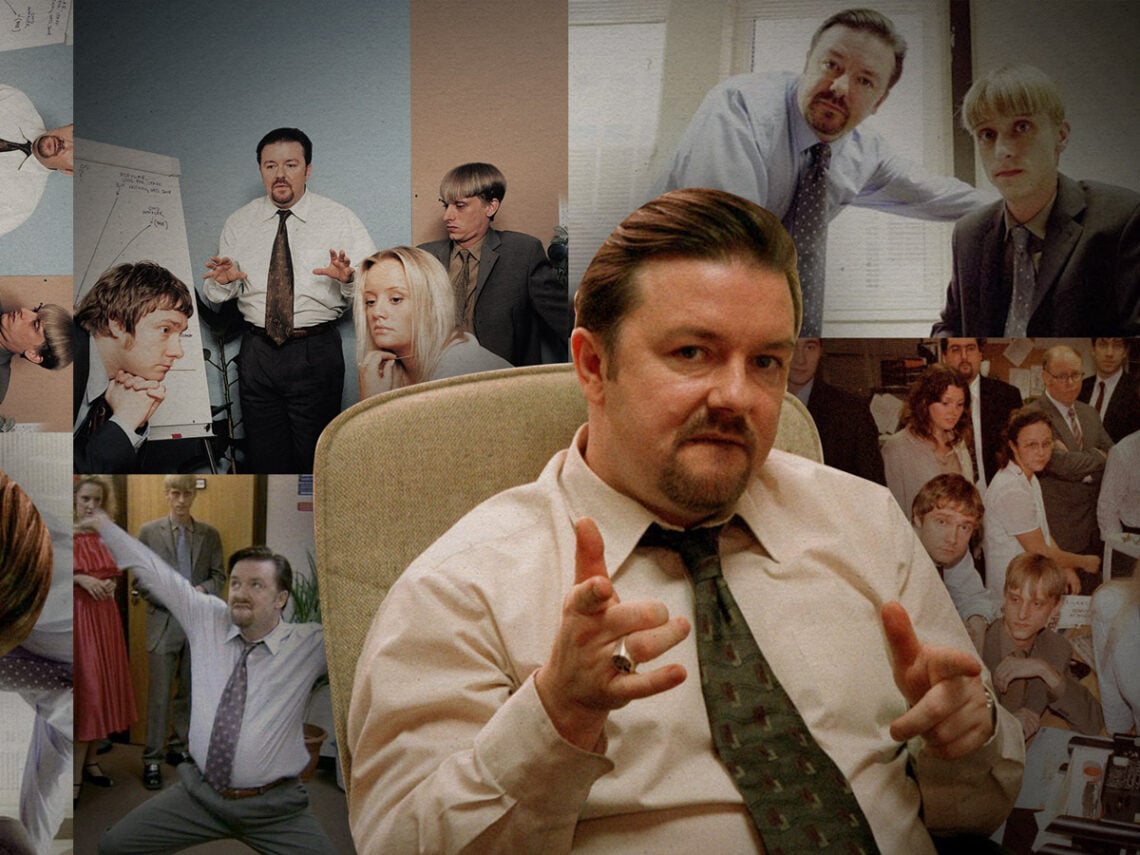
‘The Office’ at 25: how a one-day training course reinvented 21st-century comedy

Back in 2001, a new sitcom appeared on British television screens that was equal parts groundbreaking and monotonous, exciting and rather depressing, visionary and impossibly bleak. 25 years on from its first air date, though, The Office is still hailed as a masterpiece of TV comedy.
Long before the show was the international smash-hit it is today, having spawned multiple different remakes and offshoots across the globe, the realm of David Brent, Wernham Hogg, and the grey bleakness of early 2000s Slough was simply an idea kicking around in the minds of two budding comedy writers, Ricky Gervais and Stephen Merchant.
Having met in the offices of the Xfm radio station during the late 1990s, the pair quickly found that their comedic sensibilities aligned, but it wasn’t until a BBC training course that Merchant and Gervais began carving out the world that would eventually become The Office. David Brent was born during the pair’s radio days, with the character then known as ‘Seedy Boss’ invented as a means of passing the time in between working hours.
Soon thereafter, though, Merchant entered into a training course for would-be TV producers at the BBC, and the culmination of that programme was to produce a one-day video shoot showcasing your talents as a producer. Inevitably, Merchant called upon the comedic talents of Ricky Gervais for that particular project, and the pair decided to expand the role of ‘Seedy Boss’ into a delusional office manager named David Brent.
Gervais also provided the setting for that initial spark of The Office, filming the project at the University of London Union, where he was once employed, on a day in June when all the actual workers weren’t there. In essence, that short video project for Merchant’s training course was the pilot episode of The Office, but it took over a year for the BBC to commission an ‘official’ pilot episode.
In the time between that training course and the BBC commission, the videotape that the pair had created of David Brent went viral within TV production circles. Passed around some of the biggest names in television at that time, The Office was a cult success before it had even aired on TV, so it was almost a foregone conclusion that somebody at the Beeb would take a chance on it.
Then again, it is worth remembering that nothing like The Office had ever been on TV before: it was a sitcom without a live audience, filmed in the style of a fly-on-the-wall documentary, and with only very few traditional jokes. Never before had a TV audience been expected to laugh at the awkward silences in between a character’s dialogue, but with their first-ever TV project, Merchant and Gervais changed all of that.
That cult success garnered early on certainly aided the programme when it first aired on BBC Two in 2001, too. Despite relatively low rating figures, it was worshipped by critics and quickly amassed the kind of bubbling excitement that meant, when it was re-run later in the year, it became a smash-hit success, spawning a second series, a two-part Christmas special, and, some years later, an Americanised version which ran for nine series, all of which made both Merchant and Gervais two of the most successful comedy writers this side of the millennium.
Sitcoms come and go from our TV screen, but only a very select few can truthfully claim to have had the same impact as The Office, a show that rewrote the rulebook of TV comedy, largely because its writers were unaware of said rulebook when they sat down to create the show.
