


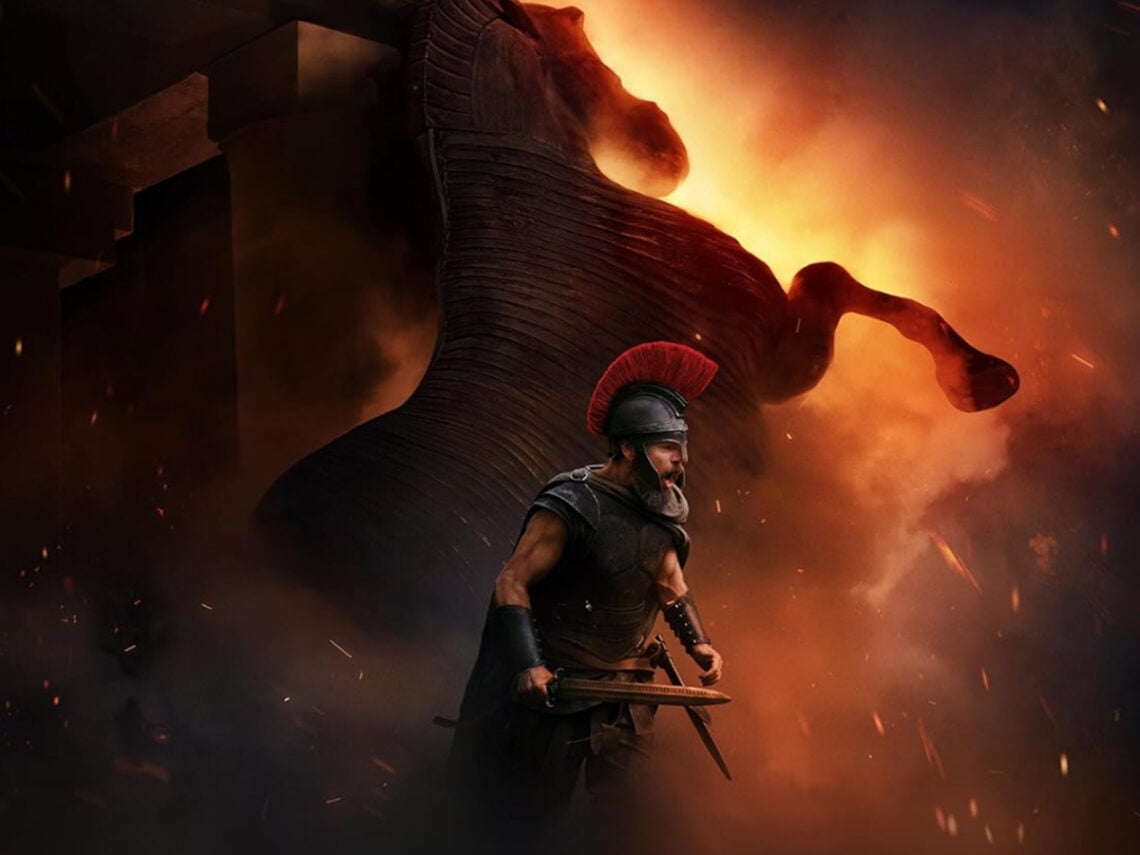
The casting of ‘The Odyssey’ tells its own story

Christopher Nolan’s adaptation of Homer’s The Odyssey has gone down well, to say the least. Opening to near-universal acclaim and raking in more money in its opening weekend than any of his previous efforts, it is already his most successful release, which is really saying something for the man who brought us The Dark Knight, Inception, and one half of Barbenheimer.
Most of the discourse around the film has revolved around its scale, cinematography, revisionist approach to the ancient poem, and emotional resonance. But what about the acting? Before its release, most of what we knew about the project was its absurdly starry cast, a roster so chock-full of cinematic royalty that it seemed like Hollywood should appoint a few designated survivors to salvage the film industry in case anything happened on set.
Now that the film is out, the only performance that has been regularly singled out is Samantha Morton’s as Circe. This is hardly surprising. Morton has been one of the greatest actors of her generation for a full three decades. Despite staying mostly out of Hollywood and its shallow portrayals of female characters, she has electrified every scene she’s been part of in major American productions. She ran away with Minority Report, made everyone else in The Whale look like amateurs, and resuscitated the well-meaning but lacklustre #MeToo journalism drama She Said.
In The Odyssey, she plays Circe, a goddess who turns Odysseus’s men into pigs. Alone with her animals in her crumbling, mountain-top tower, she is bitter, fragile, and vengeful. Morton’s performance is a staggering and all-too-short exploration of immortal pain. We don’t know what happened in Circe’s past, but we know from Morton’s performance that she has seen enough men in her unfathomably long existence to know what they are capable of at their worst. The built-up emotion is combustible, heartbreaking, and terrifying. Morton is never anything other than magnificent, and Nolan gives her just enough time to steal the movie.
The rest of the cast, though, is remarkably understated. Anne Hathaway does the most, but that is business as usual. She never turns up to a set with less than 100% of herself to give, and her performance as Odysseus’s wife Penelope is predictably but effectively impassioned. Matt Damon as Odysseus is Jason Bourne in his fifties – impressively chiselled and canny, but bent under the weight of his past. Robert Pattinson settles easily back into villainy, though he is only 50% as satanic and inventive as he was in The Devil All the Time. Tom Holland as Telemachus is Peter Parker before the spider bite. Lupita Nyong’o is fierce but brief. Mia Goth is all but invisible.

You might think that this all amounts to a lost opportunity. Samantha Morton aside, the cast largely seems to be working off of their most famous former characters, relying on the audience to draw parallels and identify tropes instead of attempting to strike out into new territory. You might assume that Nolan has reached his Tarantino and Wes Anderson phase, in which he is so bombarded with stars who want to work with him that his movies become something akin to the unfortunate World Cup halftime show – stacked with fame but not a memorable performance to be found. You might even think that, like Alfred Hitchcock, he views his actors as nothing more than glamorous pieces of furniture to be rearranged around his intricately constructed sets.
However, Nolan knows what he’s doing with actors here. He is, after all, one of only two directors who have shepherded a performance in a comic book movie to Oscar glory, and he clearly brought out the best in Cillian Murphy when he directed him in Oppenheimer. Filling The Odyssey with Hollywood splendour isn’t just about bringing in audiences; it’s about permeating the story with a sense of scale. Homer’s poem is epic in every sense of the word – epic in length, epic in plot, epic in themes, and epic in its historical import. Western storytelling is still rehashing this tale in nearly every artistic medium. It is the template, and bringing in actors who are themselves symbolic is just one of the many ways that Nolan made this movie the epic that it is.
This is most apparent in the casting of Charlize Theron as the goddess Calypso and Zendaya as the goddess Athena. Do either of them have any lines? It’s difficult to remember. But it’s also difficult to see those characters as anyone else. Theron, who has exuded an unusual combination of physical power and serenity for decades in Hollywood, is the perfect choice for playing a goddess who lives alone in an island paradise and holds Odysseus captive for seven years without him even realising it. You do not need to write pages of dialogue to get the point across. Calypso is Charlize Theron, so we understand.
Similarly, Zendaya has an otherworldly grace and intelligence about her. She wore nothing but an oversized $35 t-shirt and Louboutins to a premiere earlier this month and still outshone everyone else. Wherever she goes, she seems to command attention without ever seeming to seek it. She doesn’t do much talking as Athena, but when a revelation at the end of the movie proves that she has been the crux of the story all along, we believe it. We recognise Zendaya as a shorthand for gravitas, so it’s not a shock when her character turns out to be the key to everything.
There is another way to look at these casting choices, which is that it is very convenient for Nolan, who has always had a hard time writing female characters, let alone writing them well, to cast a movie with stars who do not need much to work with in order to perform themselves. Nolan has taken the female characters from the poem and given them weight through casting without giving them depth through writing. What a simple magic trick to cast Charlize Theron as herself instead of giving an unknown actor a meaty script with which to wow us. In his pursuit of scale, Nolan has found an ingenious method for papering over his one major deficiency as a director.
But this brings us back to the Samantha Morton performance. She is incapable of giving a bland performance, but Circe is also the one female character whom Nolan seems to have written from imagination rather than cliché. He changed her from a beautiful young seductress living in a lavish palace to a world-weary sorceress living in a crumbling stone hut. Where most of the characters, and the actors who portray them, are evoking timeless archetypes, there is a hint here that Nolan had something to say. In a movie that is lavish with meaning and emotion, the Circe character stands out.
Luckily, Nolan knew who to cast. Of everyone in the starry lineup, she is the one actor who is someone new in every movie. Across the board, the casting is as intricate and purposeful as the cinematography.
