


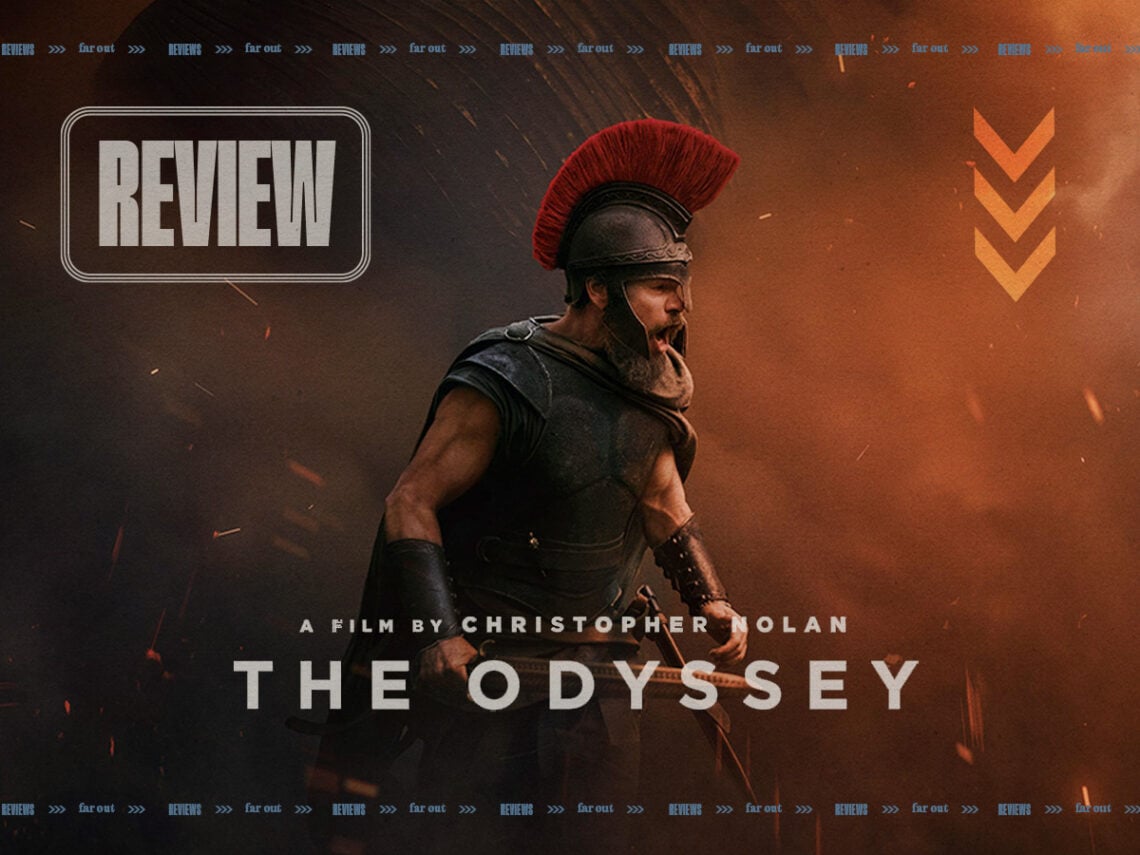
‘The Odyssey’ movie review: A deeply humane, revisionist masterclass in epic filmmaking

The Odyssey utilises Christopher Nolan’s signature time manipulation and awe-inspiring scope to question the greatest hero’s journey in history.
Although the films of Nolan have been noted for certain recurring elements, such as time loops and dead wives, the defining theme that has united them all is the paradox of greatness. Nolan tends to gravitate towards protagonists who are forced to choose between being remembered as great men and retaining their personal ethics.
Oppenheimer questioned whether the world’s most genius scientist could save the world by creating a device that would destroy it, Interstellar showed the familial sacrifice made by the saviour of humanity, and his trilogy of Batman films explored the double identity of a societal scourge who was also a city’s great protector. The tale of Odysseus, the hero of the Trojan War, is one that has served as an inspiration for generations of stories, many of which existed long before the invention of cinema.
However, Nolan ensures his interpretation is valid by dissecting the different responsibilities carried by Homer’s epic character. In trying to be a hero, a father, a leader, and a servant of the Gods, Odysseus’ greatness undercuts his goodness, making him one of the most nuanced characters Nolan has ever moulded for the silver screen.
As is often the case with his films, as well as Homer’s titular epic, The Odyssey starts in medias res, where Matt Damon’s Odysseus leads a group of soldiers as they embark home to Ithaca in the aftermath of the Trojan War, which concluded with the sacking of Troy. While Odysseus’ leadership was valued by Agamemnon, played by Benny Safdie, the Greek king of Mycenae, his defiance of the Gods resulted in a much-delayed return to his rightful place as King of Ithaca; in Odysseus’ absence, his wife Penelope, played by Anne Hathaway, is courted by many suitors, including the cunning charlatan Antinous, portrayed by Robert Pattinson.
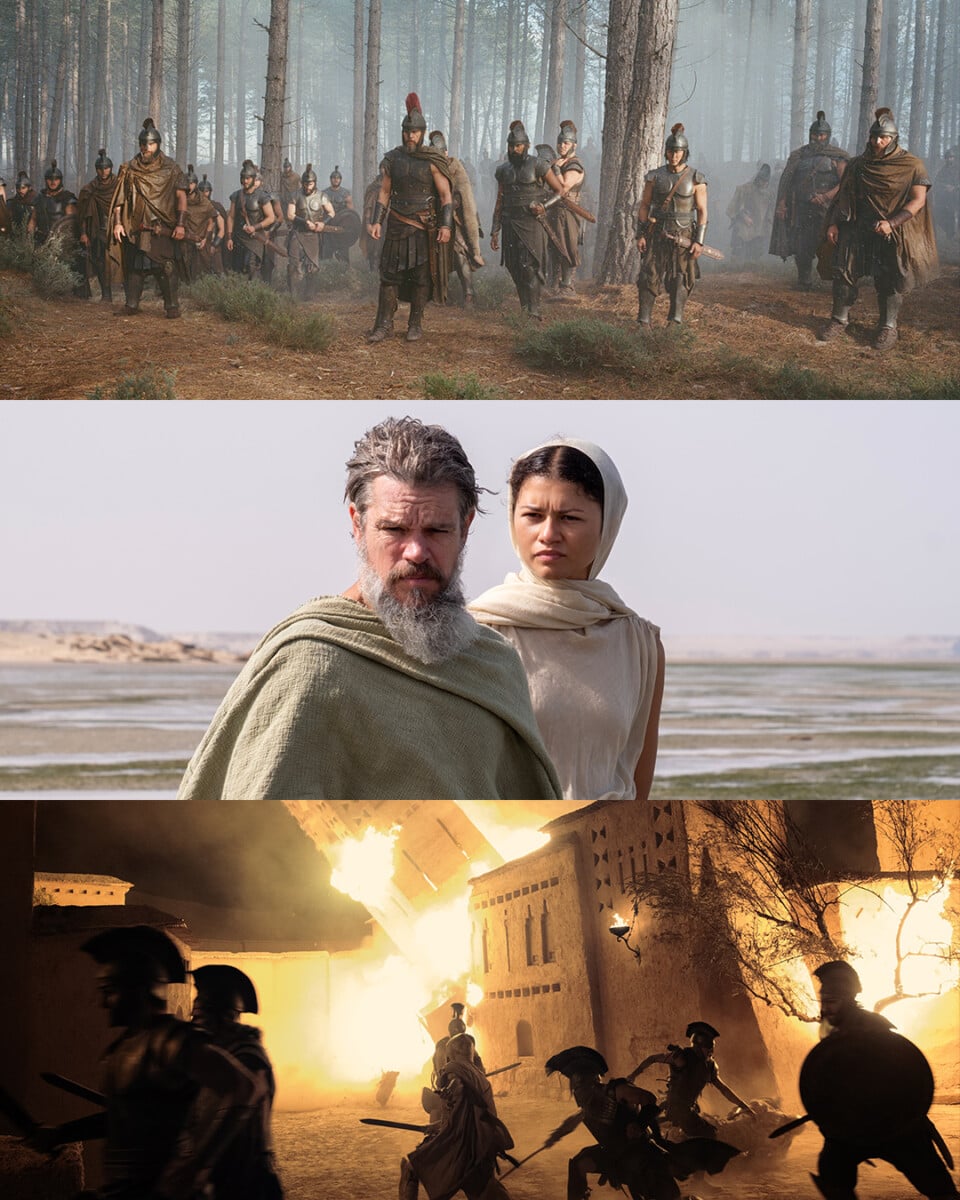
Penelope’s son Telemachus, played by Tom Holland, has strived to live by his father’s example, despite never knowing him, and has only heard stories of his heroism from the faithful servant John Leguizamo’s Eumaeus. It’s a classic case of Nolan’s race against time, but the ticking clock doesn’t solely revolve around Penelope succumbing to those who seek her hand. Rather, Odysseus’ absence from Ithaca could ruin them both, as the city has been transformed by greed and envy, with Odysseus himself tempted by darker impulses as he battles powerful creatures.
Nolan is quickly able to communicate both the scope of time in which the story is set and the massive scale of the adventure. There’s no way to take a grounded perspective on a story that is so inherently fantastical, but The Odyssey is told from a human’s point of view as the all-consuming pressures take their toll. Aside from Nolan arranging the story in a way that is dramatically satisfying, the process of storytelling is itself critical to what he is trying to say, wherein Odysseus is constantly forced to question his own motivations as he is confronted by different opponents and asked to justify his actions. The story isn’t serialised like a selection of escapades, but arranged to offer kernels of truth before the larger tapestry is revealed.
It shouldn’t come as a surprise that Nolan has made another visually stunning film with electrifying set pieces, but The Odyssey is clever in how it instructs its audience to view it. The monstrosity of Homer’s most imaginative creatures is surprisingly subdued because of how the director sees them as part of nature, especially in comparison to the ruthless warfare scenes (which more than earn the film its R-rating).
The practicality of the makeup, costumes and sets ensures that every sequence is well-defined in its own right, and each set piece has a clear purpose in the story. Thanks to how much of the film is told in flashback, Nolan is able to stick to the essentials of the mythology without ever feeling like significant moments are passed over, and it helps that the score by Ludwig Göransson embodies both the grandiosity of the scale, while making room for moments of unbridled intimacy.
Much has been made of Nolan’s supposed ‘modernisation’ of the Greek text, but his version is a largely faithful adaptation that nonetheless avoids feeling derivative. A three-hour-long film that was solely composed of frantic, high-artillery war scenes would become dull, and Nolan is able to use each chapter within The Odyssey indebted to a different subgenre of note. The encounter with the cyclops Polyphemus, played by Bill Irwin, is a confined, claustrophobic feat of suspense, whereas the seductive song of the sirens is an ethereal, tragic feat of experimentation evocative of Terrence Malick.
Perhaps the most impressive of these subquests is the body horror that awaits Odysseus’ men upon their encounter with the witch Circe, portrayed by Samantha Morton, on Aeaea, who offers the perspective of a survivor aided by the gods, yet threatened by men, and her performance is simultaneously tragic and terrifying; it’s worthy of a nomination for ‘Best Supporting Actress’ at next year’s Oscars.
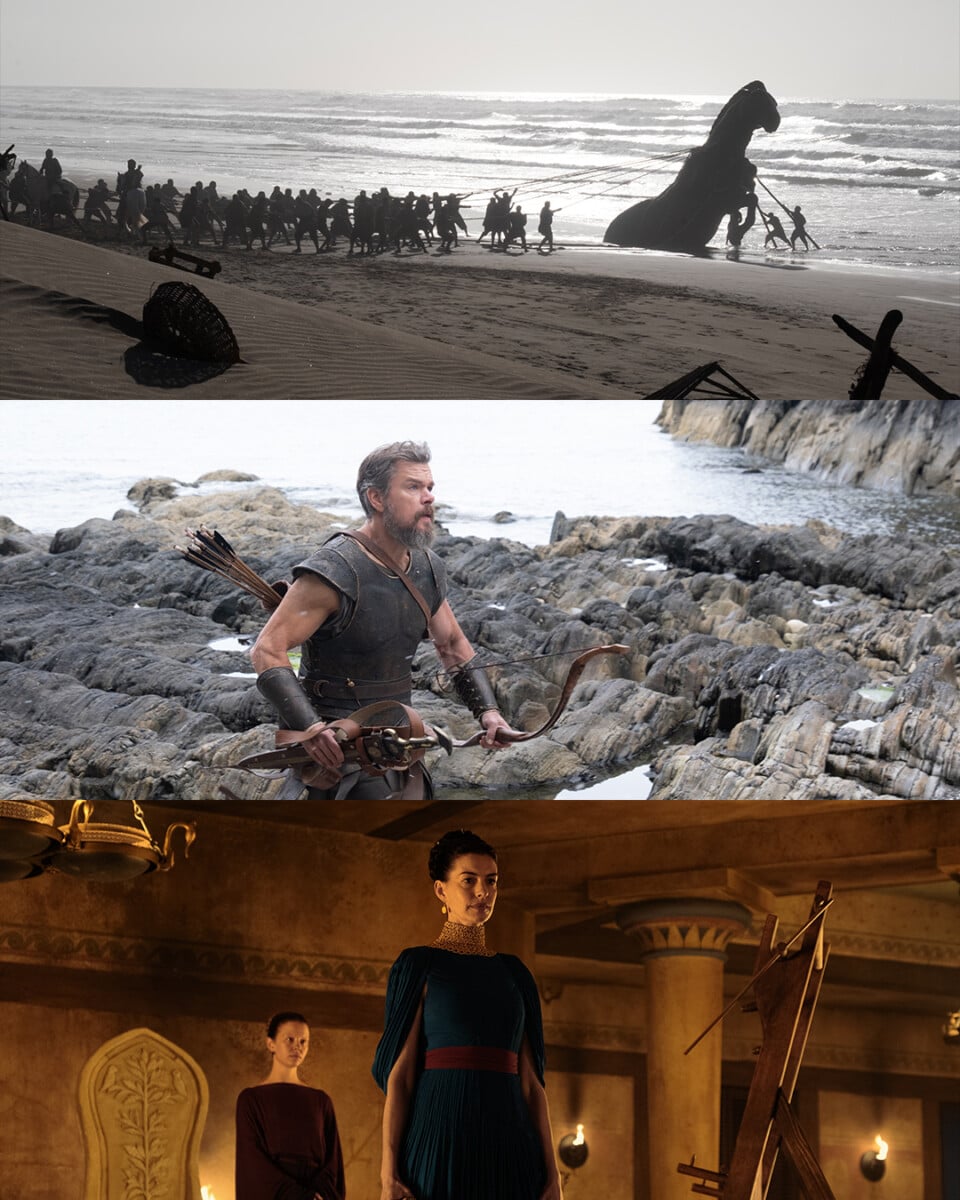
Of course, choosing just one performance to highlight would nearly be an impossibility, given how stacked the cast is. As was the case with Oppenheimer, where Nolan utilised a troupe of A-listers to signify historical figures of note, The Odyssey is dense enough that every actor can give substance to their characters and expand them beyond a defining characteristic. Jon Bernthal’s Menelaus is both a loudmouthed veteran and a surprisingly candid paternal figure to Telemachus, and his real-life friendship with Holland makes their characters’ dynamic even stronger.
Pattinson nails another slimy, despicable villain role because Antinous represents a very recognisable type of cowardice; on the flipside, Leguizamo offers the necessary perspective of a common man motivated solely by goodness, and his performance is surprisingly moving. In finding actors who can embody both ethereal knowledge and authentic emotion, Nolan made smart decisions in casting Zendaya and Charlize Theron as Athena and Calypso, respectively, as both maximise the limited screen time that they are allotted.
Yet, it comes down to Damon to carry the film on his shoulders, and it’s hard to think of a more durable movie star who could better take on this role. Odysseus is a character whose life is defined by combat and conflict, so it’s fitting that he would be portrayed by an actor who has been a consistent presence in movies for over three decades, and moreover, Damon’s inherent likability is critical for making Odysseus’ darker turns more shocking, but he also shows the lifetime of regret, longing, and bloodlust that make for a nuanced character. What’s most remarkable is the strong connection between Damon and Holland, who offer mirror sides of the same journey, despite very few scenes together.
The Odyssey is the film event of the year because it realises Nolan’s ambition of making cinema that needs to be experienced, and not just consumed. This is a story that can’t exactly be ‘spoiled’, but the visualisation, thematic analysis, and emotional calculations inherent to the filmmaker’s interpretation justify another retelling.
While a film can’t solely be judged by its ambitions, that Nolan managed to spin something original out of one of the most famous stories ever told is yet another sign of why he is without competitors.
