


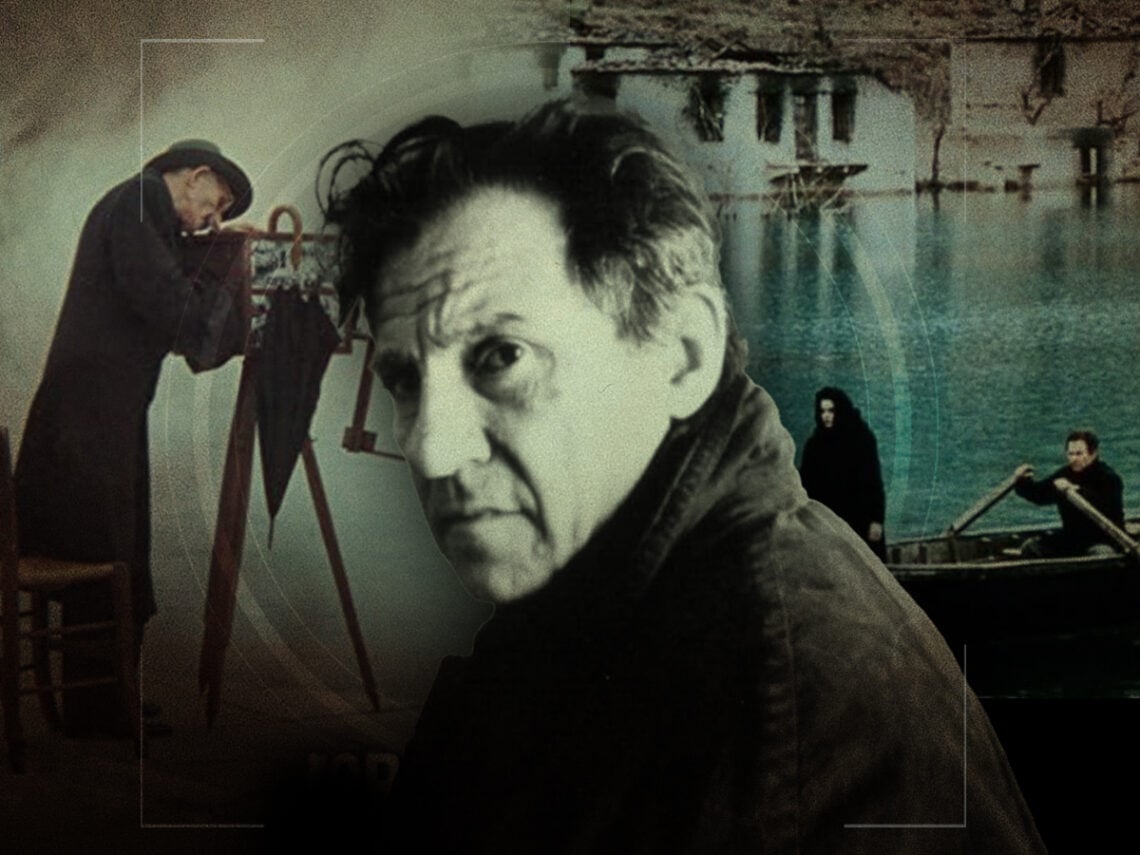
Looking back on the 1995 Greek adaptation of ‘The Odyssey’ starring Harvey Keitel

It’s no secret why there have been so few film adaptations of Homer’s The Odyssey.
This ancient tale of physical and emotional voyage, temptation, divine intervention, and family loyalty is shot through with mythical creatures, fantastical disasters, and epic geography. Passed from generation to generation through the spoken word, it is meant to be heard, not seen. Like all great works of art, it is contingent on its medium, and that medium is not cinema.
Filmmakers have been wrestling with unfilmable stories since the very beginning, though, from Millard Webb’s adaptation of Moby-Dick in 1926 to Tom Tykwer and the Wachowskis’ adaptation of Cloud Atlas nearly a century later. Adaptations of The Odyssey date back even further. In 1905, Georges Méliès released a four-minute film called The Mysterious Island, which depicted Odysseus’s stint with Calypso and his run-in with the cyclops. Since then, there’s been an Italian-American epic starring Kirk Douglas, a spaghetti western, and, of course, the Coen Brothers’ O Brother, Where Art Thou? Christopher Nolan’s upcoming adaptation promises to be as straight-faced and literal a version as $250million can buy.
One of the criticisms that Nolan’s production has faced is its complete lack of Greek actors. The cast list is so full of Hollywood stars that it makes the guest list of Taylor Swift’s wedding look like the callsheet for a micro-budget indie movie, but amongst all these famous faces, you will not find a single Greek. You won’t even find a movie star with Greek ancestry, even though it would have been incredibly easy to cast one. If you’re going to have Matt Damon and Charlize Theron, you may as well throw in Hugh Jackman and Jessica Chastain.
For viewers who want to correct this historical wrong, you can simply turn to a 1995 adaptation of Homer’s epic, directed by the Greek filmmaker Theo Angelopoulos. Ironically, Ulysses’ Gaze stars Harvey Keitel, who doesn’t seem to have any Greek heritage whatsoever. When it premiered at Cannes, Ulysses’ Gaze won the Grand Jury Prize, but it was cryptic and slow-moving enough that when it came time for Oscar nominations, it was passed over. This is a shame, because the film is unabashedly poetic, a languid, contemplative, modern take on an epic tale that feels both profoundly personal and universally existential.
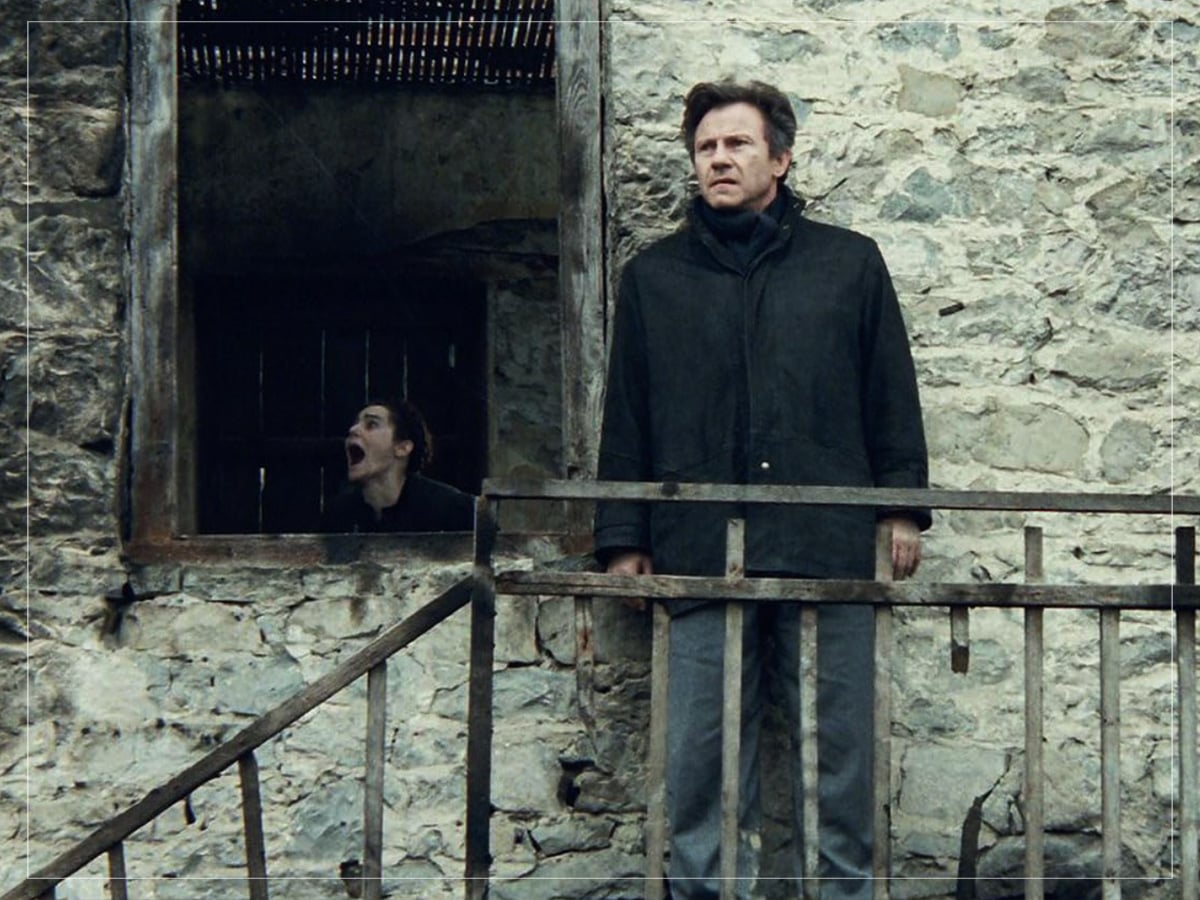
Set in the present, it stars Keitel as a filmmaker who returns to his hometown in Greece after building an illustrious career in America. His ostensible reason for the trip is to attend a retrospective of his work, but what he’s really after is three rolls of lost film that supposedly contain the first footage ever captured of the Balkans. Like Odysseus in Homer’s epic, the filmmaker must travel through a vast expanse of place and time, traversing land and water and meeting trials both internal and external along the way. His journey takes him through Albania, Macedonia, Bulgaria, Romania, and Bosnia and Herzegovina, where he finds an ally in war-torn Sarajevo.
Known for his exceptionally long takes, Angelopoulos did not modulate his style for an American audience when he made Ulysses’ Gaze. It meanders between silent long shots of icy tundras and snow-packed winter streets, cryptic pearls of wisdom and riddles about life, death, and the Balkans, and snippets of the long-lost film that the central character is searching for. In addition to the thematic parallels, Maia Morgenstern portrays multiple modern interpretations of characters from Homer’s story, including the protagonist’s long-lost love Penelope, the island nymph Calypso, and the spell-casting Circe.
The film is at turns meditative and mannered, with mesmerising cinematography and stilted language that will sound either profound or pretentious, depending on who’s watching. Keitel, for all his countless defining performances, is less of an actor in the movie than a vessel for its director’s vision. His character is reduced simply to the name “A,” and while Odysseus did his fair share of high-action doing, A is more of an observer, drifting ever closer to his grail as if in a dream.
In the most visually memorable section of the movie, A leaves behind a quietly sobbing widow, while in the background, an enormous head of a Lenin statue is lowered by a crane onto a barge. In the next scene, A stands at the front of the barge, the building-sized pieces of the dismembered statue looming behind him. It’s a striking embodiment of the collapse of the Soviet Union and a region reduced to rubble, and although its practical meaning doesn’t quite hold up, its symbolism is unmistakable, and its execution is bold, to say the least.
Ulysses’ Gaze proved to be polarising. While it won the Jury Prize at Cannes, many critics were left unimpressed. Roger Ebert was among them. Dismissing the film as “a numbing bore” and “almost unendurable,” he accused Angelopoulos of arrogance and self-importance. Its slowness revealed little, he argued, and its imagery, though occasionally arresting, was devoid of meaning. Keitel was, not surprisingly, on the other end of the spectrum. Working with the director was, he explained, like working with Homer himself. “His talent was huge,” he said. “His talent was so intense, so deep, so profound… He’s one of the great filmmakers that ever lived.”
Whether you love the film or loathe it, there is no denying that its commercial potential was slightly below that of a Samuel Beckett anthology. Nolan fans will not be flocking to see this movie, even if it was readily available to stream (I can attest that it is exceptionally hard, though not impossible, to find). However, it is one of the more creative takes on the story, swapping the turmoil of the Mediterranean after the Trojan War for the turmoil of the war-torn Balkans in the 1990s. Keitel remembered that the production was its own form of odyssey, containing freezing temperatures, landmines, and cities under siege.
Perhaps most importantly, Ulysses’ Gaze comes from one of Greece’s great auteurs. His personal vision and cinematic philosophy are written all over the film, and it remains a powerful snapshot of a turbulent time in the region he called home. It also demonstrates how ambitious filmmaking does not require an astronomical budget. At nearly three hours, the film is monumental on nearly every level, but its epicness comes down to time, space, and abstraction, not special effects.
