


Achieving the impossible: 10 “unfilmable” stories that made it to the screen

Thanks to advances in technology, the list of stories that can unequivocally be called unfilmable continues to dwindle because cinema always seems to find a way of realising the impossible.
It’s not just about the challenges presented by creating far-flung worlds or spinning a yarn against the most epic backdrop, though, with authors rarely scribbling down their latest tale while having one eye on selling off the film rights and making a killing.
Literature and film have always gone hand-in-hand, but that doesn’t mean everything in one medium is applicable to the other, and vice versa. There have been plenty of adaptations abandoned once it became clear there was no way it was going to work, but perseverance often pays off.
In the case of the following ten titles, many of them spent years, if not decades, in development hell, only to cross that final frontier and make it into cinemas. In an even more welcome turn of events, most of them are pretty damned good, too.
10 “unfilmable” stories that became movies:
10. Gerald’s Game (Mike Flanagan, 2017)
Stephen King has been a favoured conduit for film and television adaptations dating back decades, but for the longest time the story was considered unfilmable because it takes place largely within the mind of protagonist Jessie Burlingame.
It’s hard to extract much cinematic tension from a tale revolving around a person handcuffed to a bed who relays information through their internal monologue, with director Mike Flanagan even admitting that when he read the novel, he “thought it was amazing but unfilmable”.
As it turned out, the trick was to manifest Jessie’s psychological state in a more physical manner, presenting star Carla Gugino with a character she could both act and react to. Based on the infamous degloving scene, though, some folks would have preferred if Gerald’s Game stayed unmade.
9. Watchmen (Zack Snyder, 2009)
A deconstruction of the superhero genre that ends with a giant squid causing havoc through some interdimensional shenanigans was too tough of a nut for Hollywood to crack, at least until Zack Snyder came along.
Terry Gilliam, Darren Aronofsky, and Paul Greengrass all tried and failed to turn the alt-history tale of good versus evil and a looming nuclear apocalypse into a workable screenplay until Snyder decided the best thing to do was simply recreate the graphic novel almost beat-for-beat.
He made one major alteration to the ending, but for the most part, his Watchmen faithfully recreates the source material in slavish fashion. ‘If you can’t beat ’em, mimic it identically’ was the rallying cry, and it finally ended two decades of development hell.
8. Orlando (Sally Potter, 1992)
Virginia Woolf’s novel had been performed several times over on the stage before Tilda Swinton played the title role on the big screen, but for a long time the core concept was judged as being too tricky to repurpose for celluloid.
Spanning centuries, Orlando follows a character born as a male nobleman who changes sex to a woman midway through the story and then spends the next several hundred years walking through life as an ageless existential being.
Director Sally Potter rejected requests to cast two actors in part due to her ironclad belief in Swinton, which paid off handsomely when she gave a tour-de-force performance. Thematically rich and societally resonant even today, it was an ambitious undertaking that made a mockery of Orlando‘s unfilmable tag.
7. Lolita (Stanley Kubrick, 1962)
From the second Vladimir Nabokov’s novel was first published in 1955, it was immediately deemed unfilmable due to its shocking and graphic content, but Stanley Kubrick had other ideas.
Even getting it accepted by a publisher was difficult, which is completely understandable when the taboo subject matter of a middle-aged man becoming infatuated with a child was viewed as somewhere between shocking and despicable.
Kubrick made changes to squeeze past the censors and inadvertently opened the floodgates. Since he filmed the unfilmable, Lolita has been remade, transformed into a stage musical, performed as a play, and inspired an opera, so maybe everyone was simply waiting for someone to get there first.
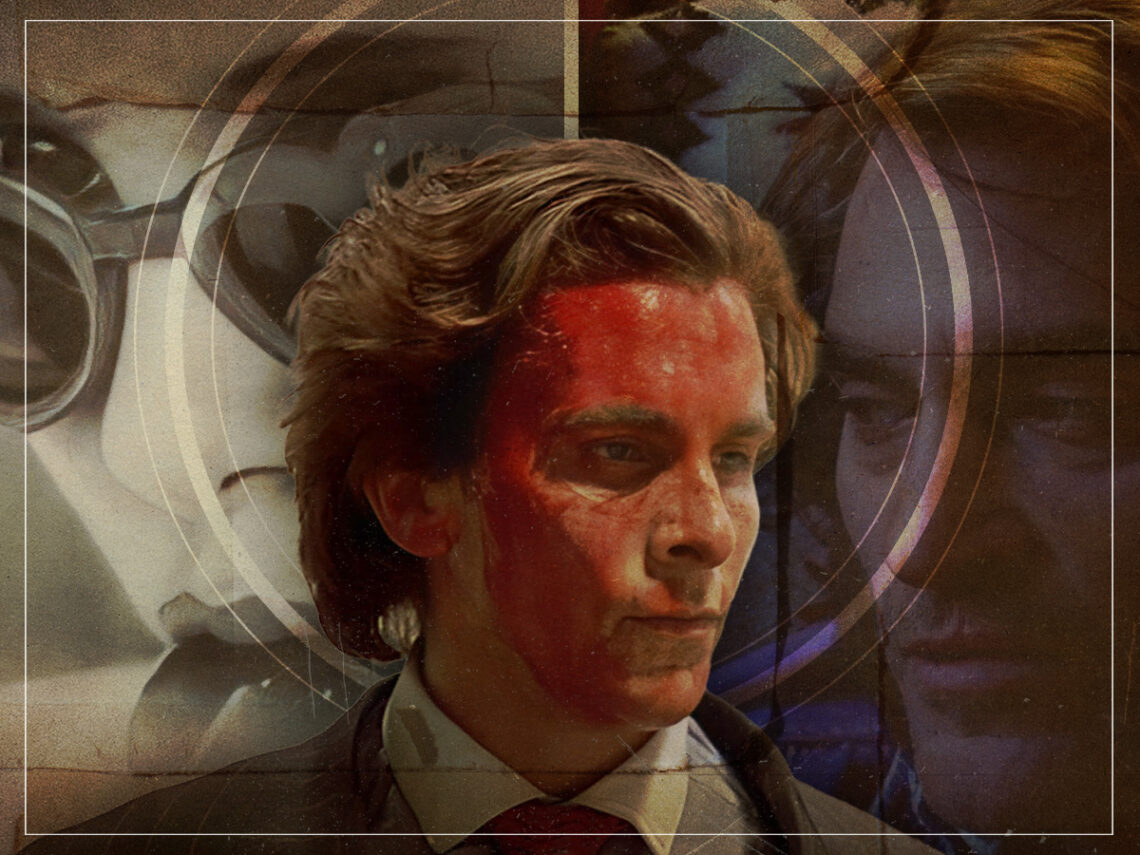
6. American Psycho (Mary Harron, 1999)
It was no less of an authority than author Bret Easton Ellis, who declared American Psycho unfilmable, with the writer believing his 1991 novel didn’t carry a single ounce of cinematic potential.
For a while, it looked like he might be right as the production cycled through several potential directors and prospective stars, all while a studio nervously watched on to see if the controversial first-person subject matter could serve as the backdrop to a narrative feature.
Of course, director Mary Harron and star Christian Bale made a mockery of those assumptions, turning Patrick Bateman’s inner monologue into a key device for exposition and analysis, all while raising plenty of questions over where the fact ends and the fiction begins.
5. Naked Lunch (David Cronenberg, 1991)
Being a very outlandish and exceedingly weird novel, Naked Lunch required a very outlandish and exceedingly weird director to even contemplate bringing it to the screen. Enter David Cronenberg.
Packed to the gunnels with sex, drugs, violence, body horror, phantasmagorical asides, a severe dearth of a tangible plot, and literary eccentricities that couldn’t possibly hope to be translated to film, it’s an unwieldy and aimless beast that encapsulates William S Burroughs.
Finding his way into the story though Peter Weller’s Bill Lee, Cronenberg somehow managed to wrangle Naked Lunch into a cohesive whole, or at least something approximating it. That deviation turned out to be masterstroke, because there’s no way it could have been captured as is.
4. Cloud Atlas (Tom Tykwer and the Wachowskis, 2012)
Even by the standards of the duo responsible for The Matrix, the Wachowskis faced a huge battle when they partnered up with Tom Tykwer to whip Cloud Atlas into cinematic shape.
A sprawling tome that covers multiple genres, dozens of characters, disparate time periods, and all manner of mind-bending musings, the structure alone was enough to have it labelled as unfilmable from the second it hit shelves.
Author David Mitchell was convinced it couldn’t be done, and while mileage varies on whether or not Cloud Atlas accomplished it to a worthwhile degree, it can’t be denied the interweaving sci-fi epic is an impressive achievement by virtue of the fact it even exists.
3. Inherent Vice (Paul Thomas Anderson, 2014)
A general rule of thumb for any director scouring bookstores for their next movie was that Thomas Pynchon couldn’t be adapted and done justice, whereas Paul Thomas Anderson embraced it as a challenge.
The end result was the frustrating, maddening, and fascinating Inherent Vice, which didn’t even attempt to iron out the kinks of the source material by instead opting to embrace the madness and plunge every fibre of its being into a fugue of drugs and confusion.
It might be one of the more polarising entries in Anderson’s filmography, but the people who love Inherent Vice really love it, while those who didn’t have any other option but to give him props for even trying.
2. Life of Pi (Ang Lee, 2012)
It wasn’t just the technical limitations of cinema that prevented anyone from adapting Life of Pi until Ang Lee steered it to massive critical and commercial success, it was the content itself.
A meandering rumination on life, longing, spirituality that was packed with symbolism and reflections on the very notion of being, a young man trapped on a boat with a tiger while drifting aimlessly at sea didn’t possess obvious chops to enthral audiences around the world.
Lee had the last laugh in that regard, though, with the movie clearing $600million at the box office and winning four Academy Awards including ‘Best Director’, ending years of fruitless attempts in the most spectacular of styles.
1. The Lord of the Rings (Peter Jackson, 2001-2003)
For decades, JRR Tolkien’s The Lord of the Rings was the white whale of fantasy cinema, but no matter how hard anyone tried or how much time they invested, the trilogy remained unfilmable in live-action.
Naturally, it was a filmmaker who made their name in no-budget splatter cinema who managed to get it over the line, with Peter Jackson roundly discrediting the widely-held belief that Middle-Earth and cinema could never coexist in industry-shaking style.
His trio notched close to $3 billion at the box office, won a combined total of 17 Oscars from 30 nominations, and secured a spot in history as one of the medium’s most monolithic accomplishments. If anything, the miserable Hobbit series underlined that it was a once-in-a-lifetime achievement.
