


The 10 essential films from the ‘Greek Weird Wave’

Cinema has existed in Greece since the turn of the twentieth century, facilitating the evolution of Greek cinema through distinctive eras like the Golden Age and the Postmodern period. The ‘Greek Weird Wave’ refers to the emergence of a subversive brand of films in the last two decades which explore political and cultural issues in unsettling ways. Made with restricted budgets due to the country’s financial situation, the Greek Weird Wave has managed to grab the attention of audiences on a global scale.
One of the leading figures of the Greek Weird Wave, Yorgos Lanthimos, recalled in an interview: “Growing up in Greece, it was not very common for a young boy to say, ‘I’m going to become a filmmaker.’ At least back then, there weren’t many filmmakers and no industry. So I was interested in films, but it started with a plan that sounded more feasible—to study film and television in order to make commercials, which is a real job where someone can make a living.”
He added: “That’s why I went to film school. But, of course, in school I became more and more in love with films. Although I did start making a lot of commercials very early on—that’s where I got my technical experience—I always had in mind that I wanted to make a film. So, at some point, we just started making our own films—a few friends asking for favours, using friends’ houses, clothing and cars.”
As a part of our weekly spotlight on world cinema, we look at ten essential films from the burgeoning Greek Weird Wave in order to understand the unique sensibilities of this important movement in cinema.
10 essential films from the Greek Weird Wave:
The Wretches Are Still Singing (Nikos Nikolaidis – 1979)
Although Nikos Nikolaidis is technically not a part of the Greek Weird Wave, his works have been clearly influential for the newer generations of directors. This 1979 experimental film launches a powerful investigation of social values by examining a group of friends who have a reunion after a long time. It is now regarded as a cult classic, incorporating elements of film noir and surrealism.
In one of his last interviews, the veteran filmmaker explained why he chose cinema as the medium for his art: “Ever since I was a kid I knew that if my imagination and reality never clicked I would be unhappy. So I did the only thing I could do: I made my fantasies reality.”
Dogtooth (Yorgos Lanthimos – 2009)
Yorgos Lanthimos is arguably the most well-known entry on this list, having made several internationally acclaimed films like The Lobster and The Killing of a Sacred Deer. Dogtooth presents a disturbing case of deranged parenthood where the parents manipulate the children and keep them closed off from the external world. The film earned an Oscar nomination for Best Foreign Language Film.
“We didn’t do any research at all, because I thought it was such a surreal story we were working on,” Lanthimos revealed. “It was only afterwards, when we were already rehearsing, that this Austrian story came out about the father who kept his daughter in the basement, where she grew up like an animal, and he had children with her. But still, this felt very different from what we were trying to do since it had a very different tone to it, way too dark and dreadful.”
A Woman’s Way (Panos H. Koutras – 2009)
Also known as Strella, this 2009 drama explores the romance between a middle-aged ex-convict and a young transgender prostitute. The film navigates the labyrinths of crime, sexuality, gender and love in a very provocative manner, forcing the audience to engage with the material.
“Before Strella I think we did not have a film with a Trans woman as the lead actress, so in that sense yes I was the first one directing a film like that,” the director said. “So the subject of Strella wasn’t just a theme of a trans woman but it was also about the abandoned, loneliness, love and of course the dysfunctional family.”
Knifer (Yannis Economides – 2010)
A brilliant meditation on the human condition, Knifer follows the story of a man who is pushed to the limits of despair. After his father’s death, Niko is devoid of any ambition and starts living in a disconnected suburb where he decides to come to terms with his existence through violent means.
Economides explained, “I build my characters through observing people around me. I’m not interested in the reasons why something happens as much as what comes next. As an artist, I work with the human condition, human nature.
“The darkness of the human soul has been ever present. There is no reason why. That is how human beings are and jealousy, hatred, arrogance, avarice are archetypical facts of human nature. I try to shed light on the Greek version of all this.”
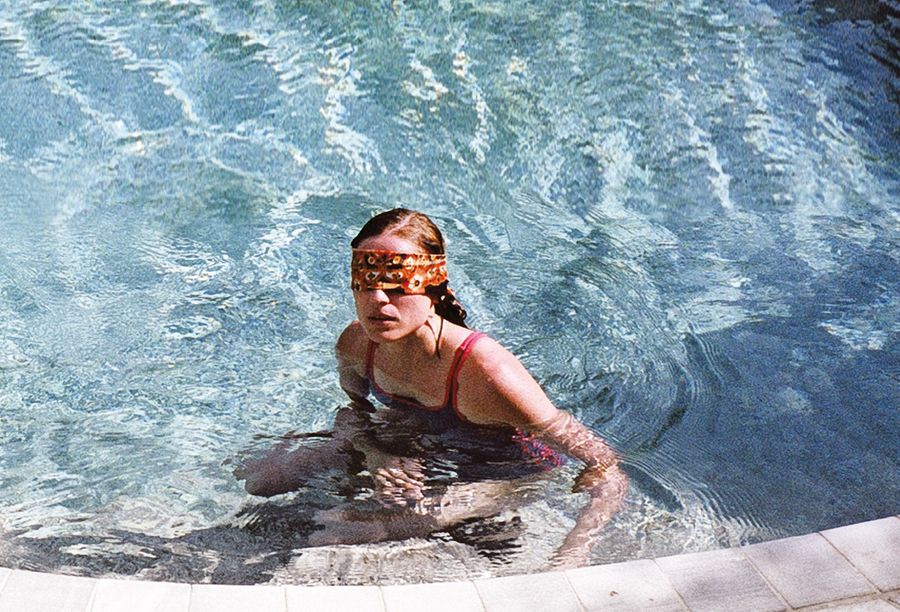
Attenberg (Athina Rachel Tsangari – 2010)
Attenberg stars Ariane Labed as Marina, a 23-year-old woman whose emotional abilities haven’t adapted to human society. She finds the human species to be strange and only likes to view the world through the lens of Sir David Attenborough‘s animal documentaries. For her brilliant performance, Labed won the Coppa Volpi for the Best Actress.
The filmmaker said: “What is great about New Greek Cinema is that all films are so different. I personally do not see any similarities between Dogtooth and Attenberg other than Yorgos [Lanthimos] and I—we worked very closely with each other. When you work with someone so close, of course you share some sensibilities. You have similar codes. And since we are friends, we watch the same films and thus use the same references.”
Boy Eating the Bird’s Food (Ektoras Lyzigos – 2012)
Loosely based on Knut Hamsun’s novel Hunger, this 2012 drama follows a boy from Athens over the course of three days. He is at a point in his life where he has no employment, no partner and no future. The only thing he has left is his canary, forcing him to form an intimate connection with the bird.
Lyzigos commented, “Throughout the whole film, as a director and camera holder, I developed the same kind of feeling towards the character, which was not compassion, pity, mercy, or being objective. It was kind of being neutral, not cold-blood, even though the camera took so much part in the story. I just wanted to be there, feeling what he felt and capturing his actions.”
Miss Violence (Alexandros Avranas – 2013)
One of the most famous films from the Greek Weird Wave, Miss Violence explores the dark secrets of a troubled family. Miss Violence received international acclaim and several accolades, including the prestigious Silver Lion for Best Director at the Venice Film Festival.
“In the year of 2002, I was living in Berlin and heard about the story of an 11-year-old girl who had committed suicide. I was shocked beyond measure and I simply couldn’t imagine any reason why such a young kid would take her own life away. I guess Miss Violence is my way to try to understand such a tragedy,” Avranas said.
The Eternal Return of Antonis Paraskevas (Elina Psykou – 2013)
This 2013 film presents the story of an ageing talk show host who fakes his own kidnapping in order to get out of debt. Psykou launches a scathing indictment of the celebrity culture, slowly exploring the pernicious possibilities of mass media.
While talking about the connotation of the Greek Weird Wave, the director said: “As to the term ‘weird’, for me, it is not a taboo, I like weirdness and weird characters, there are a lot of them among us, and in a way, this is one of the main reasons I make movies: To explore weirdness and darkness in the common people’s everyday life. As weirdness was in my mind before journalists discovered and named it, for me it is a lot more than a term, it is my code for understanding life, communicating, laughing and crying.”
Interruption (Yorgos Zois – 2015)
Inspired by a real event, Interruption successfully blurs the lines between fiction and reality with terrifying ambiguity. People have gathered in an Athens theatre to witness a postmodern adaptation of a Greek tragedy when mysterious gunmen enter and take control of the show, leaving the audience guessing whether all of it is a part of the act.
Zois elaborated, “Cinema for me, firstly is the way I have chosen to live. At least for now. Secondly is a weapon. A weapon that you can point in many directions at the same time. You can shoot and no one would even notice, you can act like a sniper and shoot on a specific target.
“Deep down I feel that this weapon is something that you do not have many chances to use in your life. So, it is good to choose when, how and where you do so. Every film is a battle.”
Suntan (Argyris Papadimitropoulos – 2016)
Suntan follows the pathetic life of a 40-year-old doctor who becomes obsessed with a teenager after moving to a remote island. The film received critical acclaim and won the prestigious Best International Film Award at the Edinburgh International Film Festival for its disturbing presentation of human depravity.
The filmmaker said: “Contrasts compose my everyday life, the mercurial ups and downs of my own emotions between joy and sorrow, an alternation which constitutes a part of the human condition. So they help me say more things, form my characters and show their internal conflicts. What I’m trying to do as a director is to say what I want to say without words. I don’t like didactic films or preachy directors.”
