


10 essential films from the L.A. Rebellion movement

Originating in the late 1960s and gaining momentum in the ’70s, the L.A. Rebellion was a unique movement in the history of cinema. It was the result of the collective efforts of young Black filmmakers studying at the UCLA Film School during that time. Frustrated with the lack of originality and the prejudices of Hollywood, they produced experimental and unconventional films which were inspired by African cinema, Italian neorealism as well as cinema from Latin America.
One of the major figures of the L.A. Rebellion, Ben Caldwell, once said: “The L.A. Rebellion started in actually 1971. We have been labeled the L.A. Rebellion because we all basically said we weren’t going to work under the rubric that Hollywood set up on showing our culture. At that time, we didn’t know it but it ended up being called blaxploitation films. We refused to kind of be filmmakers that worked in it because we really got smitten by the whole idea of independence again.”
He added: “And so we were able to do films ourselves then we say, ‘Why should we sell out and do something that we don’t like, that doesn’t represent our culture? We want to have jazz in our work. We want to have feelings in our work. We want to have tension the way the neighbourhood deals with it, tension in our work.'”
As a part of our weekly spotlight on world cinema, we look at ten essential films from the vastly influential L.A. Rebellion movement as a tribute to the pioneering filmmakers who tried to create a new form of cinema.
10 essential films from the L.A. Rebellion movement:
Medea (Ben Caldwell – 1973)
An interesting collage film that was made on an animation stand, Medea is a meditation on the history of art as well as an exploration of Black identity and tradition. The film is an intersection of live action and edited images of the Black community, presenting a vision that is experimental and familiar at the same time.
The filmmaker recalled, “We were all U.C.L.A. students. Vice Chancellor of U.C.L.A. C.Z. Wilson was brought in to deal with our generation because our generation was raising hell around the world. There was the Black Panthers that was happening, us was happening, and then there was the Weather Underground that was happening. So it was just really like the Arab Spring going on except it was in the Black community and it also touched base with a lot of other people. Even in small communities, people were starting to activate.”
Passing Through (Larry Clark – 1977)
Now a film professor at San Francisco State University, the works of Larry Clark influenced newer generations of filmmakers who carefully studied the importance of the L.A. Rebellion. His magnum opus is the 1977 drama Passing Through, which was his stunning Master’s thesis for his academic work at UCLA’s film school.
The film starred Nathaniel Taylor as a jazz musician who is tired of the criminals controlling the music industry. In order to revisit his roots, he makes his grandfather his mentor. Clark’s moving film beautifully explores how jazz music worked as a medium of cultural expression, pointing out that the industry was no longer controlled by the artists.
Killer of Sheep (Charles Burnett – 1978)
Made as a university thesis by one of the more famous filmmakers from the L.A. Rebellion, Burnett’s 1978 drama follows in the footsteps of Italian neorealism while telling the story of African Americans living in Los Angeles’ Watts district. The film moves away from conventional narrative techniques and chooses to deliver its powerful message through memorable vignettes instead.
Burnett commented, “The thing about making films about people of colour is that studios don’t want the depth and dimensions that take place. You try to make it realistic and true to life and then you have people at the door saying, ‘No. I want it this way or that way.’ They have no clue what it was like there. So you’re constantly fighting people who somehow got the ear of these producers, and you’re trying to make these movies that don’t do justice to what’s going on.”
Bush Mama (Haile Gerima – 1979)
A tragic story of the failures of police institutions and inadequate social welfare programs, Bush Mama follows Dorothy whose husband gets wrongfully arrested after returning from the Vietnam War. Struggling to deal with poverty, the universe pushes her to the edge until she is forced to resort to violence.
Gerima explained: “I come from a generation of filmmakers — especially those who came in the late ’60s, early ’70s —where making films away from the industry was not the most popularly accepted proposition. Nevertheless, we did movies. These movies were symbolically confronting the idea of storytelling without the official sanctioning of an industry. A great many independent filmmakers who felt they do not exist in the cinema were beginning to express themselves.”
Penitentiary (Jamaa Fanaka – 1979)
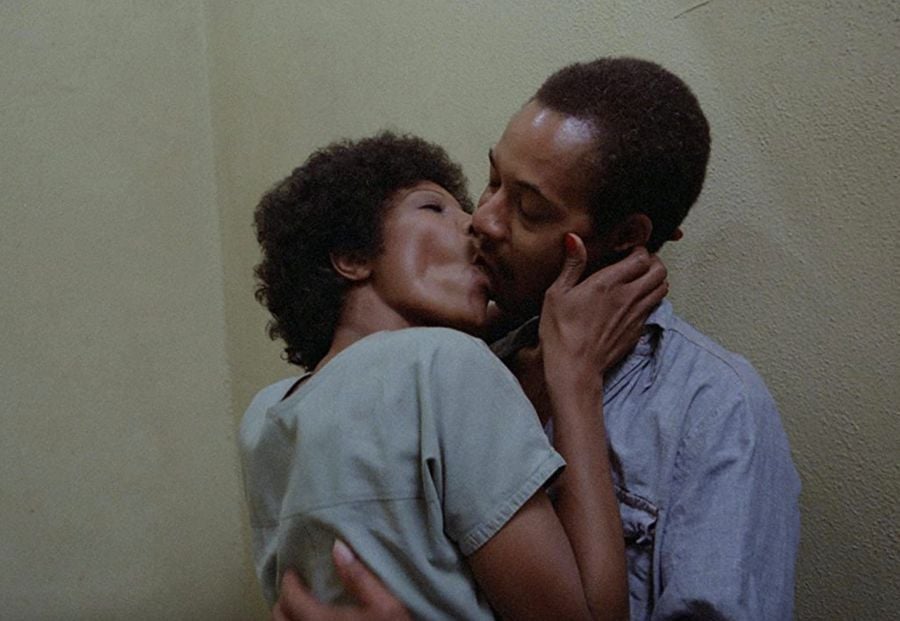
Penitentiary is one of the more successful films from the L.A. Rebellion. It explored the relationship between youth, violence and the deeply problematic prison systems in America. The film also spawned a series of sequels over the years that were commercially profitable as well.
“It was my Master Thesis—can you believe it! I had three theatrically released films out before I had even finished school,” Fanaka said while referring to Penitentiary. “The critics loved Penitentiary. It got all kinds of awards, and I was invited to speak just about everywhere.”
Adding, “I remember that at the time the movie was in theatres, the word was going around that the crime rate had dropped something like 50% in the Los Angeles area. I’m not sure if that’s true, but the point is that the story in Penitentiary spoke to a lot of young, poor, black men. The primal reality of prison life was brought home to them in a very realistic way.”
Water Ritual 1: An Urban Rite of Purification (Barbara McCullough – 1979)
Shot in 16mm, Barbara McCullough’s experimental short film is considered to be one of the pioneering works of African American cinema. Inspired by one of the filmmaker’s friends who suffered from a mental breakdown, the film explores questions of cultural identities, poverty and life in America.
“I like things that are offbeat, unusual. At the same time I like my films to reflect the diversity of my background as a Black person as well as the different influences that affect me. When I do something, I am trying to show the universality of the Black experience. So even though I am dealing with something very offbeat and different, there is still a certain line of universality that runs through my work,” the filmmaker said.
Your Children Come Back to You (Alile Sharon Larkin – 1979)
An important filmmaker from the second wave of the L.A. Rebellion, Larkin is considered to be one of the most influential independent artists. After graduating from UCLA, she went on to have a long career as an educator. She also co-founded the Black Filmmakers Collective.
Your Children Come Back to You was Larkin’s second film after the 1975 work The Kitchen. It tells the story of a single mother who is forced to live on welfare checks in order to provide for her daughter. It investigated the problems of economic inequality and social prejudice through the fascinating perspective of a child.
Bless Their Little Hearts (Billy Woodberry – 1983)
Filmed and written by Charles Burnett, Bless Their Little Hearts is a touching drama about the perpetual unemployment and anguish that the poorer districts of Los Angeles had to endure. In 2013, the film was archived by the Library of Congress for being historically important.
Woodberry explained, “It’s about life outside of work — life without work. For this couple, one part is missing because [the husband] is not at his previous job, where he knew he’d bring a salary to her, and together they’d have consistent, regular contribution. He lost that. And the question is: What happens in the process, when a man loses his work?”
Daughters of the Dust (Julie Dash – 1991)
Daughters of the Dust was the first feature film made by an African American woman that was distributed theatrically in the US. Set in the early 1900s, Daughters of Dust tells the story of three generations of Gullah women who prepare to move to the North from Saint Helena Island.
The legendary director recently said: “What I learned from writers like Paule Marshall, Toni Cade Bambara, and Alice Walker is that there’s an audience for writing from your heart. Some things don’t have to be explained, because we already know them. And that flies directly in the face of the advice you get when you’re writing for commercial films. Because people are so used to being spoon-fed: you have to explain every single thing to them, otherwise they’re angry.”
Compensation (Zeinabu irene Davis – 1999)
Inspired by a poem by Paul Laurence Dunbar, Compensation examines the human condition through two love stories – one at the start of the century and one at the end. The film won the Gordon Parks Directing Award in 1999 and was screened at Sundance Film Festival in 2000.
Davis remembered the origin of her interest in cinema, “When I was in high school we attended the first Black film festival in Philadelphia. By that time in 1980, we’d had the run of black exploitation films, stuff like Shaft (1971), Superfly (1972), Coffy (1973), and many others subsequently.”
She added, “But I hadn’t seen any black independent cinema up until that point, and it was kind of amazing the impact it had on me. I saw the work of what would then be called the L.A. Rebellion filmmakers, including Melvonna Ballenger’s Rain (1978) and Ben Caldwell’s I & I: An African Allegory (1979). That put a seed in me that would not come into fruition until a little bit later.”
