


“He’s always completely stayed true”: The musician who inspired everything Thom Yorke did

In a way, Thom Yorke, as a musician, would not exist without the influence of Neil Young.
As he tells the story, Yorke’s introduction to Young came about from a casual comparison. Between the ages of 15 and 16, he’d sent a demo tape to a magazine that remarked a similarity in his sound to that of Young’s, not that the connection resonated much with Yorke, at the time.
“I was like, ‘Who’s Neil Young?’,” he remembered, speaking with the BBC in 2008 for a documentary on Young, “And I went and bought After the Gold Rush, and immediately fell in love with his voice”. Picking up the 1970 album, his third solo release, Yorke became enamoured with the musician’s country-folk renditions, and his songs became an introduction to the folk pantheon that Yorke was unfamiliar with.
“Especially when you’re 16, that era of music, the ‘73-’74, was just pretty extraordinary,” Yorke continued, “The idea of the ‘folk harmonies’, and so on. Immediately, I sort of identified with it…”
As a teenager, Yorke’s musical palate was already filled with a mix of references: the thrill of seeing Brian May on television at eight years old, deciding then and there that he would become a musician just like him, the impact of watching Siouxsie Sioux at the Apollo for the first time, wanting to appear on stage as she did, and his studies of classical music, taking classical guitar lessons and performing a vocal recital of a Schubert piece, honing his abilities as a singer.
But Young, as it seems, was a musician unlike anyone that Yorke had encountered before. From his point of view, there were the notable factors of Young’s musicianship that anyone could listen to and immediately become enthralled by: “The frailty thing is obviously appealing, and the register of it,” he noted, explaining that during the beginning of the ‘70s, during the After the Gold Rush era, Young “has this soft vibrato that nobody else does”.
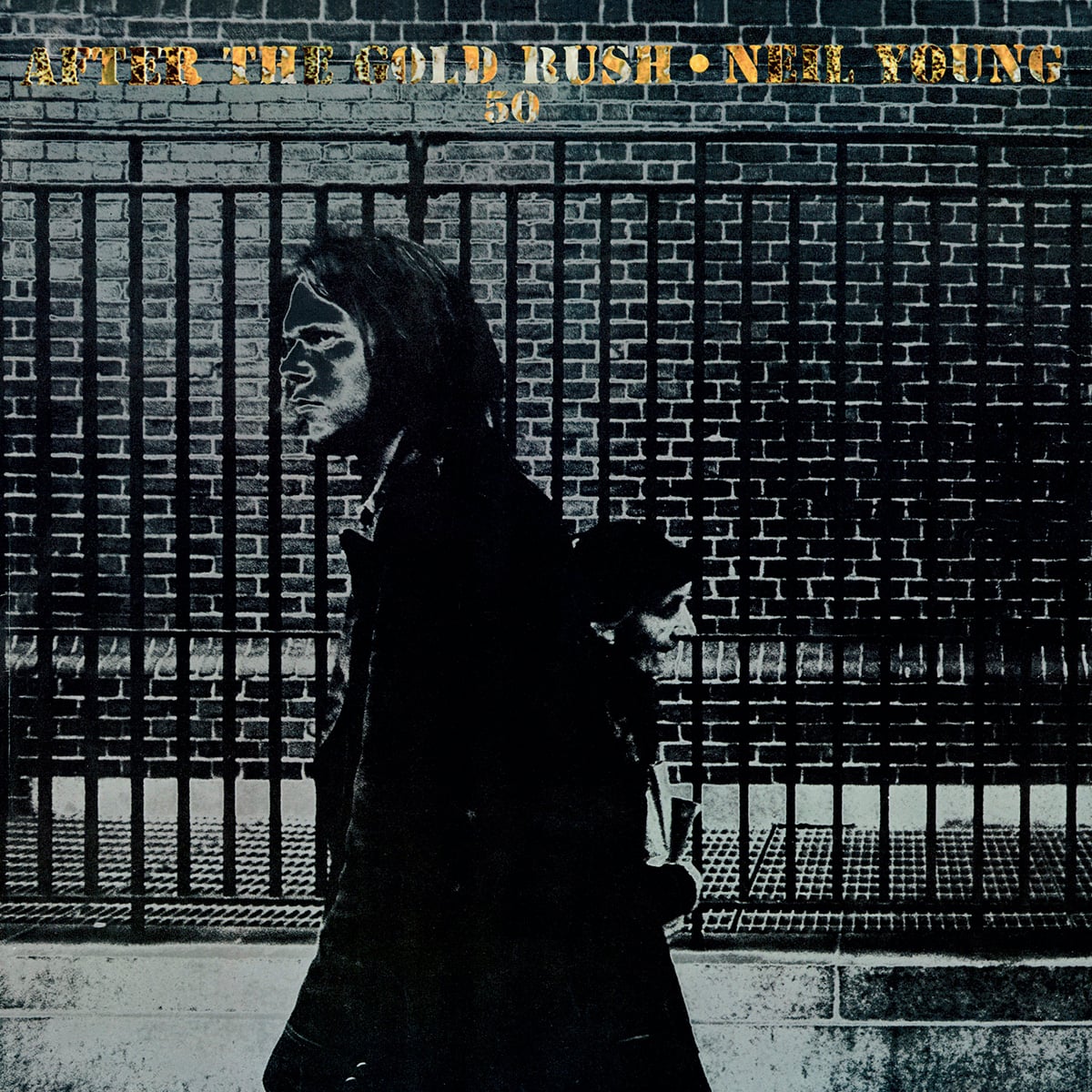
Beyond the notes that Young’s voice could inconceivably reach, or the sound of each instrument that he communicated through, it was the sheer honesty harnessed in his sound that struck the Radiohead frontman most. That very idea, as he repeatedly refers to it, of the veteran “staying completely true” to himself and his singular vision, was most imperative.
This technique, however intentional or otherwise, is one that, from Yorke’s view, remained an anchor in Young’s discography from the beginning. “It doesn’t matter what era, it’s always that thing about, you’re just laying down whatever’s in your head, wherever you’re at, at the time,” Yorke explained, “And it’s staying completely true to that… The temptation, especially when people start listening to what you’re writing, is to worry, agonise, about how things sound or how it’s coming across… And what strikes me is that Neil Young has never worried about that. He’s always completely stayed true…”
With this, Yorke named a classic Young tune as an indicator of the brilliance that just seemed to flow out of him, ‘The Needle and The Damage Done’, a song written as a description of the effects that heroin addiction had on his fellow musicians, including friends who would later succumb to it. Born from his 1972 album Harvest, the song was later re-released as a live track and revisited by him over the years, as its message remained heartbreakingly resonant.
That particular honesty that seemed to pour naturally from Young’s pen, unflinchingly raw and unafraid to expose the underbelly of life’s darkness while making it sound beautiful, nonetheless, stood as a pillar in Yorke’s mind, as he grew into the musician who solidified Radiohead as one of rock’s most fascinating groups in modern history.
“All through what’s happened with us, I’ve always sort of ended up falling back on a Neil Young record — it didn’t really matter which one, and you are reminded of the ‘source’, if you know what I mean,” he mused, “’The source’, the spring of where it’s supposed to come from, and you can get lost in the way and you always come back.”
Yorke’s admiration of the singer-songwriter reached a full-circle moment in 2002 when he was invited to perform at Young’s annual Bridge School Benefit, a charity concert in California, a moment that, as Yorke remembered it, left him in a state of awe and near-shock, filled with nerves at the intimacy of the showcase: “All the time I was there, I was thinking, ‘This is extraordinary’, because apart from REM, I think Neil Young [has] absolutely inspired everything: the way I write lyrics, it sort of comes up every day in my head, all the time.”
