


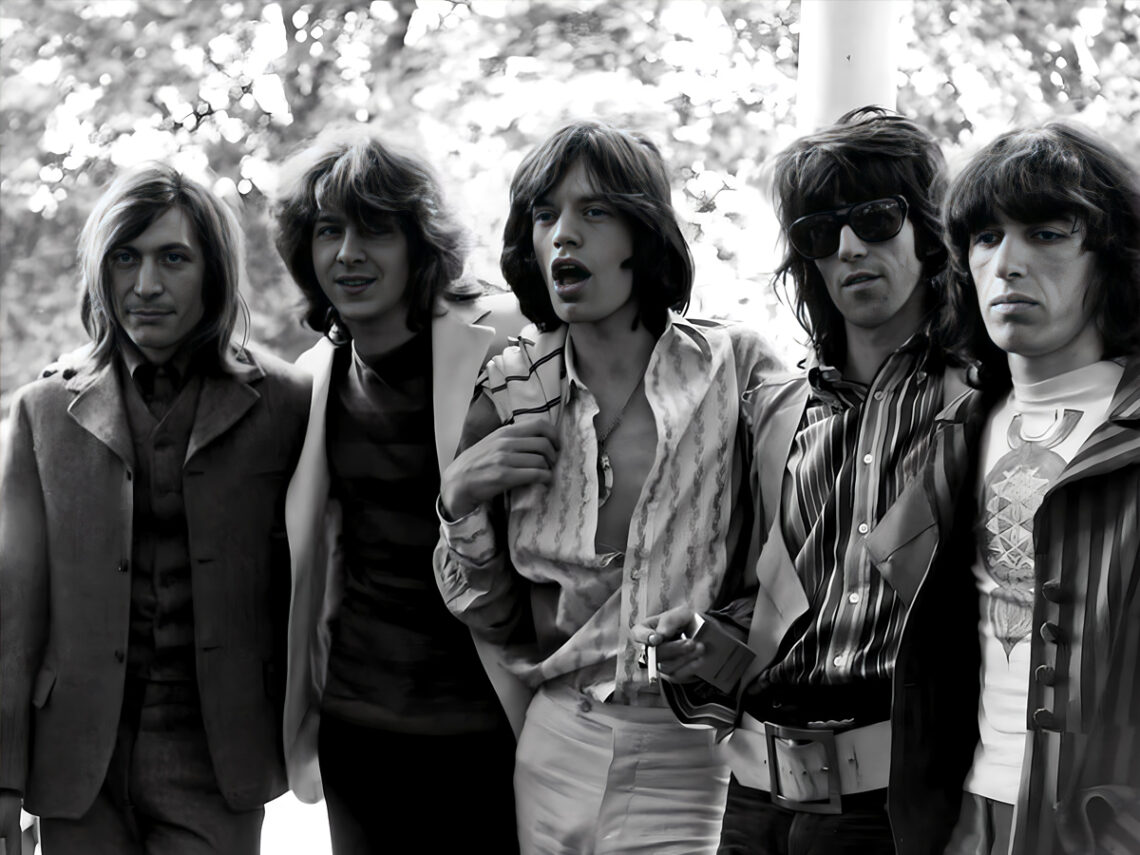
The musical “treasures” that formed The Rolling Stones

The art of any good band chemistry has never been lost on The Rolling Stones.
Even if Mick Jagger and Keith Richards had to write their first masterpieces by force at times, what started off as a chore for other artists turned into one of the greatest songwriting partnerships just underneath Lennon and McCartney. But as any songwriting team of that calibre, it takes the right songs to set them off on the right foot.
But for as much as they are indebted to rock and roll, The Stones were capable of doing so much more than simply playing a bunch of riffs. Richards was always looking for a different angle when writing his songs, and even if he was a human riff machine in many respects, there was always going to be a way for him to twist around his usual formula to make everything sound different.
Look at ‘Start Me Up’, for instance. The open-G tuning was nothing new when Richards started coming up with the lick, but even in a decade that could have left them by the wayside, everyone could tell exactly what they were listening to from the minute that they heard those opening guitar stabs. This was rock and roll in its purest form, but every iconic rock tune will always be considered the edgy cousin of the blues.
The magic of Robert Johnson and BB King wasn’t lost on any of the members, and if fate had gone in a different direction, they would have been considered one of the greatest blues cover acts in existence. It would have been a shame not to get songs like ‘Paint It Black’ or ‘Wild Horses’, but hearing them cover tunes like Robert Johnson’s ‘Love in Vain’ and ‘Stop Breaking Down’ deserve to be placed on the same pedestal ‘Satisfaction’ is.
And for Richards, he knew he had found his musical soulmate when he saw Jagger’s blues and rock and roll records, saying, “I was going to art school and Mick was going to the London School of Economics. We got into the same carriage together and I looked at what he was carrying, which was two albums: One was The Best of Muddy Waters, and the other was Rockin’ at the Hops by Chuck Berry. I had never seen anybody possessing such treasures in my life — because these were, you know, Chess Records out of Chicago.”
Rock and roll was only starting to become mainstream when The Stones first got together, but Jagger could have hardly picked a better template. Chuck Berry will forever be the guitar hero that everyone goes to when talking about rock and roll guitar playing, but Muddy Waters is where the depth comes in. Compared to other rock players like Scotty Moore who would create beautiful lead breaks, Waters would make the guitar cry out in pain like no other rock musician could at the time.
Once you look at where the Stones would eventually go, that perfect combination of Berry and Waters did end up seeping into their sound as well. Brian Jones would forever be the major blues fan in the group, but bringing in Mick Taylor shortly after Jones’s death, gave them their version of Waters, with Richards free to play up his countrified version of Chuck Berry at the other side of the stage.
Jagger and Richards had a long way to go from first meeting over those records, but somewhere in the grooves was the beginning of rock and roll’s glory days. Elvis Presley had shown the world what could happen if someone became a rock star, but ‘The Glimmer Twins’ took the basis of those few albums and showed everyone how dangerous the genre could sound.
