


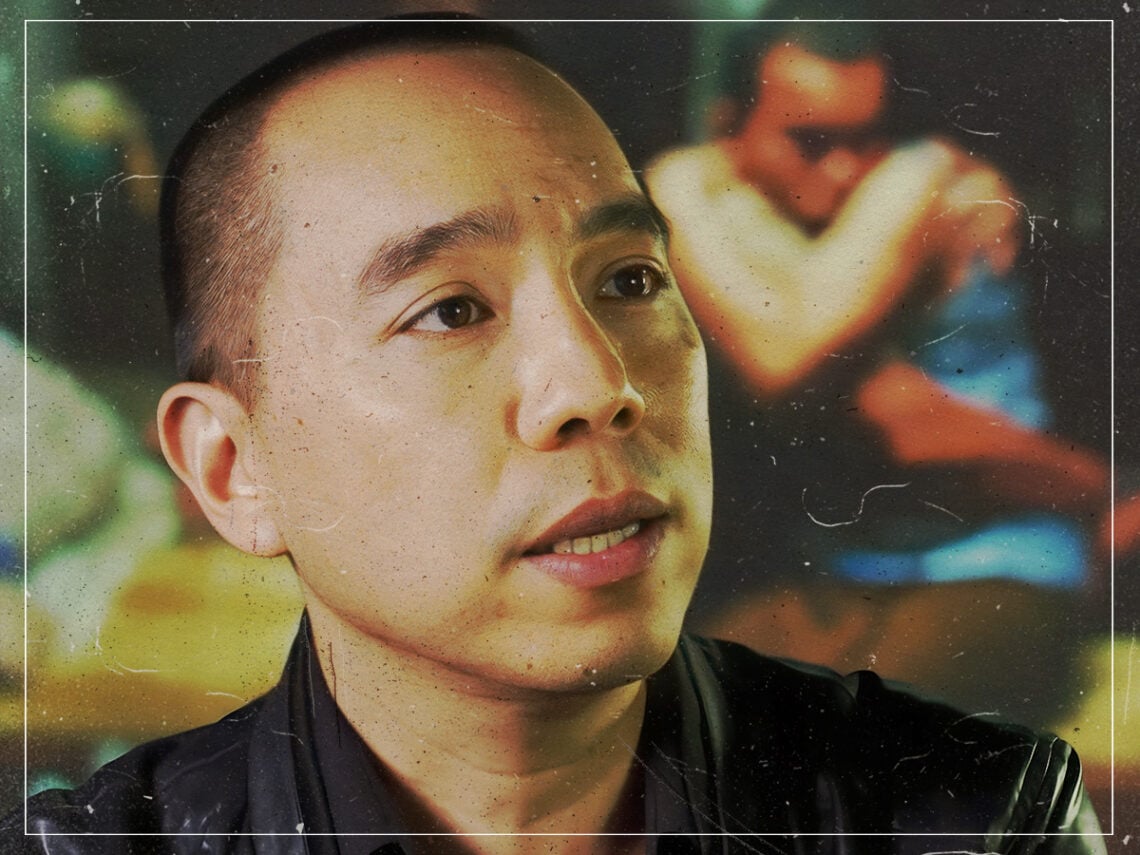
‘Tropical Malady’: the movie that saw Apichatpong Weerasethakul booed at Cannes

Apichatpong Weerasethakul is one of the most captivating and hypnotic filmmakers working today, with each film existing as a singularly unique meditation on love, grief and memory, with a haunting slowness that seeps into your very bones as you watch. With recent efforts such as Memoria, in which Tilda Swinton plays an orchid farmer who finds herself plagued by a mysterious noise that no one can hear but her and Uncle Boonmee Who Can Recall His Past Lives, a dreamy story about a man who returns to the jungle during his final days of life, trekking to the birthplace of his first life as the ghosts of his loved ones appear around him.
These ideas have become important to Weerasethakul throughout the rest of his work, exploring the concept of the afterlife and saying, “I try to mimic the pattern of memory and of thinking and the randomness of life. It’s like a journey… The idea that we can operate in different times is very important for me. And it manifests in daily life or when you meditate. In a way, it’s a very scientific thing that you experience for yourself, how time passes, how your body can react to time in different ways.”
While the director has built a devoted fan base through his delicate and surreal explorations of time and humanity, his work wasn’t always met kindly, with one film of his being booed during its premiere at Cannes.
Tropical Malady, released in 2004, follows the relationship between two men in a strange way, with the film being split into two halves, with one showing the beginning of their connection and the other showing a mysterious creature that inflicts terror within the depths of the jungle. In typical Weerasethakul fashion, the narrative doesn’t unfold in a linear way, with the film feeling spiritual in the way that it subtly builds on its reflection of human nature and primal impulses, looking at the intersection between sexuality and violence.
The director seduces his audience through slowness, which slowly unravels as he compares the struggles of being in a gay relationship to the hypothetical challenges of being in a relationship with a tiger, drawing parallels between them in both halves of the film. It’s a beautifully insightful yet very subtle critique of how difficult it is for gay men to be open about their relationships within his culture, making the comparison that we create such limiting standards for ourselves when, ultimately, we are all animals.
You’d imagine that the audience at Cannes would be the perfect place for a film like this to be appreciated and praised for everything that it achieves, but no. At the end of the screening, the audience booed, and many people walked out before it finished. People found the slowness frustrating and confused by the split narrative and the comparisons being drawn between both sections. Despite being underappreciated and misunderstood by many, this is sometimes the exact quality that the jury at the festival are looking for, and the film was awarded the jury prize that year.
Sometimes, the best films are the most divisive ones, and the reception of Tropical Malady highlights the fact that true creativity and innovation isn’t always immediately understood, but it is necessary in order to keep cinema alive and push against the status quo. After all, I can think of countless classic films that were met poorly when first released, and where would we be without them?
