


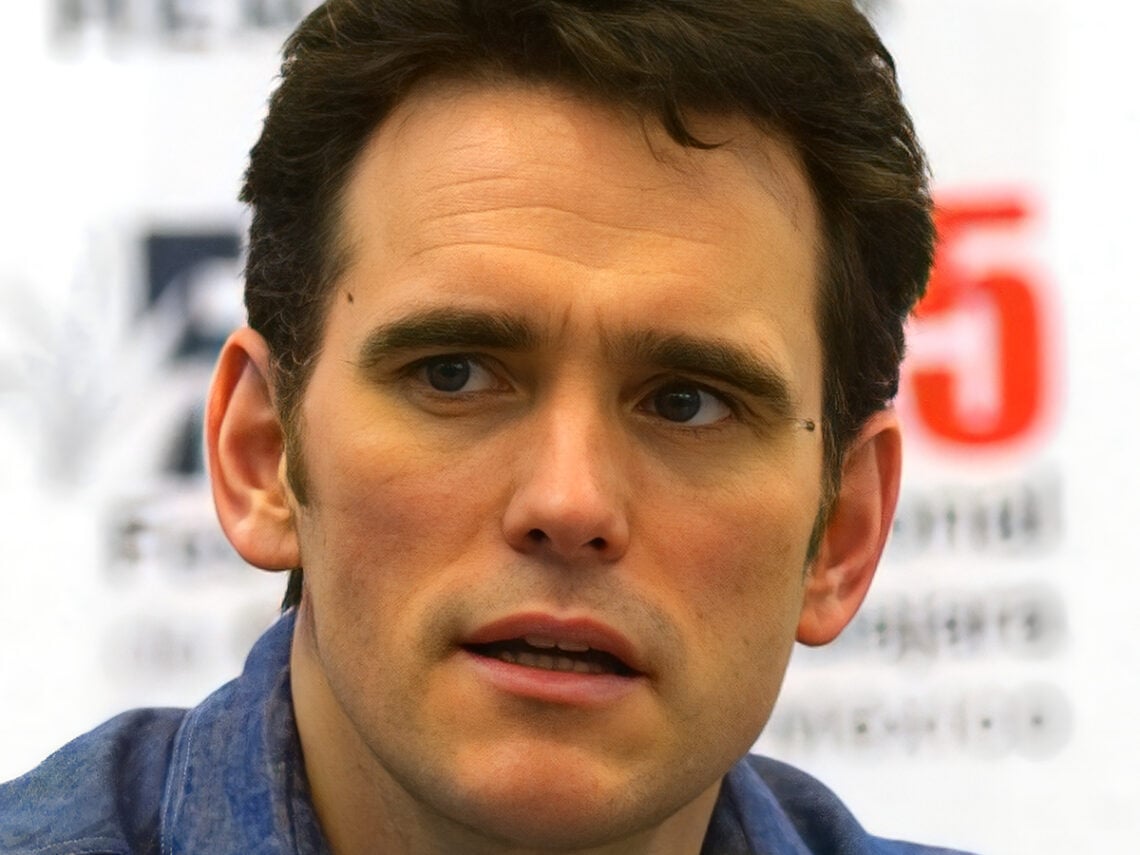
“It’s meant to be upsetting”: the 2018 movie Matt Dillon forgives you for walking out of

One of the more interesting debates in movies centres around censorship, or the question of what should and shouldn’t be shown on the big screen.
Lord knows there are enough awful things happening in the world as it is, let alone packing more of them into your Friday night down at the multiplex. But some directors have powerfully and effectively reflected the darker side of human nature, leading top actors to want to work with them regardless of controversy, including Matt Dillon.
There’s not a chance that the Wild Things and There’s Something About Mary star didn’t know exactly what he was getting himself into when he signed up to work with the Danish director Lars von Trier, a man who seems to exist solely to try to upset as many people with his movies as possible, but when he agreed to take a role in 2018’s The House That Jack Built, he may not have envisaged quite how much of a stir it would cause.
The film is a serial killer thriller telling the story of a narcissistic psychopath who recounts each of his five murders over a 12-year period as though they were great works of art, but the graphic nature of what transpires on screen led to a fairly hysterical reaction from the press, somewhat predictably, but also from film critics, so you know Trier had really managed to push some buttons.
Dillon, who played the lead role of Jack alongside Uma Thurman, was unrepentant about it all, however, saying, “I’m OK that people are upset. It’s meant to be upsetting, and you should know, if you’re going to see this, that it is going to some very dark, disturbing places”.
And that was certainly borne out when the film made its debut at the Cannes Film Festival, where, according to reports, more than 100 members of the audience, critics among them, decided they’d had enough halfway through and walked out, sparked by one scene in particular that saw children slain by the lead character. It did, regardless, inspire a six-minute standing ovation at the end of the movie, showing the director still had some supporters in the industry, but one leading voice described it as vile, saying it shouldn’t have been made and that the actors involved were ‘culpable’.
The director, typically, also didn’t care about the possibly hyperbolic reaction, explaining that the rise of Donald Trump, then in his first term as president, had influenced the film, telling The Guardian, “The House That Jack Built celebrates the idea that life is evil and soulless, which is sadly proven by the recent rise of the Homo trumpus, the rat king.”

Those mixed reviews and the undeniably polarising content no doubt contributed to the film underperforming at the box office on release, losing a few million on the budget, but it fared slightly better once released in a fully unrated director’s cut, which got the US film censors worked up because they hadn’t approved it, and it was purchasable only via YouTube for a few hours before it was pulled.
Dillon, meanwhile, continued to make low-budget arthouse movies for the next few years, going against the mainstream studio movies that he’d made his name in, like 2004’s Crash, which won him an Academy Award and Golden Globe nomination, or the Owen Wilson comedy You, Me and Dupree. He’ll be seen later this year in a drama called I Play Rocky, which tells the story of the making of the boxing classic starring Sylvester Stallone, and he has a role in the forthcoming TV series of The Magnificent Seven, the 1960 western based on Akira Kurosawa’s Seven Samurai.
