


‘The House That Jack Built’: the strange inspirations for Lars von Trier’s art horror

Even some four decades into his career as a film director, Lars von Trier still possesses the ability to shock his audiences to their respective cores. With 2018’s psychological art horror The House That Jack Built, the Danish auteur once again sickened his viewers with some of his most violent and depraved work yet.
The film sees Matt Dillion play Jack, a psychopathic and extremely violent serial killer who commits a series of murders in the state of Washington throughout the 1970s and ’80s. Also starring Bruno Ganz, Uma Thurman and Riley Keogh, The House That Jack Built is structured as a series of flashback vignettes whereby Jack makes arguments for his kills to the classical poet Virgil as he leads him towards Hell.
Von Trier had thoroughly researched serial killers before making the movie and wanted to look at the inevitable journey that such figures make towards an eternity in Hell. In fact, the Danish director went one better and actually charted Jack’s physical route into the underworld, guided by Vergil (played by Ganz).
In an interview with Little White Lies, von Trier noted that it had been some time since any Hell had been depicted through the cinematic medium. “Particularly the journey to Hell,” he said. “We put it together from different conceptions, or whatever the word is, of Hell. The Elysian Fields is something from the Roman mythology. I’m quite sure that Hell doesn’t look like what we have made for this film.”
The ending, which sees Jack attempt to traverse an impossible-to-climb wall as a last attempt at salvation, had been inspired by Alfred Hitchcock, according to von Trier. “Never let the bad guy hang on his nails, as the audience won’t care,” he noted. “Psychopaths act out of an irrational certainty that they won’t be caught. That’s why the ending is like it is. It would be typical for me to let him live. But then I thought about good old Hitchcock and decided that this calls for a classical ending.”
Hitchcock looks to have played his part in influencing von Trier’s very unique film, and even Roman mythology and the classical conceptions of Hell itself have informed the Danish director’s vision. In addition, it also stands to reason that the title of his 2018 art horror has its roots in early 20th-century cinema and a popular English nursery rhyme.
The nursery rhyme ‘This Is the House That Jack Built’ is believed to have originated in the mid-16th century and shows how the house that its titular character, Jack, builds – and even the character himself – is less important than the things to which Jack and his house are related. In that light, in von Trier’s film, the serial killer Jack is inevitably doomed to venture towards Hell, where he will be erased from history. Jack indeed fails to build his house, and all he leaves behind is a trail of blood, death and destruction, which serves as the only thing he was capable of building – his true artistry.
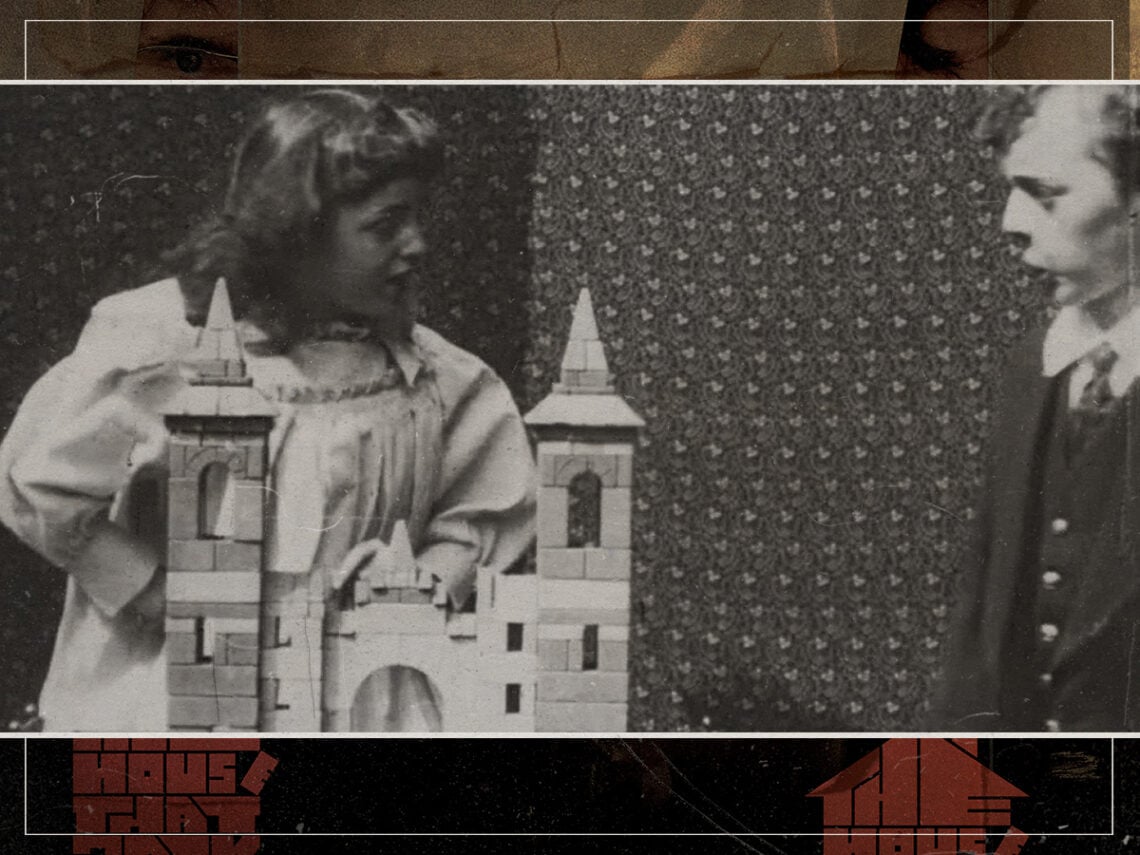
Another item of cultural history may also relate to von Trier’s movie, the 1900 British silent trick short film The House That Jack Built, directed by George Albert Smith. It details a boy who knocks over a house made of bricks built by his sister, and when the sequence is played in reverse, he rebuilds it. As far as von Trier’s Jack goes, he indeed is also a destructive character.
While his redemption would never be possible in real life, von Trier allows that potential to linger in the air even as he approaches eternity in Hell, a testament to the power of cinema itself. Just as the young boy is able to be redeemed through the cinematic trick in Smith’s 1900 short, so too might Matt Dillon’s character find salvation.
As with most of von Trier’s works, The House That Jack Built seems to have come from deep within his darkest reservoir of imagination and his endless fascination with the most depraved acts of humanity. However, scratching a little beneath the surface reveals a link to an innovative and symbolic short from the early 20th century and a nursery rhyme going back hundreds of years, which joins Roman mythology and Alfred Hitchcock in forming one of the strangest set of potential influences for a film in the history of cinema.
