


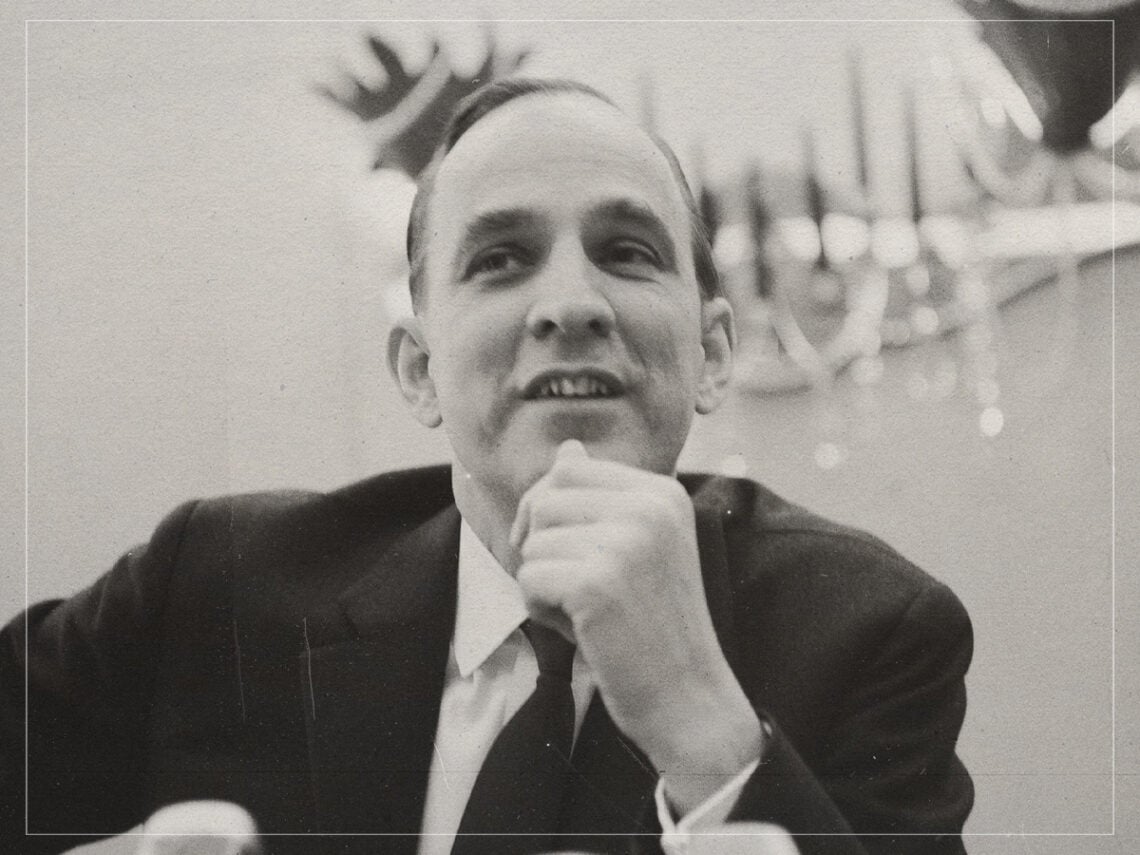
The movie Ingmar Bergman made out of spite: “Merely expresses my resentments”

Most of us will have situations or people that have wound us up and left us feeling annoyed; it could be someone left the top off the toothpaste (again) or cut you off on the motorway, or maybe made you listen to literally any Coldplay song from any album they made after 2011.
But the difference between us and legendary film directors like Ingmar Bergman is that we don’t have the ability to write and direct a major film solely to show how pissed off we are.
Very few directors are held in the kind of regard that Bergman once enjoyed, the Swede making movies for some fifty years that, although not widely troubling box office records, proved hugely influential, especially the likes of 1957’s The Seventh Seal.
Bergman’s movies, however, were certainly not anything to be taken lightly; the son of a strict Lutheran minister who would often be locked in a broom cupboard as a child would go on to vent his frustration in works that explored themes of existentialism, anti-authority, humiliation and loneliness, even in his very first film, 1944’s Torment.
That film told the story of a sadistic school teacher specialising in Latin (we’ve all had them) who ends up killing the love of one of his students. The movie proved controversial and even sparked debates about the conditions within Swedish high schools at the time. He would continue to explore difficult themes throughout the next couple of decades, writing Divorced in 1951, directing Secrets of Women a year later and then The Seventh Seal five years afterwards, his most famous film and one in which the prospect of death is met head on, most notably in that famous chess scene.
Some 12 years later, Bergman wrote and directed a film called The Rite, which told the story of three actors up in front of a judge for performing in a play that many regarded as obscene. The director again used it as a vehicle for his own inner frustrations, even urging audiences to turn it off and go to the cinema instead when it was first aired on TV.
In conversation with the American author Charles Thomas Samuels for his book Encountering Directors, in which he spoke in depth with the most influential filmmakers, including Bergman, Bresson and Truffaut, the Swede was accused by Samuels of making films, especially The Rite, that were too intellectual to be properly understood and enjoyed, prompting Bergman to retort: “Your approach is wrong. I never asked you to understand; I ask only that you feel.”
He added: “The Rite merely expresses my resentment against the critics, audience, and government, with which I was in constant battle while I ran the [Royal Dramatic] theater. A year after my resignation from the post, I sat down and wrote this script in five days. I did it merely to free myself.”
Bergman continued to direct deeply personal, belief-challenging films almost all the way up to his death in 2007, including late highlights like 1982’s Fanny and Alexander, the semi-autobiographical period drama about siblings in Sweden who lose their father only to have their mother remarry an abusive Bishop.
Bergman completely immersed himself in the production, which was originally to be a miniseries but ended up being a colossal 312-minute movie, one of the longest in cinematic history, and earned six Oscar nominations, with three wins, including one for Bergman for ‘Best Foreign Language Picture’.
