


‘(Here We Go Round) The Lemon Tree’: The Move’s strange hit that typified the 1960s

Despite securing nine top 20 UK singles in the space of five years, The Move seems to have been erased from the history books in recent years.
While you might argue this because the band’s side project, Electric Light Orchestra, overshadowed The Move’s fleeting popularity, the band’s lack of success on the other side of the pond, coupled with its libel battle with Prime Minister Harold Wilson, meant the band’s career idled before it could even get properly started.
Formed in Birmingham in 1965, the band, originally consisting of Roy Wood, Trevor Burton, Carl Wayne, Ace Kefford and Bev Bevan, gained a steady following for their covers of American coast bands and rock ‘n’ roll. After securing a production contract with Denny Cordell – known for his work with the likes of Tom Petty and the Heartbreakers – The Move’s first single ‘Night of Fear’ made number two on the UK Singles Chart in January 1967.
Later that year, the master tapes for ten songs intended for the band’s debut album were stolen from their agent’s car, leading to a media frenzy and The Move’s offering of £200 to anyone who could recover them. In the meantime, the band enjoyed a string of package tours around the UK, appearing alongside the likes of Pink Floyd and the Jimi Hendrix Experience. Once the tapes were eventually found – in a skip of all places – the band were forced to produce new mixes and masters given the damage the tapes had suffered, ultimately delaying the release of the LP to March 1968.
Soon after, bassist Kefford was axed from the band for his drug usage, while Burton left the band in 1969 after it went in a pop-oriented direction. Following further disputes, Wayne departed in 1970, marking the introduction of Jeff Lynne, who went on to play guitar and write songs for The Move. Around this time, Wood began to circulate ideas of another group to “pick up where The Beatles left off“, combining rock with classical music. The product of said idea would be Electric Light Orchestra, which released its first album in 1971, before taking the industry by storm with tracks such as ‘Mr Blue Sky’ and ‘Evil Woman’.
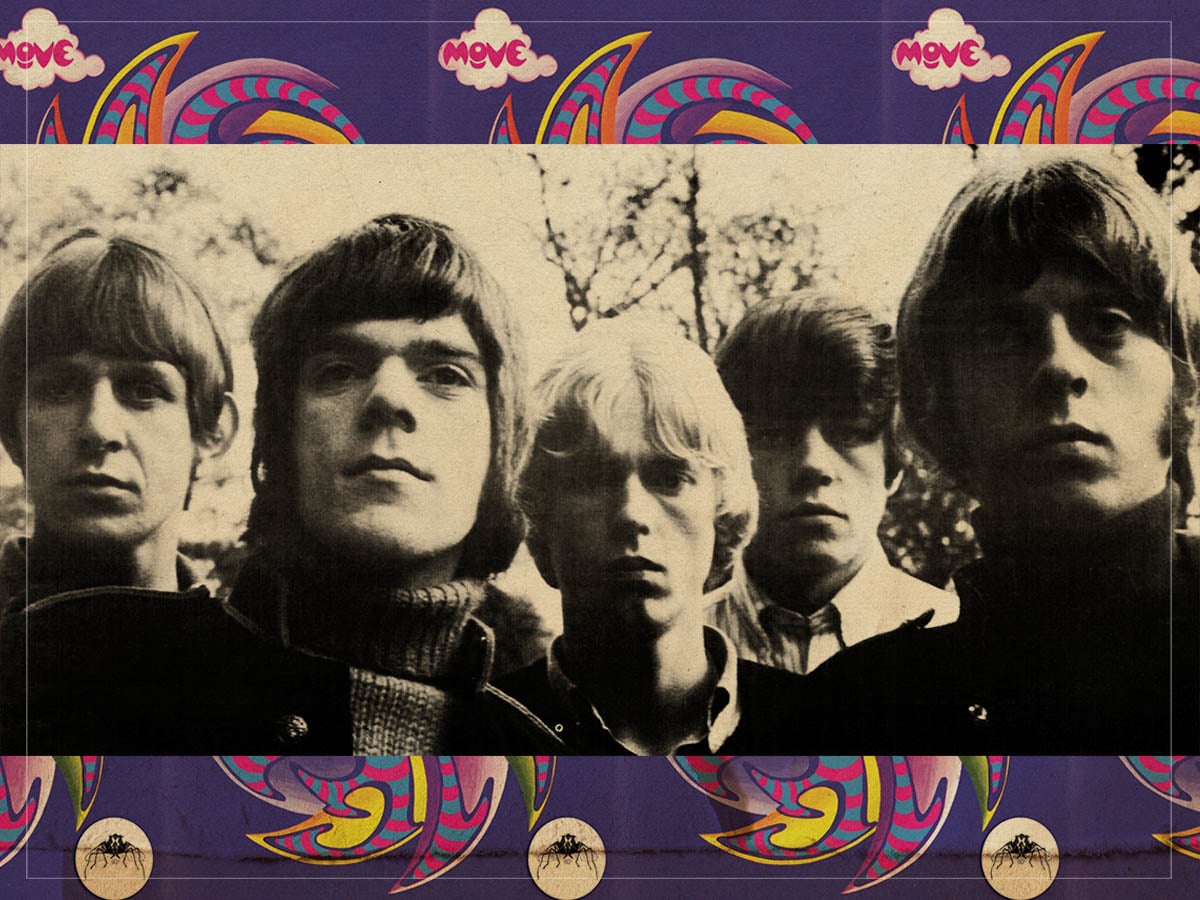
While The Move’s ‘Fire Brigade’ and ‘Flowers in the Rain’ met commercial success, other tracks off the band’s self-titled debut have slipped through the cracks. Yet one stands out in particular, mainly because of its farcical focus, reminiscent of other 1960s tracks penned after acid-fuelled trips.
‘(Here We Go Round) The Lemon Tree’, a Roy Wood composition, was originally meant to be an A-side, although it was ultimately released as the B-side to ‘Flowers In The Rain’, which landed the band in a long-standing legal battle with prime minister Harold Wilson after it promoted the single alongside a cartoon of the PM in bed with his secretary, Marcia Williams.
Recorded at Advision Sound Studios in 1967 and produced by Cordell, the track follows a modern-day byronic hero smitten with the “girl next door”, who is clad in a silver bikini, dancing, as the title suggests, around a lemon tree. Despite her “toneless singing”, the lover desperately seeks her attention, resulting in his choice to sport a pair of “bright green underpants” and wait by her window. By the end of the three-minute track, the hero is successful in his mission, dancing the rest of the night away in their bizarre costumes.
Featuring jangly riffs, harmonies and orchestral segments, paired with archetypal characters with romantic obsessions, ‘(Here We Go Round) The Lemon Tree’ typifies the decade of counterculture like no other. Combining a Beatles-esque absurdity, akin to ‘Octopus’s Garden’ and ‘I Am The Walrus’, with a sound comparable only to The Beach Boys’ surf rock, the track takes influence from some of the decade’s greatest luminaries, reiterating The Move’s hugely important role in the British psychedelic pop movement.
Later covered by The Idle Race, the track also holds a place of significance in British Midlands’ pop-rock history, even if it has been forgotten in recent years. Put simply, the track served as the link between musicians Jeff Lynne and Roy Wood, who would later go on to found not only Electric Light Orchestra, but also Wizzard, without whom we would never have ‘I Wish It Could Be Christmas Everyday’.
