


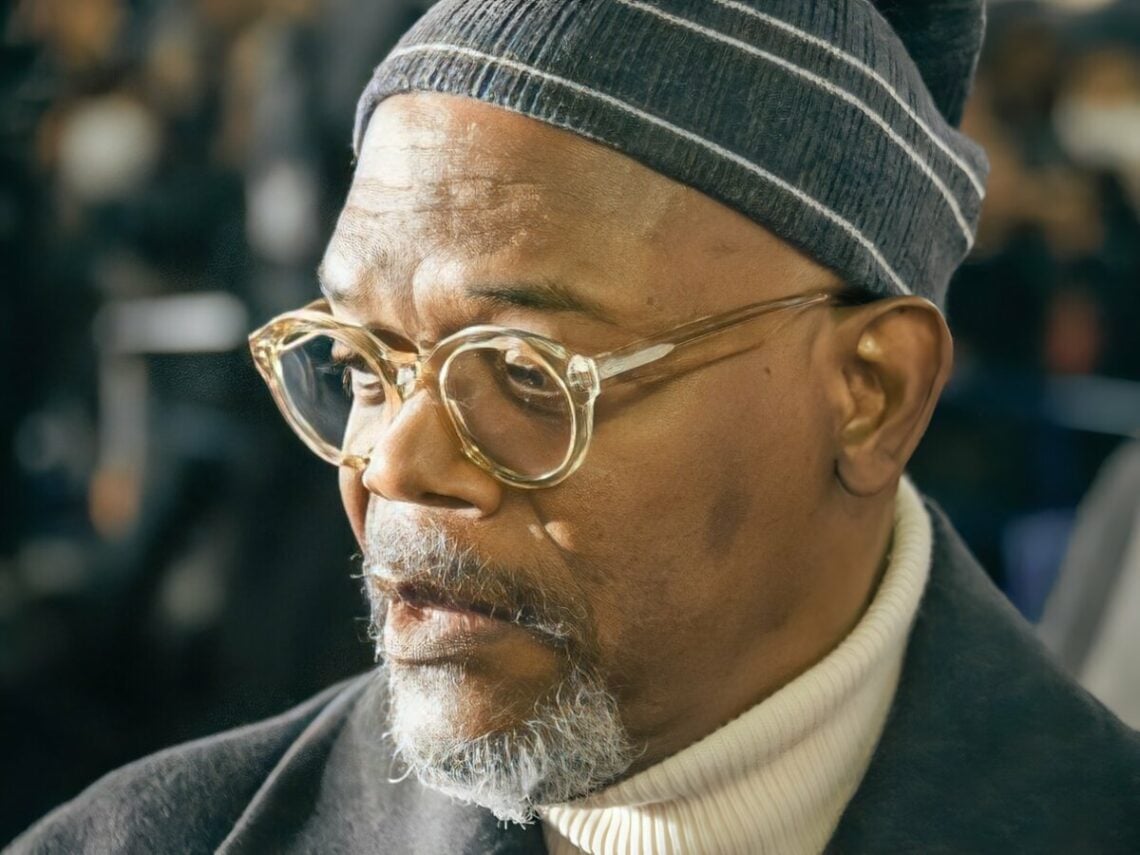
The most challenging scene of Samuel L Jackson’s career: “It’s very, very, difficult”

Life can often begin to resemble art, and as an actor, the process of performing often requires you to delve into your own memories and experiences as you try to stir emotions that feel authentic to the story.
While some actors use the method technique to embody their characters fully, others accidentally end up mirroring these imaginary people, living with someone for so long that the line begins to blur together. For Samuel L Jackson, this is what defined the most challenging scene of his career when the reality of his co-star tragically reflected what they were recreating on set.
Jackson is recognised for a number of iconic roles, and he is one of the most revered actors working today. Global audiences admire him for his part in the world of Quentin Tarantino and the Marvel Universe. The actor has recently starred in the play and film adaptation of The Piano Lesson, directed by Malcolm Washington and based on the original play by August Wilson. While these roles are all demanding in different ways, Jackson highlighted one specific scene from his entire career that most troubled him, describing a moment from the 1997 film One Eight Seven.
One Eight Seven, directed by Kevin Reynolds, follows a teacher called Trevor Garfield, who moves to Los Angeles from New York after a student stabs him. He starts in a new school as a substitute teacher, which slowly begins to drive him mad.
However, despite the gritty nature of the story, which explores the failing education system in America and institutional violence, the ending scene of the film proved to be extremely disturbing due to a tragedy that Jackson’s costar was going through in his personal life.
When describing the scene, Jackson said, “Challenging. There’s a scene in 187 at the end of the film where I’m sitting at the table playing Russian roulette with another kid. We were playing Russian roulette together. I spin it, pull the trigger, boom, give it back to him. He pulled the trigger. It was difficult because the day we were doing that scene, the other actor had discovered his father hanging in the bathroom the night before, and he came to work anyway to do the scene. So, I’d been with him all that morning, trying to help him through that trauma. And then we had to go in there and pretend to play suicide with each other all day. It’s very, very, very, very, very, very difficult”.
The context and pain around this scene is nearly unimaginable, with the situation on set being far too close to home for the actor. It is surprising that the scene was not rescheduled or cut entirely, as any other job would undoubtedly allow time to grieve and recover. But Hollywood is a business like no other, and especially in the world of independent filmmaking, nothing ever gets in the way. As they famously say, the show must go on.
It is a miracle that they were both able to complete the scene, and hopefully, Jackson was never in a situation like it again where he had to both console and draw a performance out of someone who was so emotionally fragile and vulnerable. The ethics around filmmaking have always been questionable, but this particular moment highlights a deep flaw within the system that chose not to care for their talent and prioritise the shoot over their mental well-being.
