


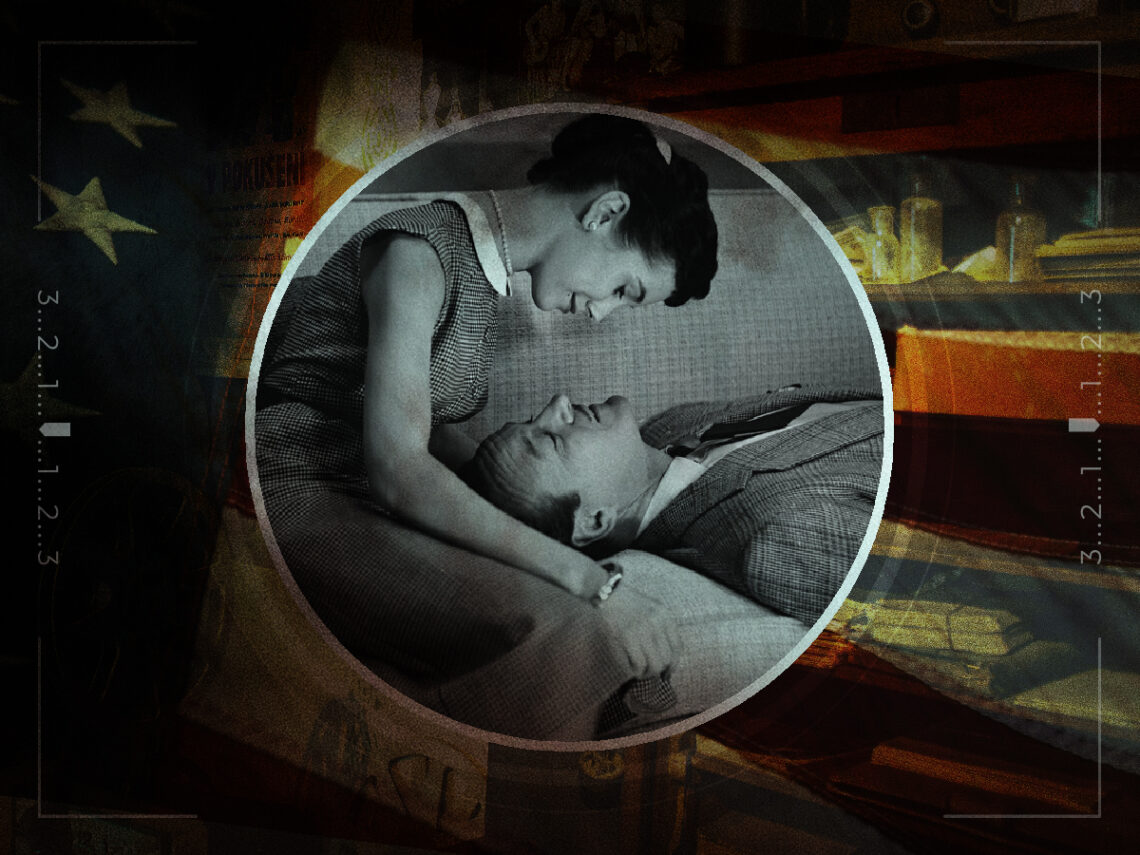
‘The Moon Is Blue’: the award-winning rom-com that had US censors up in arms

With the rom-com boom of the 1990s and 2000s giving us everything from Sleepless in Seattle to 10 Things I Hate About You, the genre started to garner a misogynistic and unfair reputation of being lesser films, fit simply to be a guilty pleasure.
They were criticised for being fluffy and unserious works of cinema, but rom-coms have been successful for decades, often exploring the complexities of romantic relationships with wit and well-needed frankness. With early entries, like 1934’s It Happened One Night or 1938’s Bringing Up Baby, heralded as enduring classics of the Old Hollywood era, a streak sustained in the following years by the likes of Annie Hall in 1977 and When Harry Met Sally in 1989, the genre is a vital part of the cinematic canon, and, let’s face it, romance is one of the most universal and relatable themes out there.
Despite the fact that practically everyone in the world has some experience of romance, sex, and relationships, there was a time when discussing such topics was incredibly taboo, even in a Hollywood rom-com, which was the case for a certain movie that ended up causing issues with censors, resulting in its ban in several US cities. It’s bizarre that there was once a time when even a passionate snog onscreen was seen as filthy, because now that kind of thing can literally be found on the Disney Channel.
In 1953, Otto Preminger’s The Moon Is Blue faced incessant setbacks from censors, who were concerned that it was too blasé in its approach to relationships and virginity. The film sees Maggie McNamara play a woman named Patty, who is adamant in saving herself until marriage, despite both William Holden’s Don and David Niven’s David (who is also Don’s ex-fiancée’s father) trying to tempt her otherwise.
She is labelled a “professional virgin”, but while the film inevitably holds up the correct moral stance of the time in the end, with Patty and Don making up and getting engaged, this casual talk of womanising, having sex before marriage, virginity, and even having a fatherly character act without regard for good virtues was enough to have it condemned by certain groups.
It was seen as shocking by the Catholic Legion of Decency, while Joseph Breen, who worked as a censor for the Production Code Administration (PCA), was also opposed to the film’s treatment of sexuality. Yet, when United Artists decided to leave the MPAA, they were able to show the movie without the approval of the PCA. So, the film was screened across the country for ‘adults only’, despite the fact that there is no nudity, no sex, and no violence present. In the UK, it was released with an X rating (it’s now rated just PG), while US cities like Jersey City, New Jersey, banned it for being “indecent and obscene”.
The movie was a success despite the fact that it was so controversial, with Niven even winning a Golden Globe for his performance, and the several million dollars it made proved that banning a movie was ultimately futile.
Prohibited for some time in the likes of Ohio, Kansas, and Maryland, Preminger ultimately took his case to the Supreme Court of the United States to have his film unbanned once and for all. This wasn’t a scandalous film; people were just uncomfortable with men and women talking so openly about sex and relationships.
