


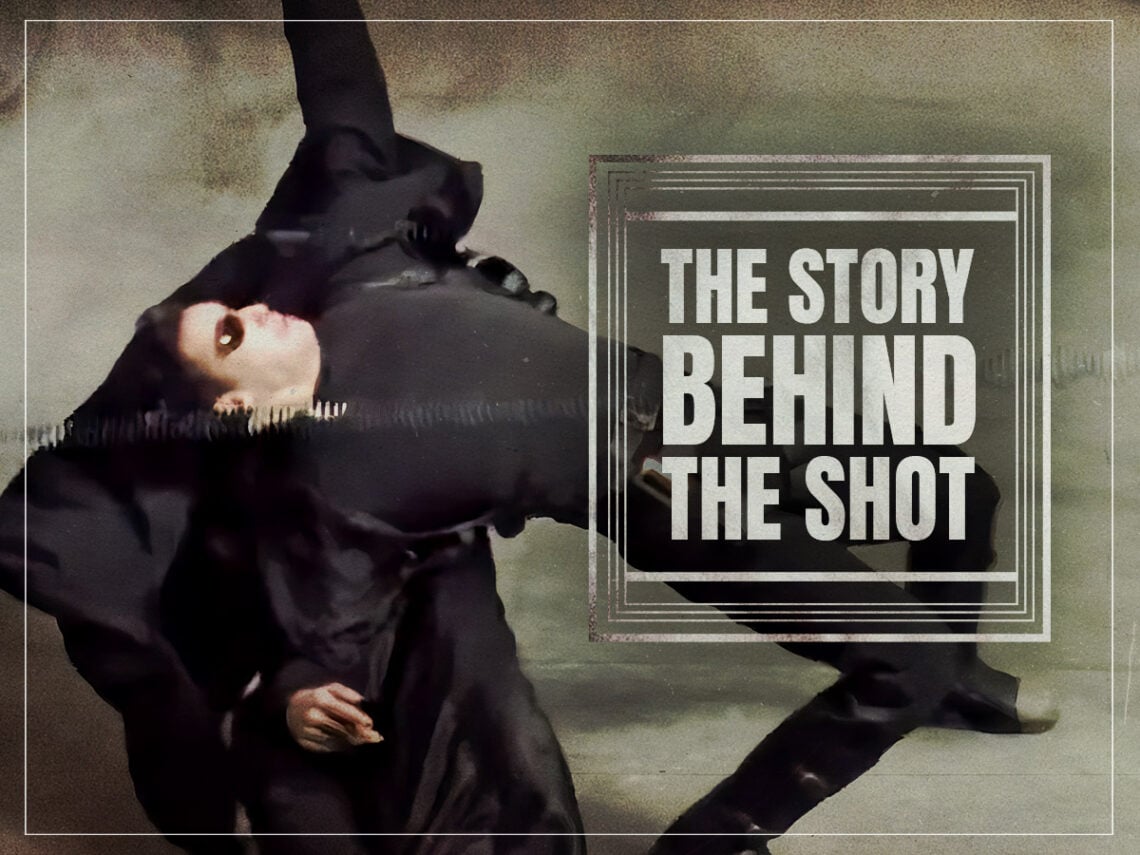
The Story Behind The Shot: ‘The Matrix’ changes the course of history with bullet time

One of the easiest ways to gauge how deeply a moment, line of dialogue, or shot from a movie has ingrained itself into the fabric of pop culture is how quickly and how often it gets parodied. The Matrix had its fair share of them, but bullet time was in a league of its own.
The red pill/blue pill decision remains as widely used as ever in everyday conversation, the camera swooping around Carrie-Anne Moss’ Trinity as she leaps in the air was lampooned across film and television, and cinema was swamped with style-over-substance actioners where the protagonists wore leather in the aftermath of the Wachowskis’ game-changer, such was the impact it made.
However, nothing could hold a candle to bullet time. In fact, it’s easy to forget just how jaw-dropping it was the first time around when it’s been mocked and repurposed so heavily for the last quarter of a century that even people who’ve never seen The Matrix will recognise it instantly.
Of course, it’s just one small aspect of what made the film so revolutionary, with the ambitious blend of sci-fi, existentialism, philosophy, and spiritualism drawing from a melting pot of influences covering literature, scripture, anime, comic books, and movies and hammering those disparate strands into a staggering high-concept blockbuster, unlike anything audiences had ever seen.
Everything from Charlie’s Angels: Full Throttle, Shrek, and Kung Pow! Enter the Fist to Scary Movie, Lizzie McGuire, and The Simpsons had a field day with The Matrix‘s technological breakthroughs, but no amount of digs and sideswipes could rob bullet time of its artistry. By modern standards, it was a fairly simple thing to accomplish, but in the 1990s, the next chapter in the CGI revolution was being written on the screen in real-time.
The extended showdown between the heroes and villains while trying to liberate Laurence Fishburne’s Morpheus from the Agents would have been an all-timer of an action sequence, even without bullet time. After all, it begins with the chaotic lobby shootout that leaves a trail of debris and broken bodies in its wake and features Trinity’s eye-popping swing to safety from an exploding helicopter.
Combining the old with the new, the team tasked with cracking bullet time took their cues from time-slice photography, a technique that had existed since the 1870s and involves placing multiple cameras around a static object and triggering them simultaneously, creating the illusion of movement while remaining frozen in time.
Dragging it kicking and screaming towards modernity more than a century later, the stunt team and Keanu Reeves blocked and rehearsed the scene so that his movements would match up with the previsualization, which involved 99 separate cameras aligned on a rig that had been pre-programmed to capture an image at specific intervals.
The rehearsals were then uploaded onto computers so the filmmakers could fine-tune the position they wanted the actor to be in and firm up the path they wanted their virtual camera to take. The individual frames – with some added digital enhancements in post-production – were then arranged consecutively to give the impression of time staying still while Neo dodged the bullets being fired by the agents, all while the camera gave the impression it was in a state of perpetual motion in a shot captured entirely against a greenscreen before the backgrounds were filled in later.
It might have been cutting-edge, but The Matrix owes the origins of bullet time to 19th-century trickery, albeit with some turn-of-the-millennium technological innovation. It’s become so ubiquitous that it’s easy to forget or overlook just how astonishing it was the first time around, and while mileage may vary on whether it’s the best shot in the movie, there’s no denying that it’s the most iconic.
