


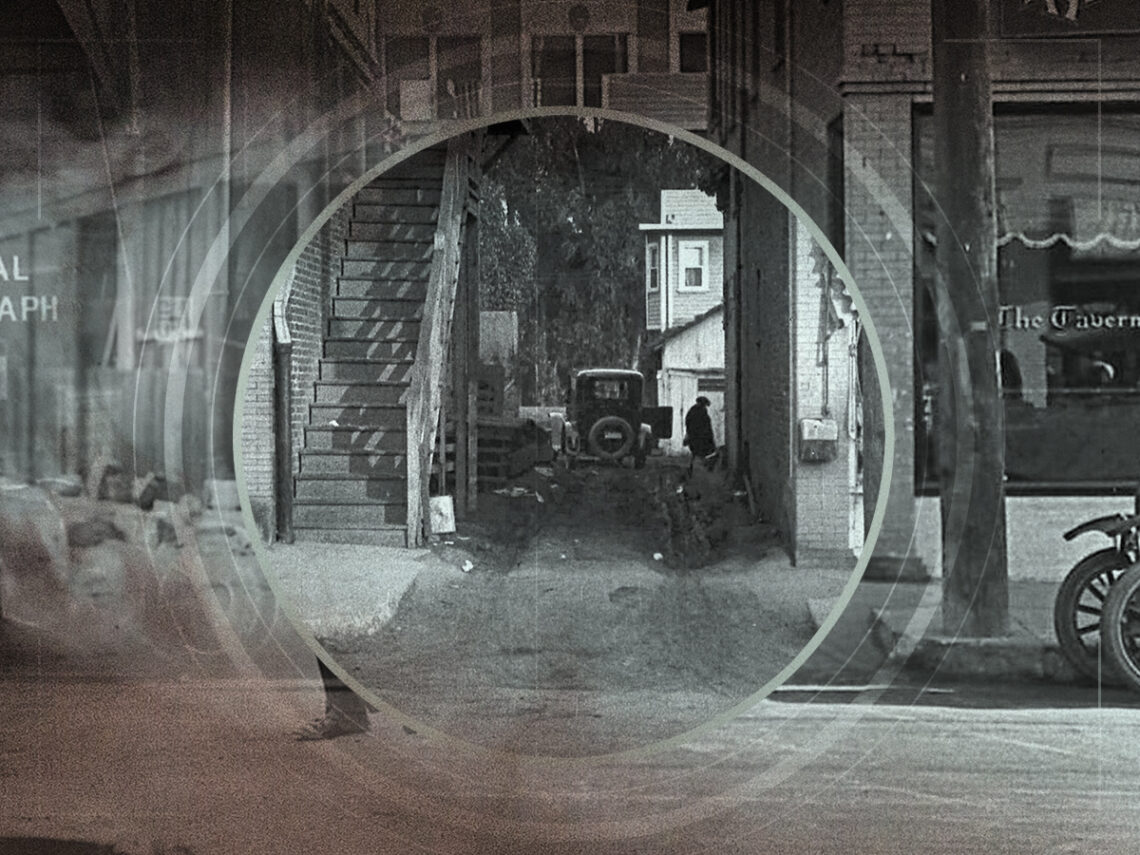
Three icons, one street: the Los Angeles alleyway that defined Hollywood’s early years

While some of its treasured locations have been lost to time, Los Angeles is home to many of the most important historical landmarks in Hollywood history.
To any actor, filmmaker, or individual remotely interested in Hollywood, LA is a complex city that has multiple associations, both good and bad, where, on the one hand, it’s a place where some of the most famous movies ever are made and remains the spot in which critical decisions about the future of the industry as a whole are determined, on the other, it can often be a hard city that sucks out dreams and offers a dose of reality for anyone still intrigued by ‘the magic of the movies’.
Los Angeles has oddly become less of a prominent epicentre in film culture as a result of many productions going international, and the recent fires that devastated the city only further decimated opportunities to set up new projects, but there is still so much history in the ‘City of Angels’ that it will never be completely set aside.
The Chaplin-Keaton-Lloyd Alley is aptly named because it served as the host for the work of many early silent era projects, namely Charlie Chaplin, Buster Keaton, and Harry Lloyd. While it’s remarkable that the three most critical figures within this era of film history happened to be, it speaks to the similar parameters that these early artists were under.
In the days before shooting in massive studio lots became common, these Los Angeles alleys offered an open environment that was perfectly suited for the type of comedy that Chaplin, Keaton, and Lloyd excelled in.
The alley is immortalised in Chaplin’s classic film The Kid, which was one of the first feature-length productions that proved he was capable of doing more than hijinks. Chaplin plays an early version of the Tramp who ends up protecting a young boy and becoming his mentor, even when poverty threatens them both. It was an early example of his heartfelt, endearing presence, as even his goofiest characters felt compelled to do the right thing. Although the alley isn’t particularly pronounced, it played an important role in making the world and stakes of The Kid feel real.
Lloyd also made an appearance in the alley in one of his most famous films, Safety Last!, a 1923 classic that featured some of the most death-defying stunts ever committed to the screen at that point in history, making him truly the Tom Cruise of his era, and establishing a real alley served as a reminder to the audience that what he was doing wasn’t all Hollywood deception, but that he had actually pulled off an incredible feat.
Keaton was perhaps the most ambitious of the early silent stars in terms of the complexity of his stunts, with his most iconic appearance in the alley being in Cops, a 1922 adventure in which his character is pursued by a group of police officers. Although he would obviously work on larger productions with Sherlock Jr and The General later on in the decade, Cops showed how much he could accomplish in a relatively contained running time, and teased the anti-authoritarian streak present in nearly all of his films.
While it may no longer be actively used, the Chaplin-Keaton-Lloyd alley is a reminder of the enduring creativity and spirit of the most foundational generation in Hollywood history, which can still be seen as a source of inspiration.
