


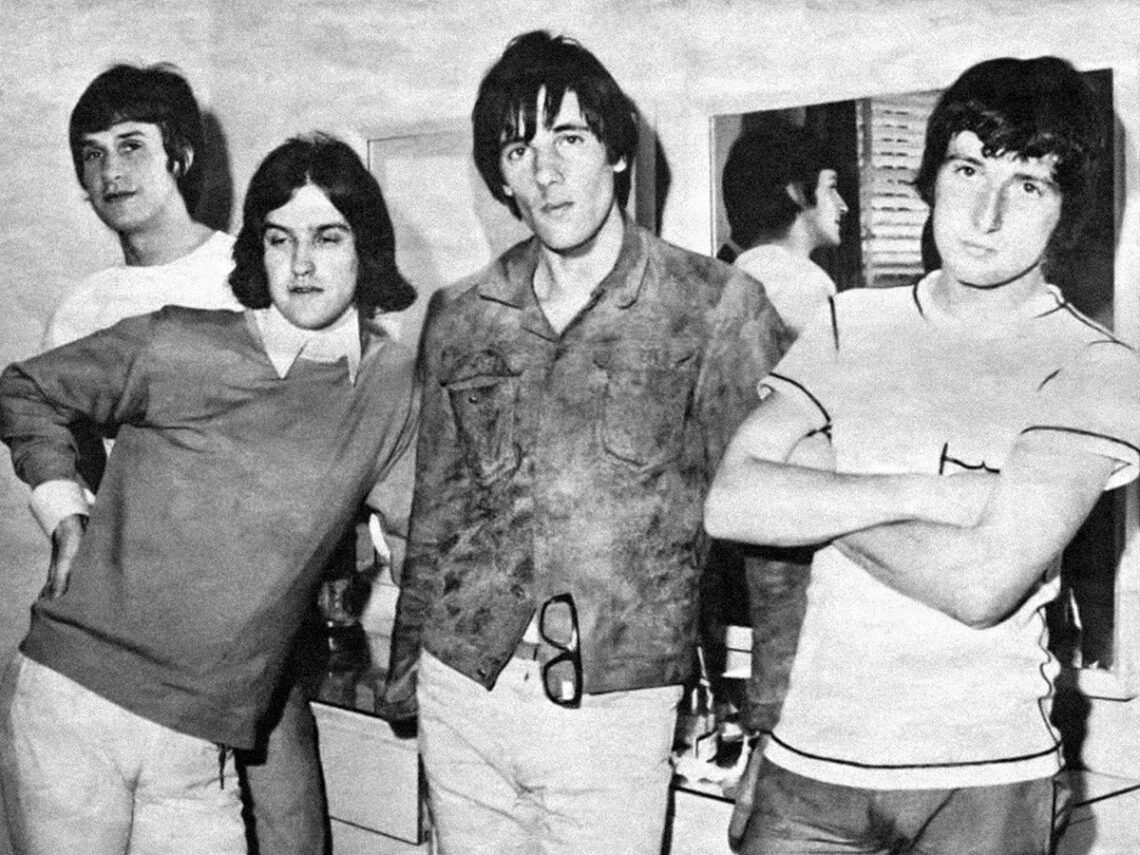
‘Dancing In The Street’: The story of The Kinks, Motown, and the worst cover in history

Over 60 years on from when it was first defined by Berry Gordy’s roster of R&B revolutionaries, the elusive ‘Motown sound’ still represents the pinnacle of pop-soul, having inspired multiple generations and carved out some of the most enduring tracks of all time. As The Kinks can attest to, though, it is a tricky sound to master.
In the early days of Motown, the label’s output was largely dominated by old-school doo-wop records, it wasn’t until Barrett Strong landed Detroit its first hit with ‘Money (That’s What I Want)’ that the ‘Motown sound’ started to take root, fleshed out by the litany of utterly iconic names that were to follow his route into the pop charts: Martha Reeves and the Vandellas, The Four Tops, Marvin Gaye, and Stevie Wonder, to highlight only a handful of examples.
With the pop dominance that Motown was afforded by the mid-1960s, the label’s output inevitably began to influence artists outside of the Hitsville studios. Thousands of miles across land and sea, the trendy modernist nightclubs of London were among the first international audiences to adopt Motown as its soundtrack, and from those seeds came sprouting the likes of The Beatles, The Rolling Stones, and The Kinks, all of whom owed a huge debt to Motown’s inspiration.
Famously, of course, The Beatles chose to cover three different Motown tracks on their 1963 record With The Beatles, becoming key in bringing the label’s output to the attention of mass audiences outside the United States. Only two years later, then, Ray Davies and The Kinks decided they would try to evoke the same soulful magic with their own Motown cover.
Appearing on their sophomore effort Kinda Kinks in 1965, the page that Davies took from The Beatles’ playbook didn’t have quite the same impact as their Liverpudlian counterparts. ‘Dancing In The Street’ was the track that the band elected to cover – a Martha Reeves masterpiece released the previous year, which became a number-two charting single in the US, and an iconic track of the euphoric defiance of the civil rights movement. Inevitably, The Kinks couldn’t do it justice.
It isn’t as though the band weren’t qualified to perform the cover. The Kinks, from their very beginning, had been indebted to the kind of American soul, blues, and R&B that Motown typified in so many ways. They had the musical skill, and they certainly had the requisite respect for the music to do ‘Dancing In The Street’ justice, but their 1965 recording of Reeves’ track still stands out as one of the all-time worst Motown covers.

In an almost impressive fashion, The Kinks transformed one of the most driving, upbeat and infectious Motown tracks of all time into a flat and lifeless album deep-cut, with Ray Davies providing a truly uninspired vocal performance that creates an impression of their ‘Dancing In The Street’ being little more than a contractual obligation, or a rushed after-thought meant to extend the album’s runtime a little longer.
The Kinks’ disastrous cover is owed to a number of factors. For starters, the recording sessions for Kinda Kinks were infamously slapdash, with a view to getting the LP out as fast as humanly possible in order to capitalise on the band’s then-current relevance. More importantly, though, Davies was lacking two key things that made Martha Reeves’ original so special: the vocal range and the lived experience.
Ray Davies is, without question, a fantastic performer and a talented singer, but his appeal did not fit naturally into the octave range, nor the euphoric spirit that Martha Reeves imbued that 1964 track with. Coming from the grey streets of working-class London, too, he couldn’t find the same degree of connection to the track as Reeves had done; ‘Dancing In The Street’ essentially being owed to the city of Detroit, the changing tides of the civil rights movement, and the long-awaited joy that came with that fight.
‘How come The Beatles managed to pull it off?’ you might be questioning, and it is a fair enough query. However, it is worth noting that Motown didn’t have nearly the same notoriety in the UK in 1963 versus 1965 – ‘Dancing In The Street’ had been a top 30 hit when it was originally released by Martha Reeves, so audiences didn’t have as much to compare the Fab Four’s cover versions to. What’s more, they chose tracks that were distinctly more pop-centric in their approach, without much social context or, indeed, demanding vocal performances behind them.
Either way, The Kinks earned the regrettable accolade of having released the worst Motown cover of the 1960s, and perhaps the worst Motown cover of all time, although they might have to battle it out with another ghastly version of ‘Dancing In The Street’, this time recorded in 1985 by Mick Jagger and David Bowie.
