


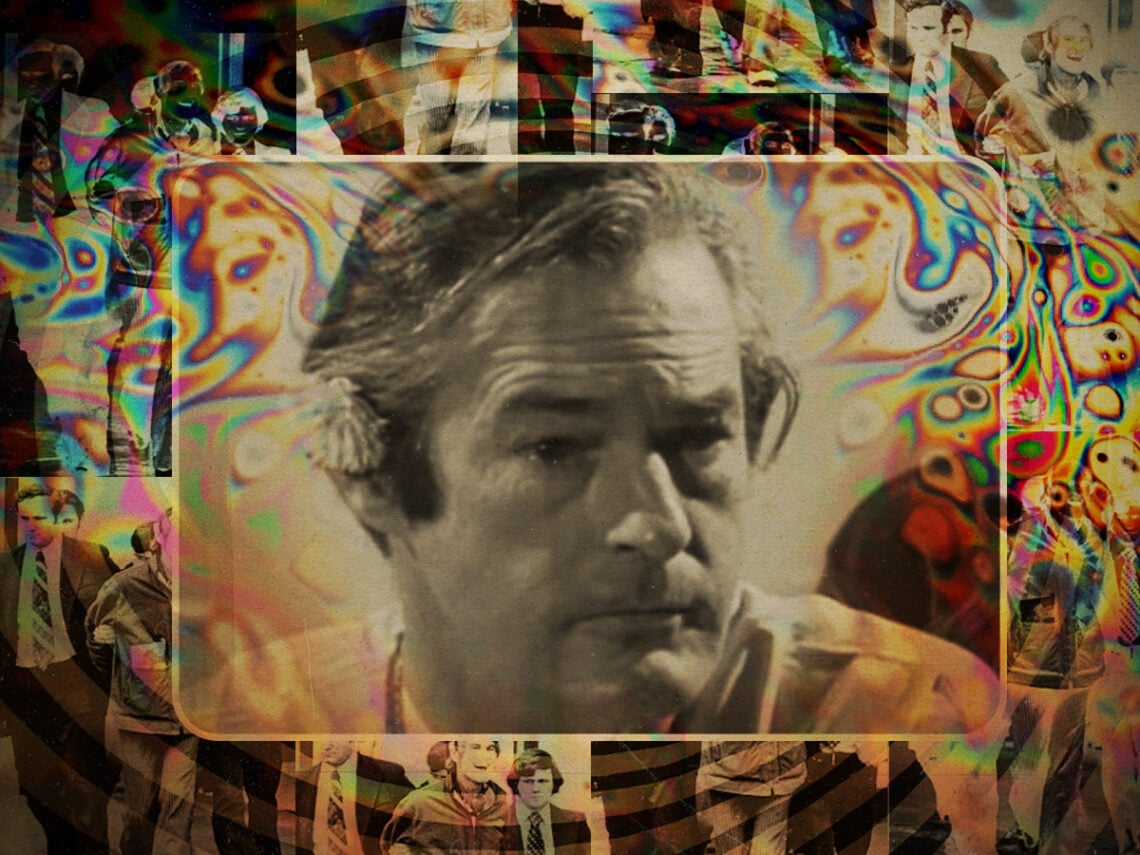
The jailbreak of Timothy Leary: the daring escape of counterculture’s acid king

Between the 1960s and ’70s, Timothy Leary was arrested a total of 36 times.
From the 1960s, Leary was an outspoken advocate for the use of psychedelic drugs, namely LSD, and he had his PhD in clinical psychology from the University of California, Berkeley, and his title as a clinical psychologist at Harvard University, to his credit. After being introduced to psychedelic mushrooms in Mexico in August of 1960, he began a research program, the Harvard Psilocybin Project, to study the effects of psilocybin and various psychedelics on the human mind, with his colleague, Richard Alpert, otherwise and later known as Ram Dass.
His project caught the attention of Allen Ginsberg, who revered Leary as “a hero of American consciousness”.
Still, the psychologist was no hero in the eyes of Harvard, and in 1963, he was fired from the university after questions of ethics and safety arose (though his firing was claimed to be resulting from Leary’s failure to keep his classroom appointments and his leaving campus without authorisation).
Leary continued his work with the Psilocybin Project after his firing, notably during his years spent at the Hitchcock Estate (known as “Millbrook”), a mansion in Millbrook, New York, owned by heirs of the Mellon family. There, Leary and Alpert assembled a group of former Psilocybin Project members, and LSD sessions were facilitated by Leary.
“We saw ourselves as anthropologists from the 21st century inhabiting a time module set somewhere in the dark ages of the 1960s,” Leary wrote of this time. “On this space colony, we were attempting to create a new paganism and a new dedication to life as art.”
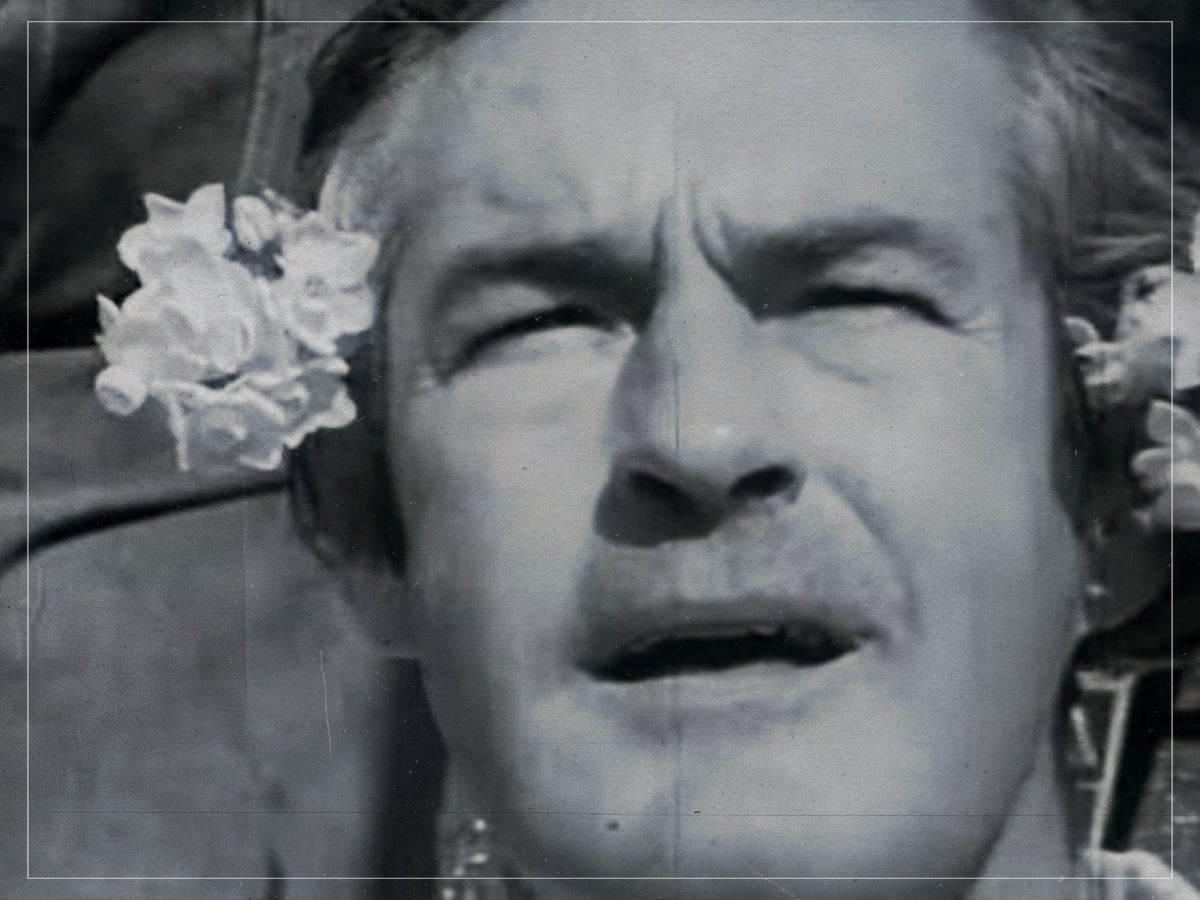
The saga of his infamous arrests began on December 23rd, 1965, when Leary was arrested for possession of marijuana. Three days earlier, he and his girlfriend, Rosemary Woodruff, travelled with Leary’s two children to Mexico for a month-long vacation. They had travelled to Mexico and back, to Texas, awaiting the proper visa for their extended stay, when Woodruff remembered that she had a small amount of marijuana. Leary’s daughter, Susan, placed it in her clothes, but the substance was still found during their return to the States through customs.
Leary took responsibility for the substance, was convicted of possession under the Marihuana Tax Act of 1937 and sentenced to 30 years in prison, on top of a $30,000 fine and an order for psychiatric treatment. He appealed the case, deeming the Marihuana Tax Act unconstitutional and requiring self-incrimination, and in May of 1969, this was taken to the Supreme Court under Leary v United States, which found in agreement with Leary. His conviction, then, was overturned.
A second arrest came on December 26th, 1968, in Laguna Beach, California, for the possession of two marijuana joints; he was arrested alongside Woodruff and his son, Jack. This arrest resulted in a ten-year prison sentence and a $10,000 fine on March 2nd, 1970.
The court also ordered that there be no bail pending appeal, basing this decision on Leary’s arrest, his reputation as an advocate for drugs and the drug-related deaths of two individuals, Charlene Almeida and John Griggs. “Whether or not Leary bears any liability at law for these deaths,” the bail denial report said, “these persons would, as a matter of simple, factual cause and effect, in all probability have been alive today had Timothy Leary not been at large during the latter part of the year 1969.”
Leary’s bail request was subsequently denied, and a further ten years were added to his sentence while in custody, with a total of 20 years to be served, the maximum. Arriving at the California State Prison in Chino, Leary was subject to psychological tests that would determine his placement for work. Allegedly, some of the tests given were designed by Leary himself, including his “Leary Circumplex”, a psychological model he’d designed in 1957, during his days as a research psychologist.
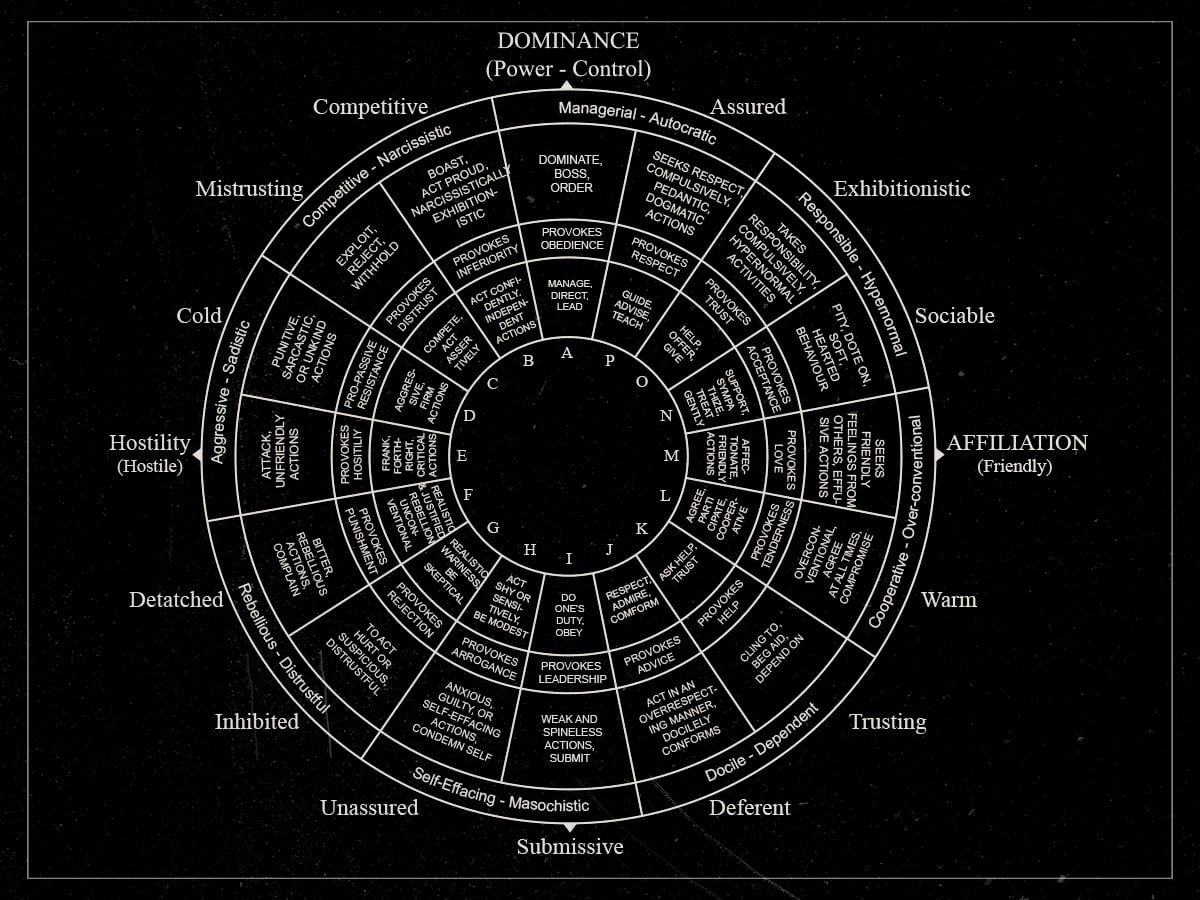
He had the knowledge to answer the questions in a way that would allow him to pose as nonthreatening, and it worked: he was transferred from Chino to the California Men’s Colony (CMC), a minimum-security facility for elderly and nonviolent prisoners, in September of 1970, and there, he was assigned work as a gardener.
During this time, Woodruff was ceaselessly campaigning for her husband’s defence: she conducted television and media interviews, appeared at radio stations, looked to secure Leary’s writing and movie deals through his literary estate and elsewhere, all while maintaining their home and keeping in mind the well-being of Leary’s children. Meanwhile, Leary was plotting a rescue of his own – that is, in the form of an escape.
The environment of CMC – golf courses, vegetable gardens and unsupervised visitation – gave Leary the ease of setting forth his plan, and on the night of September 12th, 1970, he executed it. He made his moves from his cellblock to across the prison yard, then climbed a tree, crawled across the prison corridors’ rooftops, before wrapping himself around a cable connecting two telephone poles, shifting from one end to the other. He descended to the road below, where, a couple of miles ahead, he was picked up by a getaway car, driven by a member of The Weather Underground, an American Marxist militant organisation.
“I offer loving gratitude to my Sisters and Brothers in the Weatherman Underground who designed and executed my liberation,” Leary wrote in a statement released to the press. “Rosemary and I are now with the Underground and we’ll continue to stay high and wage the revolutionary war I am armed and should be considered dangerous to anyone who threatens my life or freedom.”
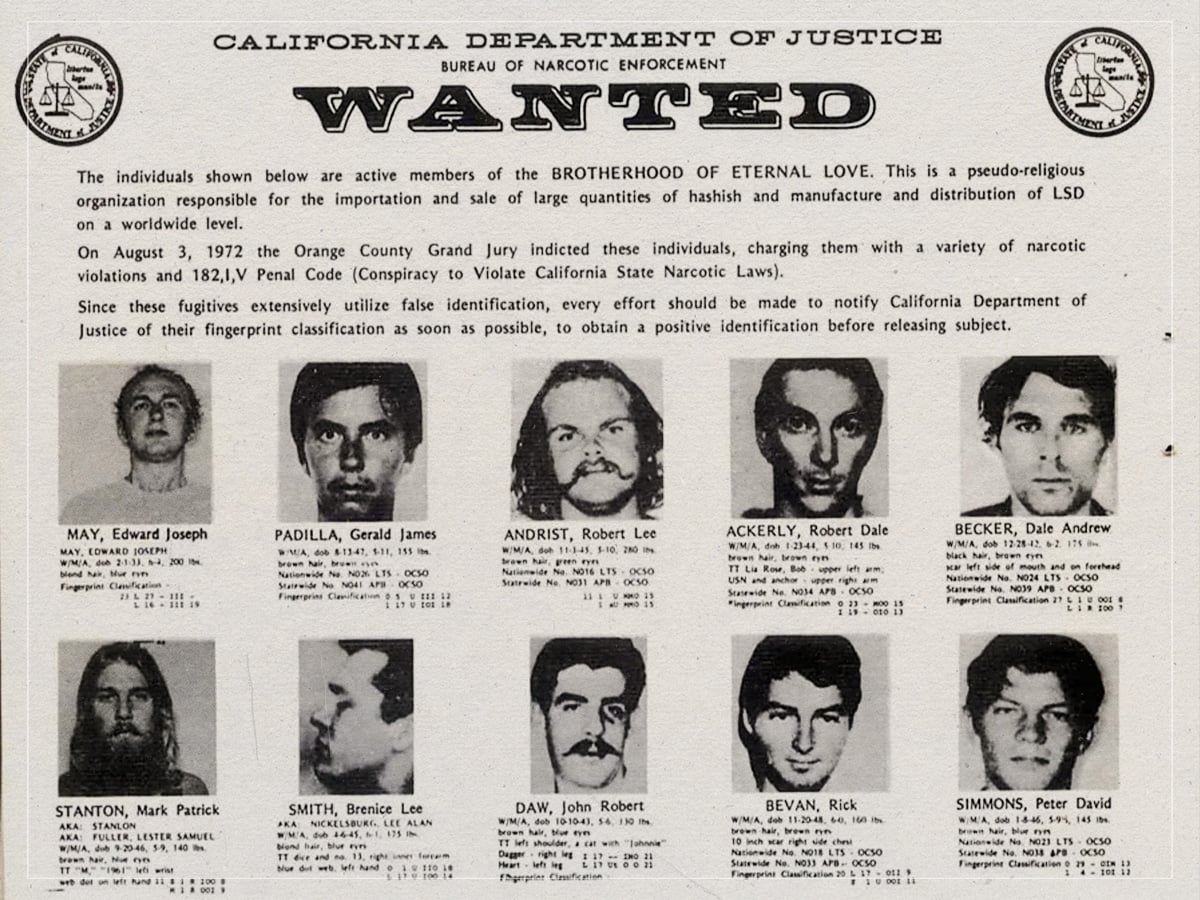
Leary’s conspirators were The Weathermen and The Brotherhood of Eternal Love, a so-called “Hippie Mafia” who produced and distributed drugs in order to start a “psychedelic revolution”. The Brotherhood were the ones who gave The Weathermen $25,000 – in a paper bag, on the Santa Monica Pier – and in turn, they not only picked up Leary, but they helped him and Woodruff escape the country.
Eventually, the couple landed in Algeria, where they stayed with and were offered protection from Eldridge Cleaver and other members of the Black Panther Party. But their relationship quickly turned sour: Cleaver placed the couple under house arrest, claiming that Leary had become dangerous.
“To all those who look to Dr Leary for inspiration or even leadership,” Cleaver wrote in a letter to Rolling Stone in 1971, “We want to say that your god is dead because his mind has been blown by acid.”
The couple then escaped to Switzerland, staying in Geneva for a short period in 1972 until Leary was once again arrested after the then-President Richard Nixon’s attorney general, John Mitchell, convinced the Swiss government to imprison him, after filing extradition papers. Switzerland, however, refused to deport Leary. Leary and Woodruff separated later that year: she continued to travel and live as a fugitive until the 1990s, while Leary remarried a Swiss-born British socialite, Joanna Harcourt-Smith, and travelled from Vienna to Beirut, then to Kabul, Afghanistan.
But there was no true escape for Leary: the American government kept an eye on his whereabouts. The infamy of Leary’s escape was only the beginning of his contentious relationship with the government and later, with culture at large.
