


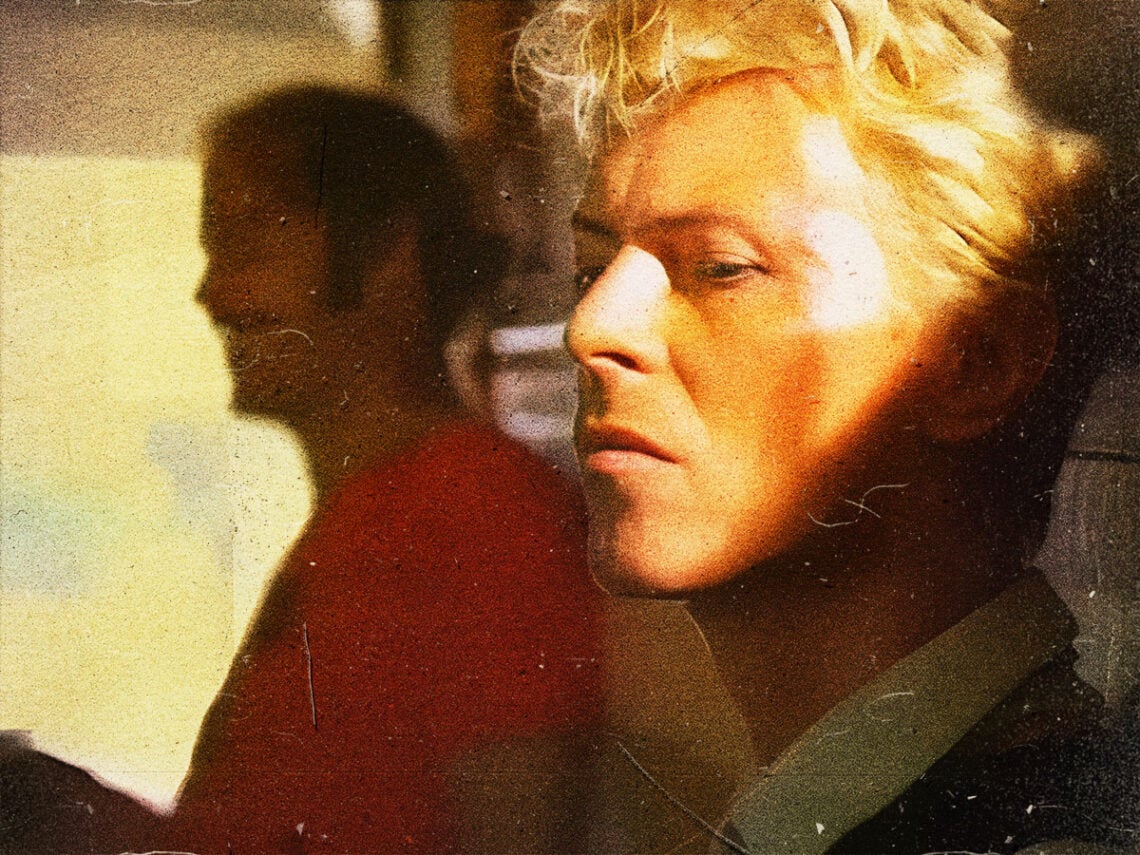
The inspiration that made David Bowie want to write a musical

When it comes to someone as sui generis as David Bowie, tracing an inspiration is a bit like trying to reverse engineer an alien aircraft. He was so unfathomably original and unique that any influences seem to be subsumed in the mythical welter of his otherworldly output. Thankfully, he was very forthcoming about his passions and the art that wove its way into his oeuvre was happily extolled so that his fans could join him in his bohemian mausoleum.
In fact, one of the draws that makes Bowie so beloved among his army of followers is just how much of an artistic guardian he proved to be. I, for one, owe a fair chunk of my bookshelf, record collection, gallery visits and cinema trips to the guiding influence of Bowie. He was never too hung up on his own identity to not simply come across as an interesting person absorbed in the flurry of happening culture around him—and this culture came from all walks of life.
This thought process made him a beacon beyond his bright new music, tying art of all virtues together. As he said himself: “I suppose for me as an artist, it wasn’t always just about expressing my work; I really wanted, more than anything else, to contribute in some way to the culture I was living in.” He achieved that feat with roaring aplomb and continues to do so.
Pivotal to this was the fact that his act was always a lot more multimedia than many of his peers. He wasn’t quite a song and dance star, but his work was never cut and dry rock ‘n’ roll either. You don’t look at Mick Jagger and sense the lingering influence of Yukio Mishima or Salvador Dalí in his work the same way you do with Bowie. He simply embraced all that is interesting under the sun in order to create a riveting act.
This sense of being a consummate entertainer was inspired by Anthony Newley, a musician and actor who started off as a solo artist before moving into musicals and cabaret. As the Starman once said: “When I was around 17-18, what I wanted to do more than anything was write something for Broadway – I wanted to write a musical. I had no idea how you did it or how musicals were constructed, but the idea of writing something that was rock-based for Broadway really intrigued me. I thought that would be a wonderful thing to do.”
“I thought of myself as somebody who would end up writing musicals in a way – probably rock musicals of some nature,” he continued, “But it never actually became that, so those ideas were quashed a little bit when I realised what an ambitious thing that was to take on because you have to write dialogue and all.” With a cheeky grin and a cockney singing accent stolen straight from Newley, Bowie’s early stylings were essentially an attempt at ushering the ways of his old hero into the visceral world of rock.
In Newley, he saw a charismatic performer with a great sense of individualism, owing to the fact that, unlike many performers of the day, he didn’t hide his cockney accent. Celebrated as a British Al Jolson, Newley was prepared to go beyond being merely a singer to let his personality come through on top of it. In his pomp of performing in the late 1950s, he seemed liberal, funny and part of a wider sphere of culture than what you see on stage.
Bowie was enamoured and wanted to mimic him, seeing his fate on Broadway. In many ways, everything he ever wrote was a play of sorts, extending far beyond a typical pop song.
