


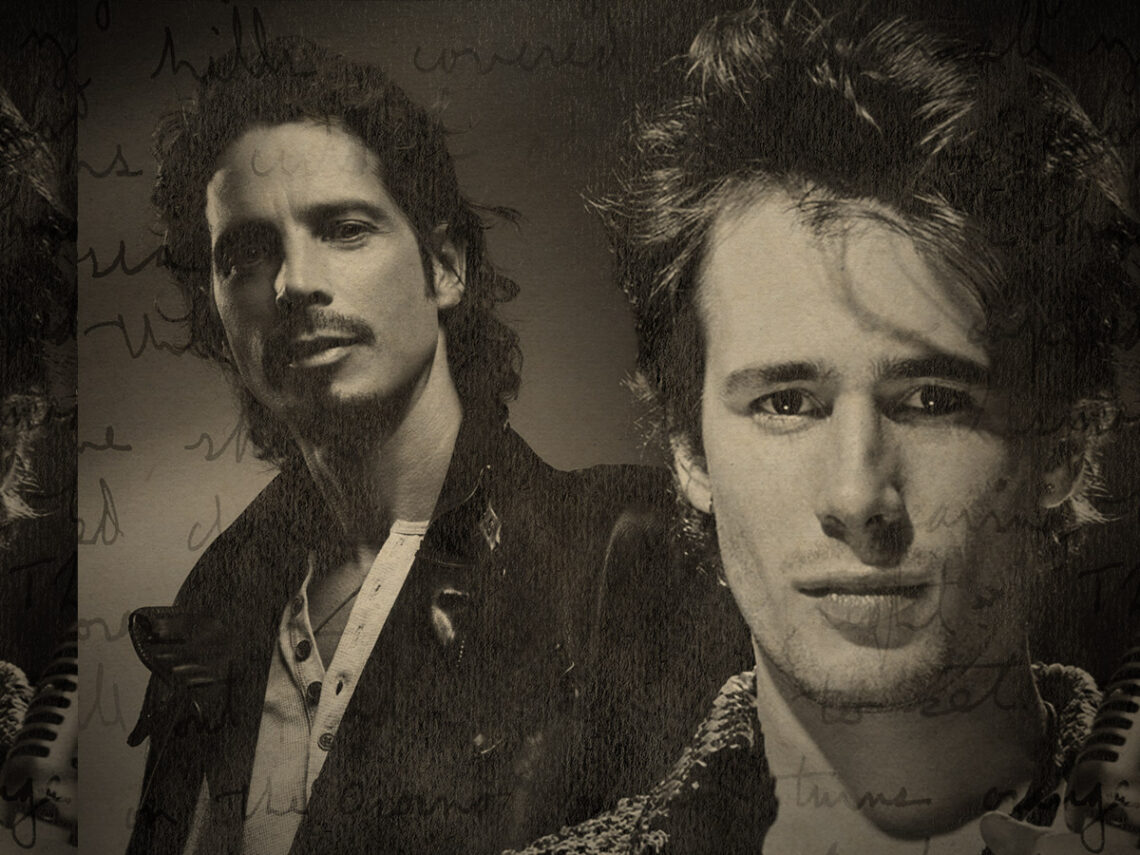
Posthumous phone calls: Jeff Buckley and Chris Cornell’s heartbreaking connection

“I have this cockroach feeling that I’m not going to be one of those guys that has the unhappy early ending,” Chris Cornell said in 2000.
He was 35 years old and still figuring out his post-Soundgarden career, but despite ongoing struggles with depression, he said he always managed to see a “light at the end of the tunnel… I know I’m a lucky person in so many ways”.
Cornell had already seen too many talented but tragically unlucky friends come and go; it helped motivate him for quite a few years to carry forward and stay grateful. Some examples, like Kurt Cobain, served more as a “there but for the grace of God go I” sort of warning. Others, like Jeff Buckley, reminded Cornell that even a person on a sober, seemingly straight-and-narrow path might still have it all disappear in an instant.
Ironically, Cornell first met Buckley just a few weeks before Cobain’s death, after a Soundgarden gig in London on March 12th, 1994.
“I don’t think I quite realised what a huge Soundgarden fan Jeff was,” Buckley’s friend and label exec Michele Anthony said in the recent documentary, Jeff Buckley: It’s Never Over. Anthony already had backstage passes to the Soundgarden show at the Shepherd’s Bush Empire, and recalled that Buckley was like a nagging little brother when he found out about it: “You have to take me, I’m coming with you!”

Buckley hadn’t released his debut studio album, Grace, yet; it was due out in the summer. Cornell, meanwhile, was in the middle of touring behind Soundgarden’s new album Superunknown and its soon-to-be hit single ‘Black Hole Sun’. A few months earlier, somebody had given Cornell a copy of Buckley’s earlier EP Live at Sin-é, but he hadn’t had time to listen to it yet. After briefly meeting and chatting with Jeff backstage in London, though, he was immediately impressed with the kid and made a point of listening to the EP later that week.
Later, when he returned home to Seattle, Cornell went and saw Buckley play a gig on the Grace tour and met up with him again backstage, this time as a mutual fan. In the 2001 Buckley biography Dream Brother, Cornell recalled how Jeff’s falsetto at that Seattle show was sometimes pushed to the point of making the audience uncomfortable with its razor’s edge vulnerability.
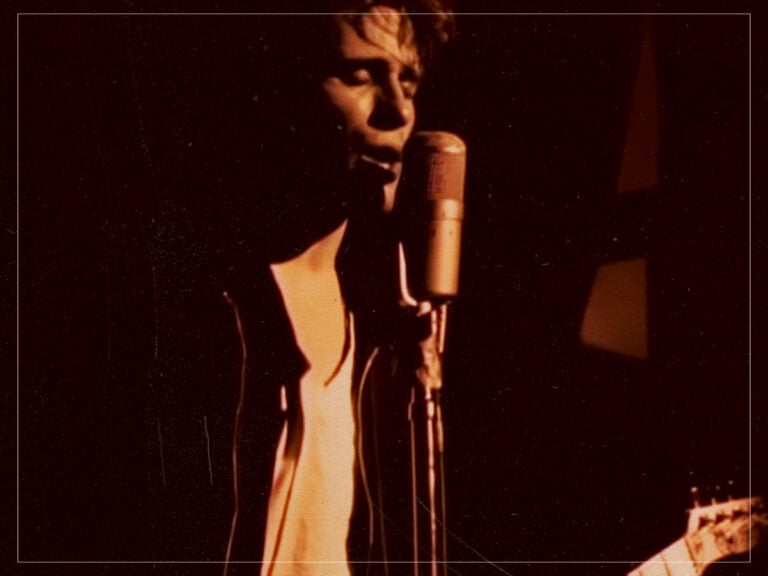
“That was the punk-rock stage of ‘this is dangerous’,” Cornell said, “There were these 12 to 20-year-olds in flannel shirts standing there, dead silent. These were young guys who were into really aggressive music and they didn’t know what to make of [Buckley]. But after a while, they started looking at each other like, ‘Yeah, I kinda like this’.”
“He definitely had a maverick nature to him, but he wanted to push and entertain himself. That’s what he enjoyed.”
Chris Cornell
As an established rock star who seemed to have a handle on the pitfalls of fame, sitting at the top of the grunge mountain, Cornell became an increasingly important source of support and guidance for Buckley, especially as the almost universal praise for Grace put him in the eye of the storm in the mid-1990s. The two stayed in touch regularly and helped each other creatively, as well, but it was a friendship neither artist discussed much publicly; with both preferring to maintain a low profile and keep their name-dropping to a minimum.
“Chris Cornell does it really well,” Buckley did say in one previously unheard recording featured in the documentary, “He’s one of the few people I’ve met who makes his life work; his ordinary life. Because without ordinary life, there’s no art.”
Cornell’s ex-wife, Susan Silver, described Chris’s friendship with Buckley as a “beautiful” one, saying, “There was this sense of mischief with an almost soulmate-like understanding”.
On April 9th, 1997, after 12 years together, Soundgarden announced their official break-up, which Cornell attributed to creative burnout, and it’s likely he probably had more than one chat with Buckley over the next few weeks, looking for a pep talk of his own. Then, on May 30th, Cornell heard the impossible, devastating news that Buckley had vanished while swimming in the Wolf River in Memphis, and four days later, his body was found. Toxicology reports found he’d had no drugs or alcohol in his system; he’d simply been pulled from the shore by the wake of a passing tugboat while out for a spontaneous dip after a fun day in the studio.

Buckley had been working on his second album at the time of his death, and in the aftermath, his bandmates and the managers of his estate struggled to decide what to do with the half-finished work. Buckley’s mother, Mary Guibert, reached out to Cornell to help as an advisor on the recordings, and Chris agreed, quietly helping piece together the songs that became 1998’s Sketches for My Sweetheart the Drunk.
As a token of appreciation, Guibert later gifted Cornell a red telephone that had belonged to Buckley, which wasn’t a typical landline model, but a unique prop of sorts, one Jeff apparently would use to “talk to God,” according to his mother.
Over the next few years, Cornell regularly thought of his friend and tried to mourn in the best way he knew how. For his debut solo album, 1999’s Euphoria Morning, he recorded a direct tribute to Buckley titled ‘Wave Goodbye’. The song, which opens with a brief, Buckley-esque falsetto, has a soulful feel, almost like a heartbroken Otis Redding tune rather than a typical angst-ridden Soundgarden ballad:
“When you miss somebody / You tell yourself a hundred thousand times / Nobody ever lives forever / So you give it one more try / To wave goodbye / Wave goodbye”.
Though the song didn’t mention Buckley by name, Cornell began discussing the topic more openly, and many fans realised for the first time just how close the two friends had been.
More than a decade later, in 2011, Cornell began bringing Buckley’s old red telephone on tour with him, placing it in a prominent position on stage during his solo acoustic sets. He didn’t pick up the phone or make any reference to it during the shows, but eventually, his fans became curious. Somebody at a gig in Kalamazoo, Michigan, shouted up toward the stage, asking essentially, “What’s up with the phone?”
“A friend of mine’s mom gave it to me after my friend passed away,” Cornell patiently replied, “That’s the actual true version [of the story]. There’s a whole bunch of other bullshit reasons I make up sometimes. That’s the real one.”
Any time he was asked about Jeff Buckley, he lit up, eager to share the memories of the real person he knew. He didn’t like how people were posthumously trying to create a profile of the late singer as someone who was sad or introverted or mysterious, more in the Nick Drake mould.
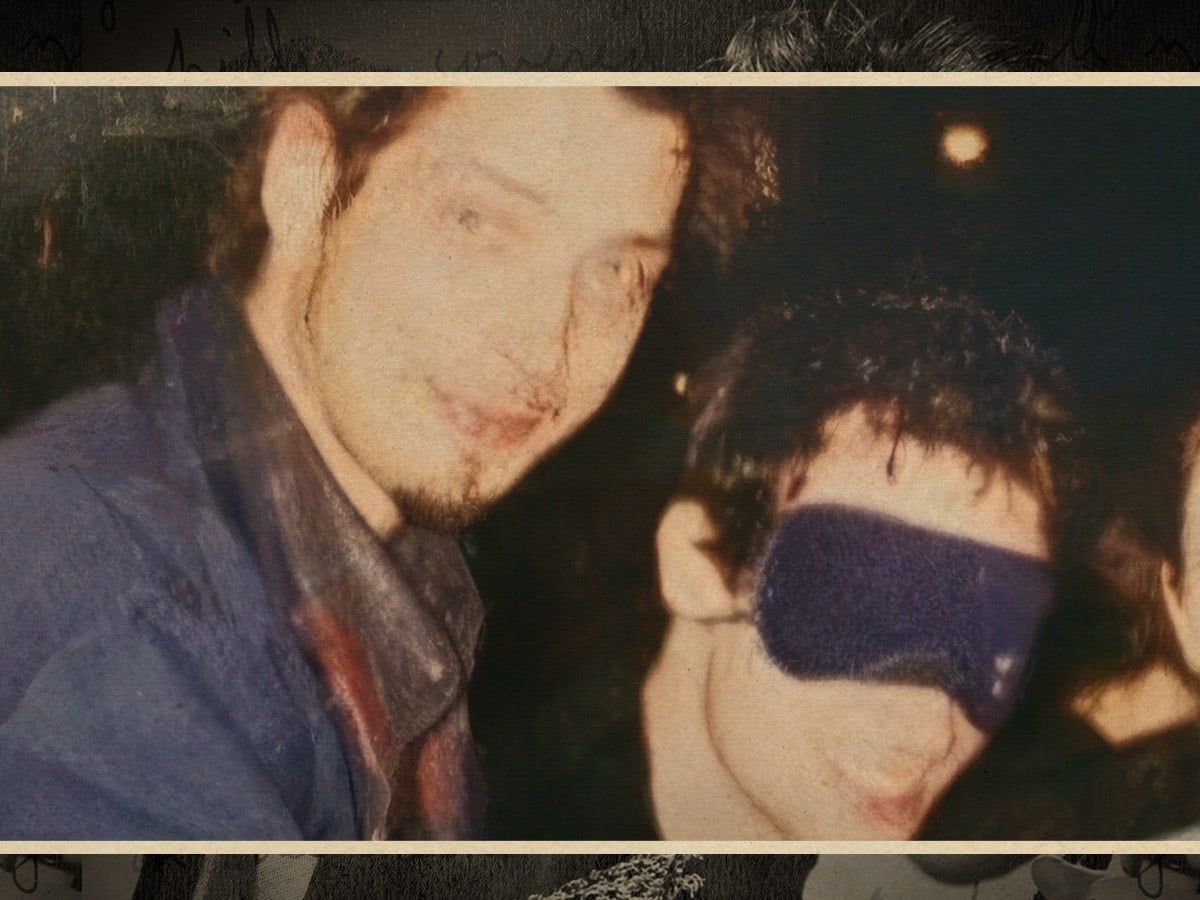
“Jeff was the opposite,” Cornell told the Irish Independent in 2009, “He was very much full of life and had a lot to say. He was somebody in love with experiencing everything… People talked about his concerts the way they used to talk about Hendrix; they’d sit there, wide-eyed, telling you stories about him. He definitely had an aura,” describing Buckley in the same way many people would later describe Cornell himself.
“It’s impossible to say what it is exactly a guy like that has, that is so attractive to other people. But he had more of it than anyone I had ever met,” he added.
One of the greatest tragedies of the Cornell-Buckley friendship, of course, is that the former couldn’t pick up that red telephone and call Jeff, or God for that matter, when he faced his most difficult challenges later in life. On May 18th, 2017, just shy of the 20th anniversary of Buckley’s death, Cornell took his own life at 52.
The “unhappy early ending” he had trusted himself to avoid had, instead, come to pass, extinguishing two great voices in its wake.
