

25 years on from Jeff Buckley’s tragic death
Read More


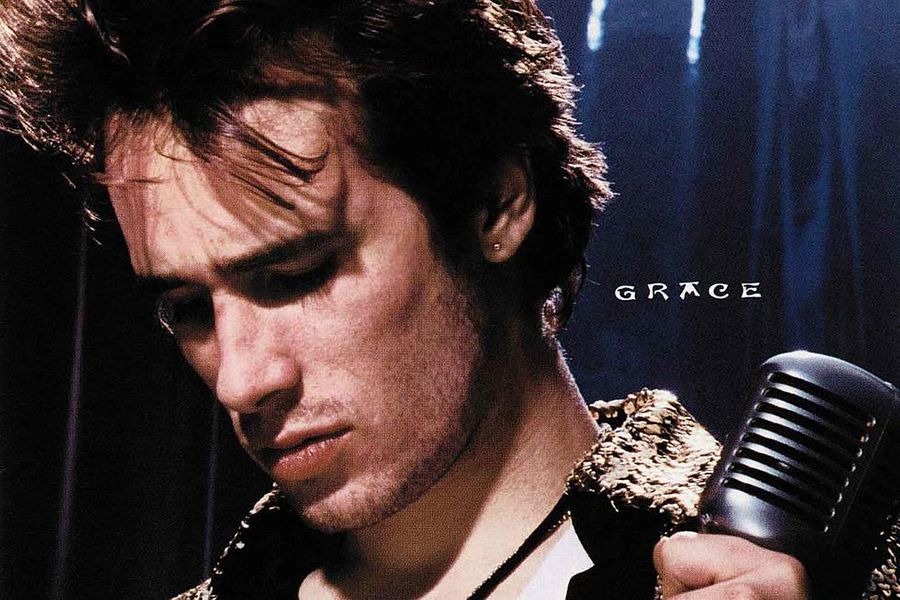
Some albums are truly flawless, ten out of ten in their own right, with not one skippable moment. However, such albums are naturally few and far between, so whenever one rarely comes up, it stays with us eternally. If we listen to one track from the album in isolation, when it ends, the next song of the album’s sequence begins to play in our heads and throws us off when a different track plays instead. One such album is Grace by Jeff Buckley, the only full-length record he released during his short life.
The album arrived in August 1994 and was released on Columbia Records. Grace had been long-anticipated, given that Buckley had been a session musician briefly in the late 1980s, and in 1990, he recorded a demo with his father’s former manager Herb Cohen. Buckley’s father was the iconic Los Angeles-based folk-rock singer Tim Buckley. However, Jeff was estranged from his father and had been raised under the name Scottie Moorhead.
When Tim died of a drug overdose in 1975, Jeff would readopt his birthname, Jeffrey Scott Buckley. The demo with Herb Cohen was comprised of many early versions of tracks that would make their way onto Grace, including ‘Eternal Life’ and ‘Last Goodbye’. In 1991, Buckley took part in a tribute concert to his father and performed ‘I Never Asked To Be Your Mountain’, a song that Tim Buckley had written about Jeff and his mother, as well as ‘Once I Was’.
Buckley’s performance at the tribute concert raised a few eyebrows; clearly, Buckley had inherited some of his father’s talent, particularly his beautifully effortless falsetto vocal style. With a buzz growing around Buckley’s future career, he moved to New York City and set about writing some songs with Gary Lucas, including ‘Grace’ and ‘Mojo Pin’. Much of Buckley’s public performances took place in cafes and clubs in Lower Manhattan around 1992.
He acquired a regular slot at Café Sin-e in the East Village and performed solo, covering many of his favourite artists, including Bob Dylan, Van Morrison, Nina Simone and Nusrat Fateh Ali Khan, amongst many others. The way Buckley performed these renditions made it clear that he was a unique artist with a prominent musical career ahead of him. Not only could he sing like an angel descended from heaven, but his guitar skills were second to none, and he regularly went off on improvised jams with his signature tone from a butterscotch Fender Telecaster and a distinctive plate reverb.
Eventually, Columbia Records signed Buckley, having caught wind of his musical prowess, and they released Live at Sin-e in November 1993. Now the real work was to begin, and Buckley set about recording his debut album with producer Andy Wallace, backed by a band comprised of Mick Grondahl, Michael Tighe and Matt Johnson.
What came out of the Bearsville Studios in Woodstock, New York, complimented by overdubbing sessions in Manhattan and New Jersey, was nothing short of astounding. The album was comprised of seven original songs and three covers: ‘Lilac Wine’ ‘Corpus Christi Carol’ and ‘Hallelujah’, the latter of which was originally penned by Leonard Cohen.
Though Grace was critically acclaimed following its release, sales were initially slow, and its tracks received little radio airtime. One reason for this, perhaps, is that the singles are not singles in the traditional sense. Buckley’s compositions were frequently over the recommended three-minute runtime for a single release, but this fact only proves the complexity that runs throughout Grace.
Grace is simply one of the best albums of all time. The complexity of the guitar lines, particularly on the album’s two opening tracks, ‘Mojo Pin’ and ‘Grace’, are complimented by some of the most beautifully delicate vocals ever recorded. With Grace, Jeff Buckley had managed to transcend the pressurised shadow that hung over him with his father’s prior success. Even though the Buckley family talent is there for all to behold, Jeff had become a uniquely talented artist in his own right.
Lyrically, the album concerns the sometimes futile nature of true love, with its triumphs (‘Grace’) and its downfalls (‘Last Goodbye’ and ‘Lover, You Should Have Come Over’). Elsewhere there is a response to Tim Buckley’s track’ Dream Letter’, written for his son, in the shape of ‘Dream Brother’. Buckley’s themes of love, family, desire and loss are all perfectly captured in a patient, harrowing and magnificent record.
Grace‘s production helps lift it up next to some of the most significant records of all time. Every track is exactly where it needs to be, whether giving Buckley’s delicate yet powerful vocals the room they need to breathe or elevating the full band sound in a track like ‘Eternal Life’. The angelic and heavenly nature of ‘Corpus Christi Carol’ is undisturbed by unnecessary instrumentation; just one of the tracks where we envision Buckley alone in the live room, doing what he does best.
As Hollywood icon Brad Pitt once went on record to sayL “There’s an undercurrent to his music; there’s something you can’t pinpoint. Like the best of films, or the best of art, there’s something going on underneath, and there’s a truth there. And I find his stuff absolutely haunting. It just, it’s under my skin,” and I couldn’t put it better myself. Buckley would also draw praise from some of his idols, including Jimmy Page, Robert Plant, Bob Dylan and David Bowie.
Grace will forever hold its status as a truly flawless record from beginning to end. Perhaps the fact that it is Buckley’s only full-length studio offering grants it a special consideration, seeing as it is the only document we have of an utterly polished record of the iconic singer. Today marks the 28th anniversary of the record’s release, so whether you’ve never heard it all before or it is one of your all-time favourites, now (as is every day) is the time to give it another spin.
