

In the footsteps of David Bowie: A cultural history and guide to Bowie’s bohemian Berlin
Read More


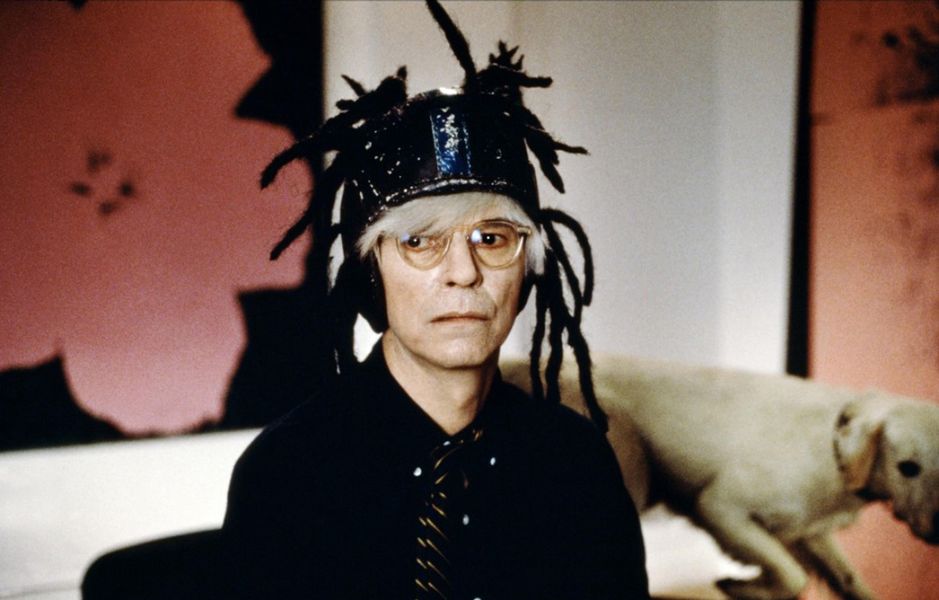
In some ways, David Bowie is an outsider musician. He has always been drawn to the oddities of existence and stayed steadfast to his own individual muses like a hammer and a nail. As he once proclaimed: “If it’s wearing a pink hat and a red nose and it plays the guitar upside down, I’ll go and look at it. I love to see people being dangerous.”
However, there is a fine line between danger and derangement. Bowie knew this all too well. When he was in Los Angeles, the one fellow he saw eye to eye with in the “insidious” town was Iggy Pop. At the time, Iggy was mostly holed up in a Californian mental institution. He was in a haze of post Stooges bewilderment, booze and substance abuse, and an equally mind-bent Bowie thought, ‘That’s the man for me’.
It worked out. Somehow the duo absconded to Berlin, sobered up, and hit upon mutual purple patches. Thus, Bowie became somewhat fascinated with white-walled institutions. And when his career hit the skids following the commercial zenith of Let’s Dance, he eventually returned to this world for some inspiration in the rather antiquated and callously named “Outsiders’ Wing” at the Maria Gugging Psychiatric Clinic in Klosterneuburg just outside Vienna, Austria.
At the time, Bowie had reenlisted Brian Eno for his 1995 record Outside. This returned his thinking to the notion of isolation and realignment. For some reason, this always proved inspirationally fruitful for Bowie—it’s as though being on the outside of things allowed him to place his art with greater clarity. As Bowie said, “It was really fortuitous that we got back together in ’92 and realized that we both, again, wanted to approach music the same way we did back in the Seventies.”
Thus, when they were invited to the institute by André Heller, it seemed fate had orchestrated a new sense of impetus. As Bowie recalled, “We kind of had these artistic – at least conceptual – parameters in place before we went into the studio. We sort of knew we were on a mission. Out of the set-ups we gave ourselves, we went to a mental hospital just outside of Vienna and that particular hospital is famous for its artistic wing. Inmates who’ve shown really strong orientation to painting or sculpting or something like that are given their own wing.”
Therein, the “inmates” were allowed to paint and sculpt, and the results were often fascinating. Much like Vincent Van Gogh, they were abstract in such a way that was only a short perspective trip away from reality. Importantly, for Bowie amid his dower patch, their perfunctory outsider art notion also came to the fore: they were creating these works for an audience of one. This allowed Bowie to get back into music from an entirely individualistic point of view.
This made art exciting to Bowie again. As he continues, “if those walls could talk! [The inmates’] whole process and how they instinctively jumped from symbol to symbol in their narratives and things. One man is called the Angel Man –and in fact, he turns up in one of the songs in the end.” That track is ‘I’m Deranged’ and them to the disenfranchised and the catharsis of art. The track is the definitive exemplar of what the album was all about and the paradigm for how this invigorating experience infiltrated the record.
As Bowie explained regarding the fascinating Angel Man: “He believed he was an angel and said, ‘I was exactly who I was up until the 5th of February, 1948, and then I became an angel… it was just after lunch.’ And from that point, he believed that his old person disappeared and his angel took over him. He was totally reborn at that moment.” Without sounding glib, if that’s not going to artistically inspire you then nothing will. The result was a return to form thanks to a return to the ab-norm.
