


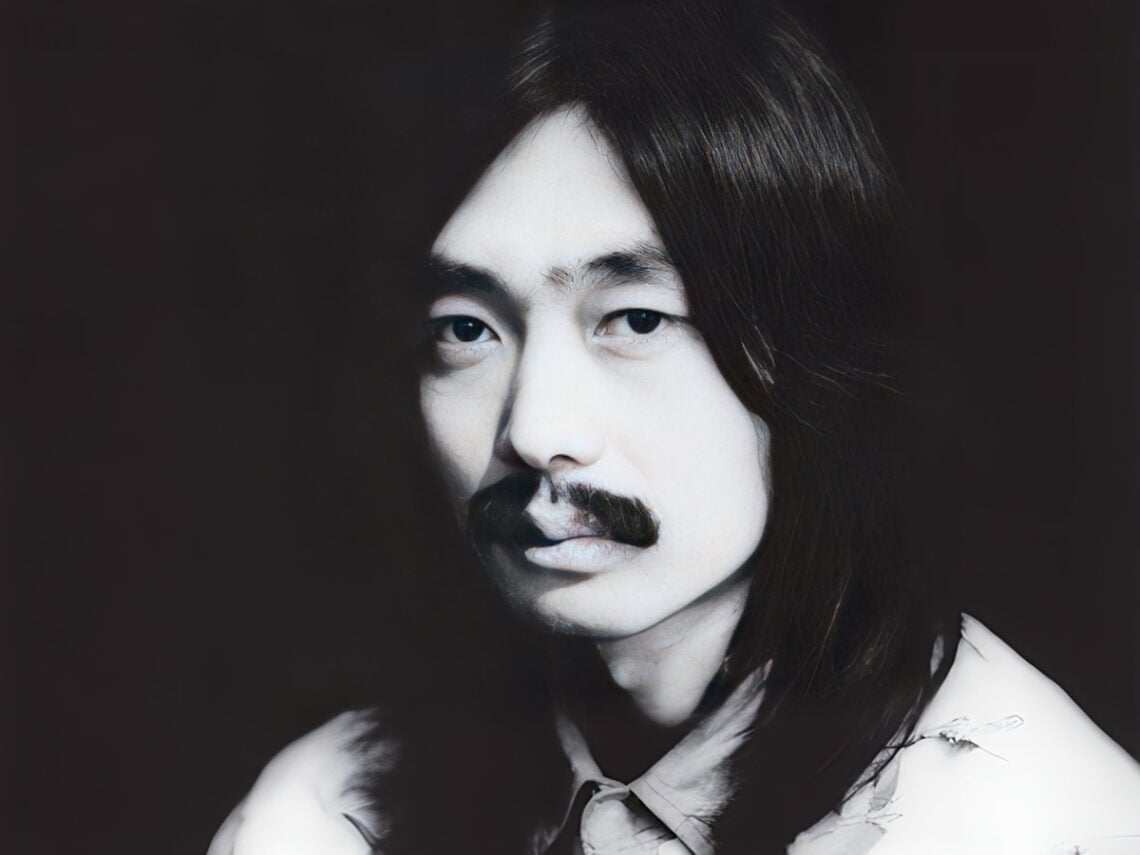
The greatest American songs ever, according to Haruomi Hosono

Haruomi Hosono listens to everything. Now, I know everyone says they “listen to everything” these days. In the age of streaming, this is an easy claim to make.
After all, the only thing standing in the way of listening to obscure Vietnamese soul artists from the late 1960s like Mai Lệ Huyền and Thanh Lan is your awareness of them and your willingness to do so.
However, as anyone who’s scrolled through their Netflix queue will tell you, just because you have the option to take in art doesn’t mean you will. The decision paralysis caused by limitless options makes us retreat into what we know.
This makes us less likely to take risks with our listening than ever. In short, the instant availability of music makes us less interested in music. Contrast that with the upbringing of Haruomi Hosono, who grew up in post-World War II Japan and yet, when he says “I was listening to everything”, he absolutely means it.
Despite the scarcity of music on offer, he took in everything he could, which led to him beginning a chameleonic, decades-spanning music career that saw him dip his toes into nearly every genre on the planet. The closest Western equivalent we have is probably no less an authority than David Bowie.
Both of them started out playing psychedelic folk pop in the 1960s, Hosono as part of the pioneering folk-rock bands Apryl Fool and Happy End, before moving on to more daring types of music in the 1970s. For both artists, this included pioneering works of art-pop and synth-driven music. However, Bowie continued making fairly Western styles of music. After all, he never created an avant-garde, electronic raga album as the soundtrack to a fake Bollywood film, in 1978, no less.
So, Haruomi Hosono is a genuine musical omnivore. A man as likely to wax lyrical about Indian khyal singer Lata Mangeshkar as English avant-garde jazz maverick Gavin Bryars. However, the irony of all this is that the music that inspired him to seek out all the music he could was almost uniformly American. One can see this with a cursory glance at an illuminating interview with Pitchfork where he talked about all the music that shaped him.
What music shaped Haruomi Hosono?
In the interview, Hosono said, “I was always bored by Japanese domestic music, and as a kid, I was always interested in picking up music from overseas—the rhythms were interesting and the sound was good”.
Thus, the very first music that Hosono developed a love for was American jazz and big band music, paying special tribute to Deanna Durbin’s ‘It’s Raining Sunbeams’ and swing legend Benny Goodman. From this, he got into country music, with Johnny Horton‘s ‘The Battle of New Orleans’ lighting a spark that would blossom into a lifelong love of the genre after discovering Waylon Jennings.
However, the folk and countryside of Haruomi Hosono only made up half of his early work; the other side was a love of 1960s rock ‘n’ roll. Hosono references all the standard bearers of the time, like Chuck Berry and The Beatles, but marks one band out above all others.
“1962 to 1963 is when something really important happened in pop music: Beach Boys’ ‘Surfin’ USA’,” he remarked, noting that Brian Wilson’s early classic “was the first Beach Boys song that I was drawn to, but I was into all their singles”. Of course, Hosono wasn’t the only person making music informed by the folk and rock music of the 1960s.
When he was about to leave his teens, he found the artist who is arguably the ultimate example of that crossover. “Shortly before I was 20, Bob Dylan had a huge impact on me,” he said, adding, “I remember wanting to learn how to play ‘Subterranean Homesick Blues’ and ‘Don’t Think Twice, It’s All Right’, and I did just that.”
It was songs like this that inspired him to form Apryl Fool, who would cover songs by The Doors and Vanilla Fudge, but it was Dylan and especially Buffalo Springfield singles like ‘For What It’s Worth’ and ‘Bluebird’ that personally inspired him.
By the end of the 1960s, Hosono was beginning to move away from rock music. While his second folk-rock group, Happy End, would continue until 1974, Hosono was enamoured by funk music by the start of the new decade. In the interview, he specifically shouted out Sly and The Family Stone, The Impressions and especially Chuck Rainey. Of the revered bass player, Hosono highlighted, “He was very influential to my career. There were so many songs he played on that I loved, but it was really amazing when he played for Aretha Franklin, especially on ‘Rock Steady’.”
From then on, the musical journey of Haruomi Hosono took him all over the world. Yet the foundations of his music taste remained in the pinnacle of American music from the 1960s: Folk, rock and soul. Let’s hope that now, since we can show a similar level of musical omnivorousness without anything close to the level of effort, we can all take after him. That way, we can actually listen to everything!

Never Miss A Tale
The Far Out Bob Dylan Newsletter
All the latest stories about Bob Dylan from the independent voice of culture.
Straight to your inbox.