


“A song is capable of having several life spans”: The forgotten singer Paul Simon felt had immortal songs

In 2016, Leonard Cohen told David Remnick ahead of a beautiful profile on the legendary singer that “I am ready to die”, but then, a little while later, he backtracked on that by saying, in his charmingly and delightfully mischievous manner, “When I said I was ready to die recently, I think I was exaggerating. I’ve always been into self-dramatisation. I intend to live forever”.
Cohen left the mortal realm only a month after making his pitch for immortality, and yet even though he had physically died, he is going to live forever through his art; through his music, his poetry and his prose, his charm and the vital way that he touched each and everybody who ever loved him. It’s like he told us in 1988. “You’ll be hearing from me, baby, long after I’m gone”.
Like Cohen, we can still connect to so many spirits and the energy of all the greats, in every medium, who are no longer physically with us. We can still feel the movement of Henri Matisse’s hand across the canvas, or see the world through Monet’s deteriorating eyesight when we look upon his painting. We can still feel the audacity and genius coursing through Orson Welles in every frame of Citizen Kane or the cool, tough, without-a-gun feel of Humphrey Bogart every time we watch Casablanca, and when we listen to the songs of Elvis Presley, Louis Armstrong, Aretha Franklin, Muddy Waters or Nina Simone, it’s like they’re right in the room with us still.
The things we leave behind are bigger than we are, can reach more people than we ever could in life and in fact can take on lives of their own. That’s why so many songs are still known to us and handed down through the ages, even when their authors’ names have been long forgotten. Think of ‘Bella Ciao’, ‘Frog Went a-Courting’, ‘Barbara Allen’, ‘Dink’s Song’, ‘Go Tell It on the Mountain’, ‘Go Down, Moses’ or ‘The Water is Wide’: no one remembers who wrote those songs anymore, but we all still remember the music.
In a 1972 Rolling Stone interview, Paul Simon discussed the phenomenon of songs outliving the people who wrote and first sang them, telling Jon Landau, “If you go for what has a chance of surviving, then you have to go for songs. You can go for artists, but to what degree has Bessie Smith survived today, by her recordings?”
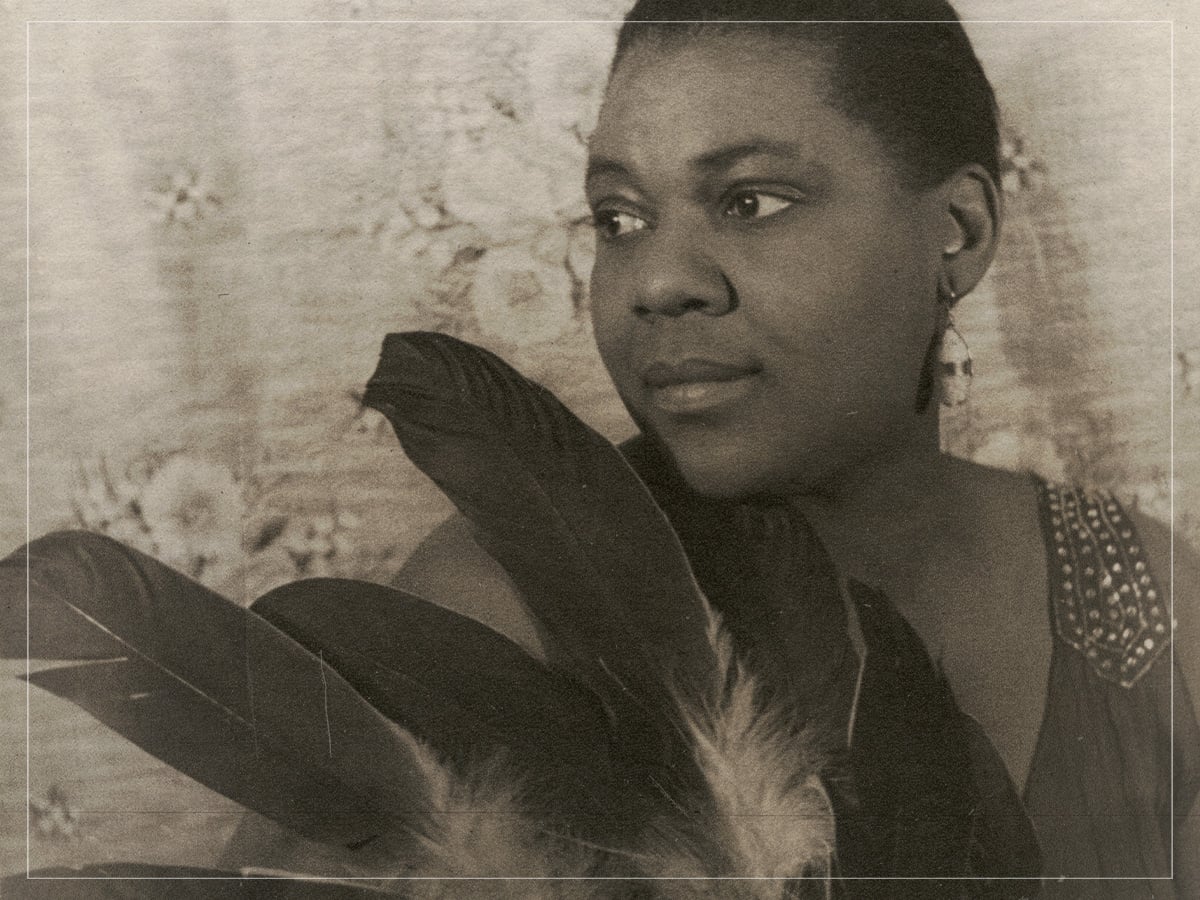
Landau tried to push back, suggesting that Smith had survived to a “great degree”, but Simon doubled down, saying, “I think not a great degree. I think Grand Funk Railroad is much more well-known today by most people than Bessie Smith, and yet, I’ll tell you this, a lot more people know ‘St Louis Blues’ than know Bessie Smith. In other words, her work is preserved on records, and that record remains a part of history. A song is capable of having several life spans.”
In her time, Smith was just about the biggest name in the blues, and she more than earned her nickname ‘Empress’. She sold hundreds of thousands of records, almost unheard of at the time, and drew magnificent crowds wherever she played. She set the standard on plenty of blues standards, not only ‘St Louis Blues’ that Paul Simon mentioned, but also on songs like ‘Nobody Know You When You’re Down and Out’, ‘Back-Water Blues’, ‘Downhearted Blues’, ‘Alexander’s Ragtime Band’ and ‘A Good Man is Hard to Find’.


Her voice was strong enough to shake the earth, and it certainly tests your very foundations every time you listen to her. When you hear her voice, you don’t only feel the blues that she felt, but you feel the sum total of the blues that anybody ever felt. She’s got the blood and the grit of the earth in her voice, and she puts every last drop into each of her performances.
Recording around 160 songs for Columbia Records, she could have her pick of the very best sidemen and players accompanying her. Louis Armstrong, Coleman Hawkins, Fletcher Henderson, James P Johnson, Joe Smith, and Charlie Green all featured on her recordings over the years, among just about any other name you’d know from the era, too.
If Paul Simon is right and people have forgotten about Bessie Smith, then they are missing out and would do well to spend some time getting to know her and her blues. And whether you know her music or not, the book Bessie Smith by Jackie Kay should be essential reading for any music fan. Hopefully, Paul Simon has read a copy by now. Just like Leonard Cohen, just like ‘St Louis Blues’ and just like ‘Bridge Over Troubled Water’, Bessie Smith is going to live forever.
