


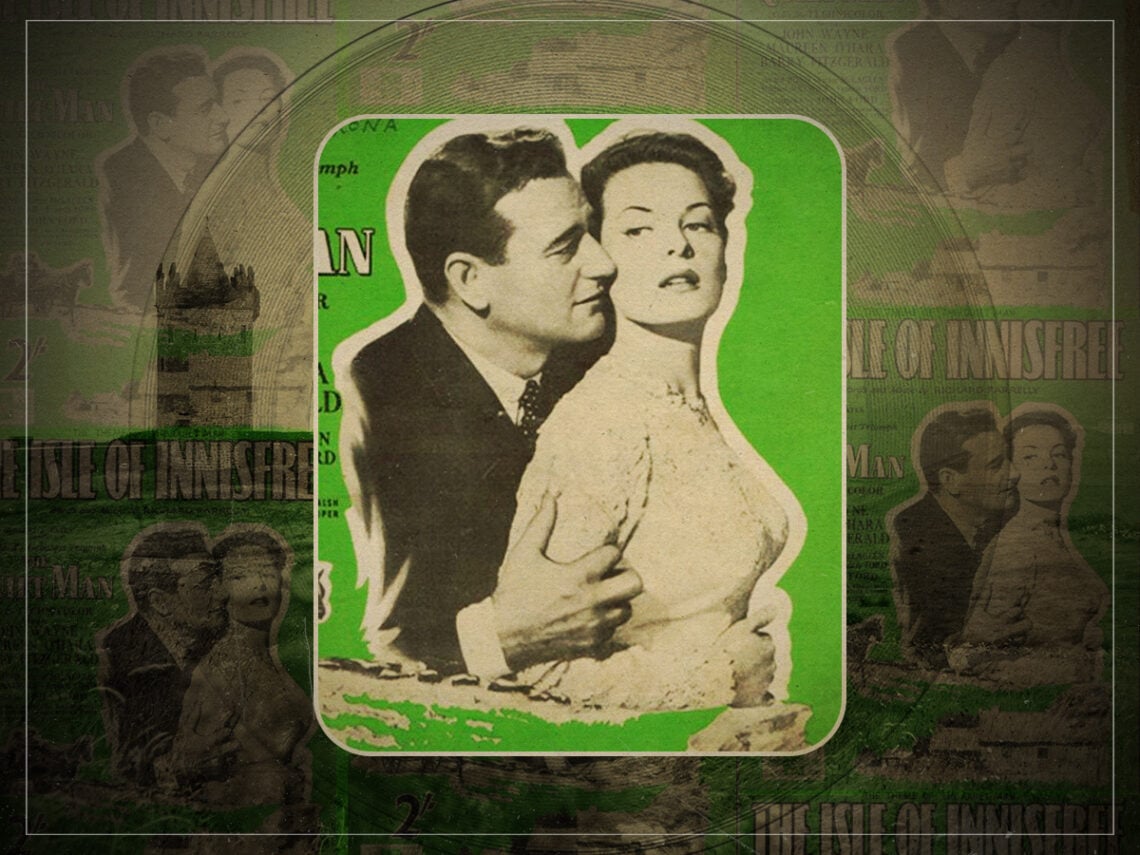
‘Isle of Innisfree’: The folk song about longing for Ireland written in Ireland

When Steven Spielberg‘s movie E.T. became one of the blockbuster movie events of 1982, nobody was happier about it than a 66-year-old Dublin policeman named Dick Farrelly.
Thanks to some complicated licensing and royalties agreements handled by far-away men in publishing offices years earlier, Farrelly was suddenly receiving regular checks from Hollywood for the use of his old song, ‘Isle of Innisfree’, during a brief scene in the movie.
Being a respectable gent, Farrelly wouldn’t tell local reporters exactly how much money he was pulling in from the E.T. needle drop, “though it is not to be sneered at”, he said. “My son Gerard, who is 20, came rushing home to tell me the news,” he added. “He could not believe his ears.”
Farrelly hadn’t seen E.T. yet, but he had been through a similar experience once before with another acclaimed film. Back in 1953, just three years after he’d written his famous ballad of Irish romanticism, Farrelly was contacted by someone at the Hollywood studio Republic Pictures, informing him that the legendary director John Ford wanted to feature ‘Isle of Innisfree’ prominently in his new film, The Quiet Man.
“Prominently” was an understatement, as well, as the melody was ultimately used as the skeletal structure for the John Wayne classic, appearing in the opening credits and nearly a dozen other times throughout the film. This is the same film, incidentally, that the our alien friend E.T. is seen watching on television in Spielberg’s movie, opening up that new flow of royalties to Mr Farrelly.
John Ford eventually won the Oscar for ‘Best Director’ for his work on The Quiet Man, and composer/arranger Victor Young was nominated for a Golden Globe for its original score. Sadly, Dick Farrelly’s name was never included in the credits, but the humble Dubliner didn’t seem too offended. The use of ‘Isle of Innisfree’ in the film, combined with a successful cover version by Bing Crosby around the same time, immediately turned the song into a standard. It wasn’t a cash windfall big enough to inspire Farrelly to quit his policing job or to leave Dublin for Tinsel Town, but it certainly ensured a legacy for him and allowed him to continue pursuing his songwriting hobby for the rest of his life.
Aside from its beautiful melody, ‘Isle of Innisfree’ connected with millions of listeners as a song of longing for a homeland that had been left behind. Ironically, Farrelly developed the idea for the song while on a bus from Kells to Dublin, so he was actually happily observing his home turf rather than yearning for it. Nonetheless, he managed to capture a certain spirit that a lot of Irish-Americans, in particular, sensed in their DNA.
“And precious things are dreams onto an exile / They take him o’er the land across the sea / Especially when it happens he’s an exile / From that dear lovely Isle of Innisfree.”
Over 75 years after Farrelly wrote it, ‘Isle of Innisfree’ remains one of the most covered songs in Irish folk music, with just about every singer in the genre taking a swing at it: the Irish Tenors, Celtic Woman, Celtic Thunder, Dublin City Ramblers, Daniel O’Donnell, Phil Coulter, Foster & Allen, etc. It’s a good lesson in songwriting, as well: you don’t need to leave a place to understand how it would feel to miss it.
